Base44 Challenges Anthropic: An AI Duel for Web Creation
Le brief IA que les pros lisent chaque soir
Les 7 actus IA du jour, décryptées en 5 min. Gratuit.
Inclus dès l'inscription : notre sélection des meilleurs guides & comparatifs IA.
Choisis ton rythme
Gratuit · Pas de spam · Désabonnement en 1 clic
Base44 Unveils Its AI Model to Compete with Anthropic
This week, Base44 introduced its brand new artificial intelligence model, named Base 1. The primary goal of this model is to address the lack of originality often observed in AI-generated products. To test its capabilities, Base 1 was pitted against Opus 4.8 from Anthropic, tasked with creating an identical website. The results showed that Base 1 not only completed the task faster but also used fewer credits to produce a site of comparable quality.
Base44 designed its AI model with the aim of surpassing competitors such as Lovable, Replit, and Cursor. Maor Shlomo, the founder and CEO of Base44, explained to Business Insider that one of the motivations behind developing their own LLM was to move away from the stereotypical designs often associated with AI-coded products. Design experts have noted that websites created by advanced models like Opus 4.8, GPT-5.5 from OpenAI, or Gemini 3 tend to share similar characteristics, such as rounded corners, neutral color palettes, and frequent use of emojis. Base44's competitors, like Lovable and Replit, rely on these underlying models.
Paul Bakaus, CEO of the AI design startup Impeccable, compared these designs to an "algorithmic Uniqlo or Ikea" in a June interview with Andreessen Horowitz — functional but lacking in creativity. Shlomo stated that future versions of Base 1 will aim to "create something unique every time," although this still requires work. He also emphasized that the model would deliver faster results and be less costly in credits compared to competing models. Base44 is a subsidiary of the website creation company Wix.
Showdown Between Base 1 and Opus 4.8
To evaluate the performance of Base 1, we put it up against Opus 4.8 in a website creation task.
Designing a Site for a Fictional Ambient Lamp
I chose to use Base 1 to create an e-commerce site dedicated to a fictional product: an emotional support lamp capable of interacting with Google calendars and changing color based on events. For example, the lamp could glow yellow for focus mode, blue for breaks, pink for meetings, and red for impending deadlines.
When providing my prompt to Base44, I deliberately omitted any design directives, curious to see what the model would spontaneously propose. After selecting Base 1 as the AI model, I waited a few minutes before witnessing the site "Lumos" take shape.
Analysis of Results
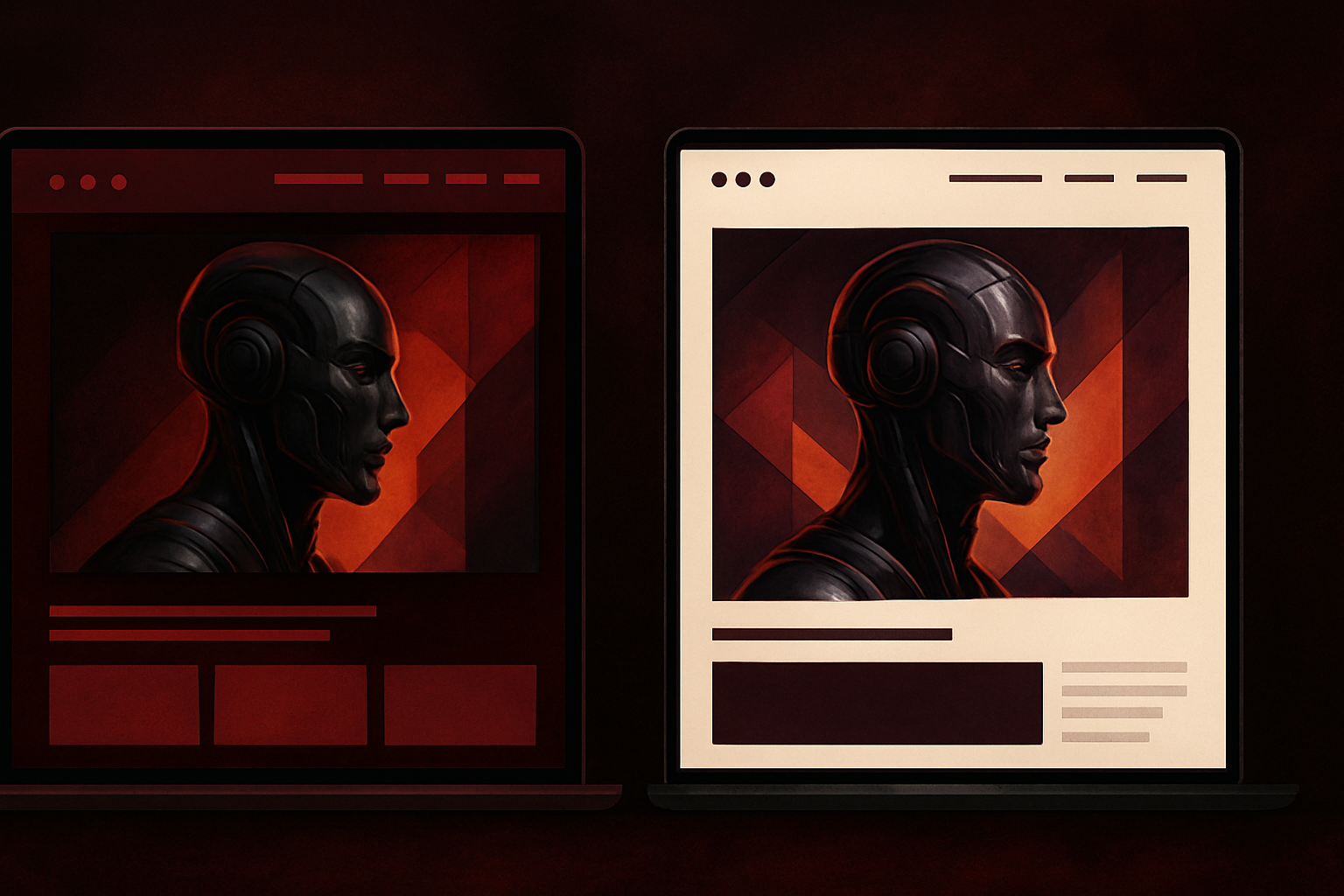
From the outset, I was struck by the bold color palette, a rare feature without a specific prompt for an AI-generated site. The deep blue background of the site distinctly set it apart from the typically light or beige interfaces of other AI sites. This background was enhanced by a bright yellow accent color.
The rest of the site remained basic, with typical signs of AI coding, such as rounded corners and an abundance of emojis. Base 1 from Base44 generated a site with numerous emojis, confirming Shlomo's remarks about the journey still ahead to achieve true uniqueness in designs.
For comparison, I submitted the same prompt to Base44, this time choosing Opus 4.8. The first notable difference was the generation time: Opus 4.8 took about twice as long as Base 1. Once the site was loaded, I found a beige background, consistent with expectations for an AI-coded site.
Aside from the color palette, the rest of the site was similar to that generated by Base 1. Although Base 1 was faster, both models used the same number of credits, 1.2 credits each from my 250 monthly credits.
I then attempted to add an additional feature to both sites, requesting the addition of extra color modes: green for exercise and teal for eye breaks. For this task, Opus 4.8 consumed 1.4 credits, while Base 1 made the change in 1.2 credits and did so more quickly. Although the difference was minimal, Opus proved less efficient in terms of credit consumption for a similar adjustment.
Overall, both models performed comparably, although the design generated by Opus seemed slightly more generic. Shlomo mentioned that the Base44 team plans to pursue "reinforcement learning" on Base 1, aiming to encourage the model to produce increasingly innovative and distinct designs. We will closely follow developments in the next update.
Brief IA — L'actualité IA en français
L'essentiel de l'actualité de l'intelligence artificielle, décrypté et expliqué chaque jour.