Bumble Revolutionizes Dating with AI Bee
Le brief IA que les pros lisent chaque soir
Les 7 actus IA du jour, décryptées en 5 min. Gratuit.
Inclus dès l'inscription : notre sélection des meilleurs guides & comparatifs IA.
Choisis ton rythme
Gratuit · Pas de spam · Désabonnement en 1 clic
Dating Apps: A Constantly Evolving Revolution
In just a few years, dating apps have transformed the way we interact and form romantic connections. The "swipe" concept, introduced by Match Group with Tinder in 2012, allowed users to quickly navigate through profiles, deciding with a simple gesture whether they were interested or not. This method has redefined online seduction, making interactions more instantaneous and visual.
However, a new era seems to be dawning with the introduction of artificial intelligence in this field. Bumble, a well-known dating app, is positioning itself at the forefront of this innovation by integrating AI to facilitate the search for love.
Bee: Bumble's AI Assistant
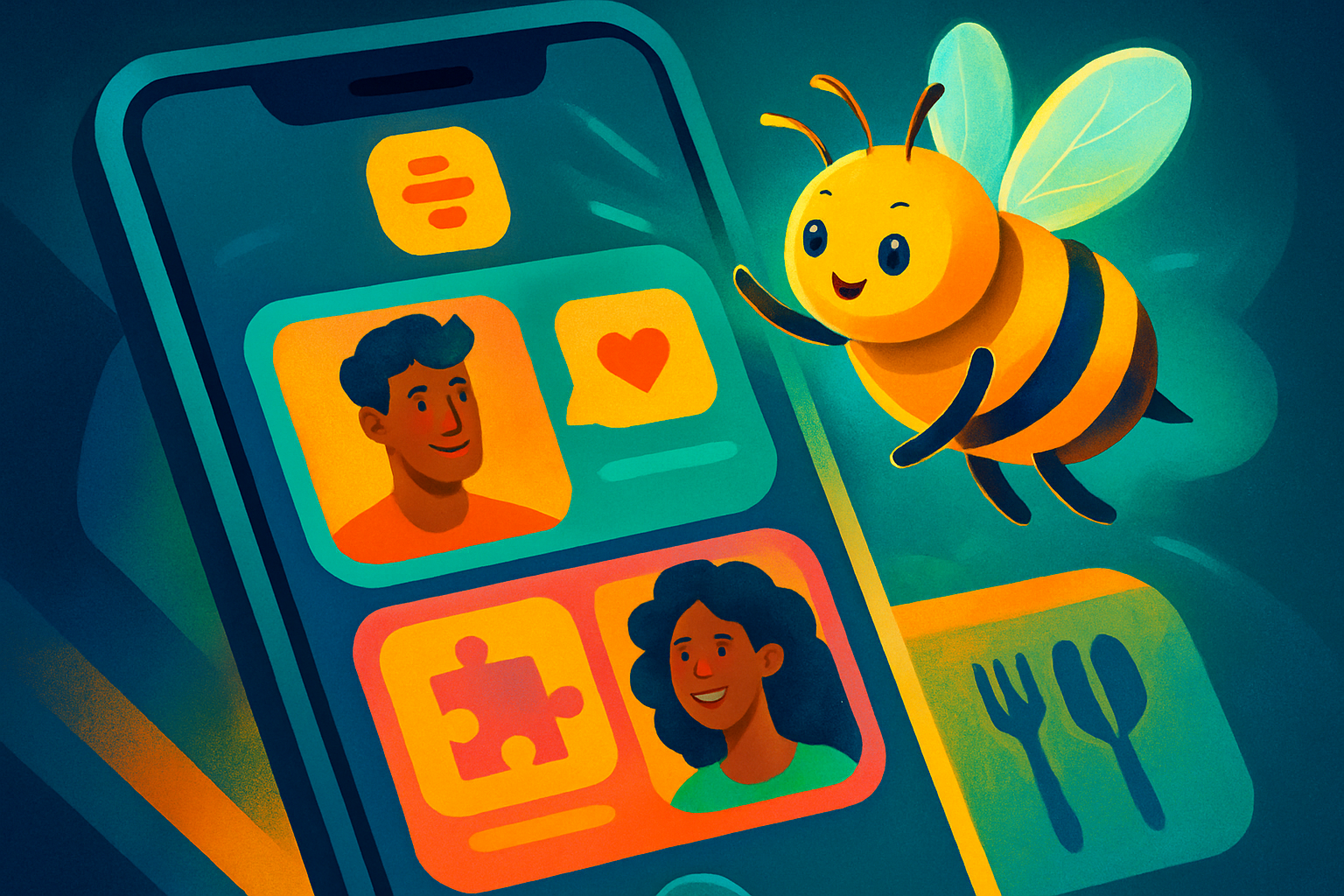
Whitney Wolfe Herd, the CEO of Bumble, recently announced the launch of an innovative project: an AI assistant named "Bee." This tool aims to converse with users to better understand their preferences and suggest compatible profiles, as well as tailored date ideas. By integrating Bee, Bumble becomes the first major dating app to place artificial intelligence at the heart of its operations.
Although the use of AI in dating apps is not entirely new, Bumble is taking an additional step. For example, Hinge already uses generative AI to help its users initiate conversations or improve their profiles. Bumble, for its part, had already integrated AI systems as early as 2024 to detect fake profiles and prevent scams.
Love in the Age of AI: A Matter of Trust
For a long time, researchers have questioned the transformation of love into a modern marketplace. Sociologist Zygmunt Bauman described our era as one of "liquid love," where relationships have become more flexible and ephemeral. Another sociologist, Eva Illouz, pointed out that the abundance of choices makes romantic commitment more complex, as the more options there are, the harder it is to commit.
Dating apps like Bumble have amplified this phenomenon by transforming profiles into showcases to be quickly browsed, following a logic similar to online shopping. AI could potentially reduce this confusion by suggesting compatible profiles, but it also raises new concerns.
One crucial question is whether we can trust an algorithm to choose a potential partner. This technology, while advanced, is not free from bias and can reproduce existing discriminations in society.
The Potential Dangers of AI in Dating
AI systems are not always impartial. Numerous studies have shown that they can reflect and even reinforce societal discriminations. Renowned researcher Safiya Umoja Noble explained that AIs tend to reproduce human inequalities rather than correct them.
In the context of dating apps, this could mean that AI reinforces certain stereotypes related to gender, ethnicity, or social status. An algorithm that seeks to propose "compatible" individuals might end up trapping users in overly similar profiles, eliminating any element of surprise.
The most memorable encounters often arise from the unexpected and from unforeseen differences. By entrusting the reins to an AI, there is a risk of reducing love to a mere data analysis, transforming human emotions into compatibility statistics.
Thus, the question arises: would you be willing to let a Bumble AI choose your potential life partner?
Brief IA — L'actualité IA en français
L'essentiel de l'actualité de l'intelligence artificielle, décrypté et expliqué chaque jour.