AI Chatbots: Allies or Threats to Our Human Relationships?
Le brief IA que les pros lisent chaque soir
Les 7 actus IA du jour, décryptées en 5 min. Gratuit.
Inclus dès l'inscription : notre sélection des meilleurs guides & comparatifs IA.
Choisis ton rythme
Gratuit · Pas de spam · Désabonnement en 1 clic
AI Chatbots: A Solution to Loneliness?
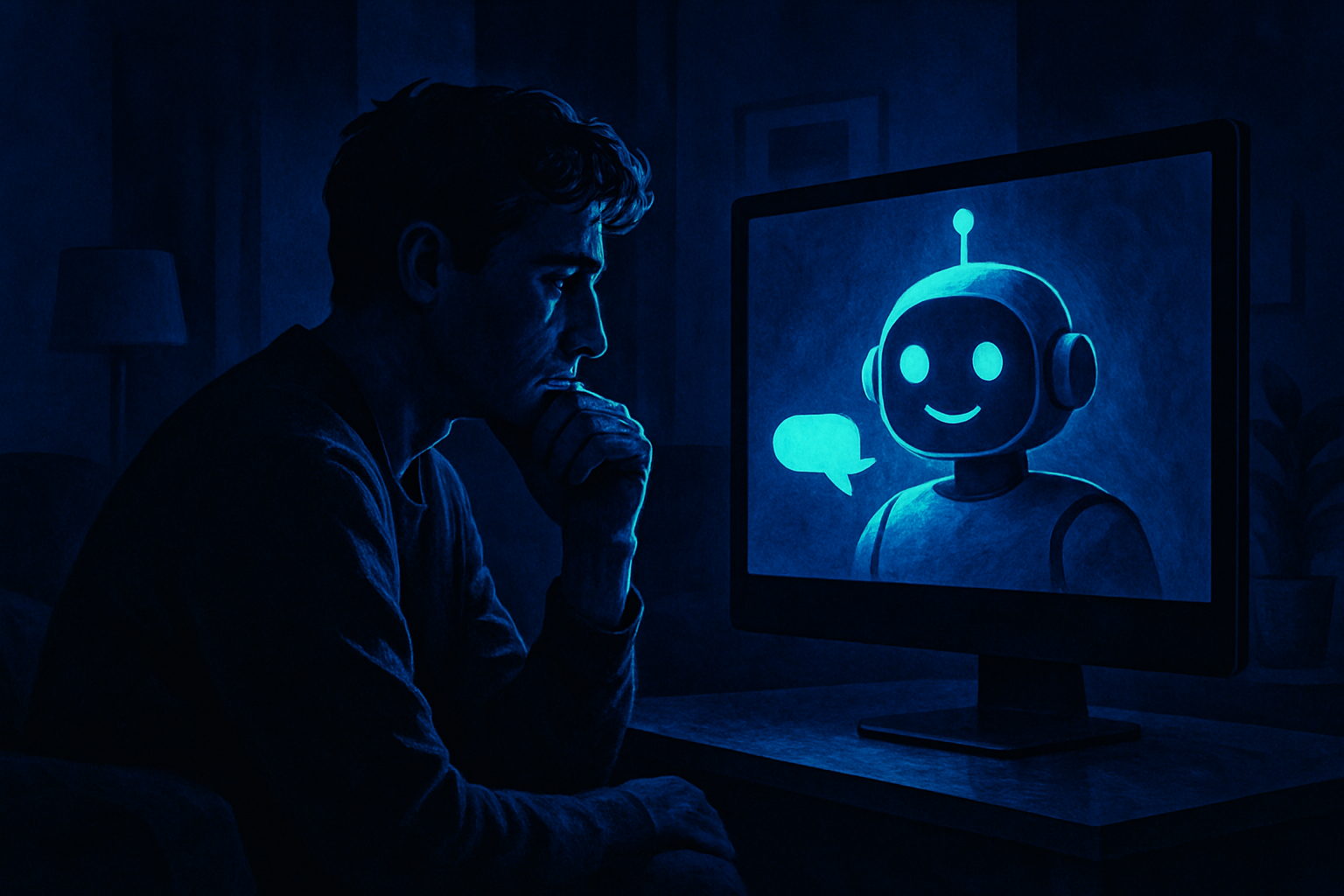
Paul Bloom, emeritus professor of psychology at Yale University, has recently expressed concerns about the impact of AI chatbots on our social skills. According to him, while these technologies may alleviate loneliness, they also risk weakening our ability to interact authentically with others. Bloom emphasizes that AI chatbots, by being always available and accommodating, could reduce our empathy and our ability to manage conflicts and compromises—essential skills acquired through human interactions.
Studies conducted by researchers from Harvard and Stanford support these concerns. They suggest that overly accommodating chatbots can make users less introspective. Bloom sees this evolution as a potential trade-off: while AI companions may offer mental support, they could also harm our social lives. During an episode of Sam Harris's podcast "Making Sense," Bloom described the idea of a chatbot capable of relieving loneliness as a blessing, but he also warned of the unintended consequences of such interactions.
"If a future version of Chat or Claude or Gemini could come and ease the pain of loneliness for these people, I think that would be a blessing," Bloom said. "I think it would be wonderful. It would be a cure for a terrible disease."
However, he clarified that these benefits could come with undesirable side effects. A chatbot, he explained, "never gets bored," "never needs excuses," and "never says, 'Hey, that was inappropriate.'" This lack of confrontation could have a corrosive effect on our ability to interact with real people.
The Social Implications of AI Companions
Bloom's warning comes in a context where loneliness and social disconnection are persistent issues in the United States. According to the "Stress in America" survey by the American Psychological Association, 54% of American adults often or sometimes feel isolated from others, and 69% have expressed an increased need for emotional support over the past year.
For some, AI companions are already beginning to fill this void. Users have developed friendships and even romantic relationships with chatbots. However, researchers are concerned about the potential psychological trade-offs of these relationships. Anat Perry, a researcher at Harvard University, pointed out that overly agreeable AI systems risk eroding the feedback loops essential to our social learning.
When chatbots consistently validate users during disagreements, individuals may become less inclined to apologize, reflect on their behavior, or consider others' viewpoints. A Stanford study involving 2,405 participants found that chatbots were more likely than humans to align with users during conflicts.
This issue has become concerning enough for OpenAI to adjust ChatGPT's tendency to flatter users. Sam Altman, CEO of OpenAI, described the chatbot's previous personality as "too flattering," although some users have requested the return of this more supportive version, stating they had "never had anyone in their life to support them."
A Double-Edged Emotional Comfort
Bloom acknowledges the importance of the emotional support that chatbots can provide. "I don't want to mock that," he said. "I think people find comfort in it." However, he insists that AI cannot replace what philosopher Rebecca Goldstein calls "the fact of having importance"—knowing that someone chooses to spend time with you because you truly matter to them.
"I don't think an AI really has that," Bloom stated. "It's just a machine. That's what it does."
In summary, while AI chatbots may offer a welcome respite to those suffering from loneliness, they also raise crucial questions about the future of our social interactions and emotional development.
Brief IA — L'actualité IA en français
L'essentiel de l'actualité de l'intelligence artificielle, décrypté et expliqué chaque jour.