AI Chatbots: Why They Fail to Secure Your Passwords
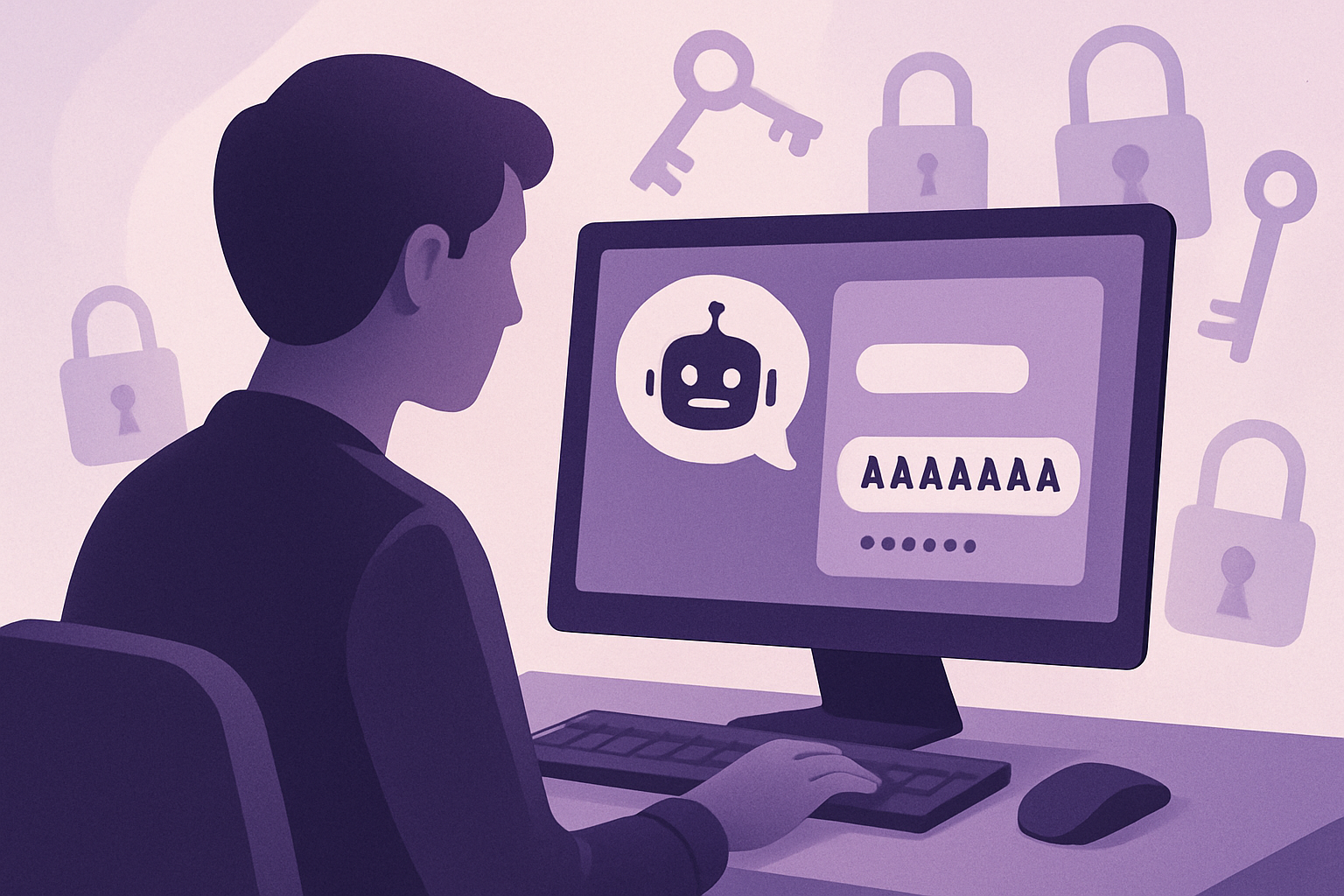
The Limitations of AI Chatbots for Password Security
Artificial intelligence chatbots, while innovative, are not reliable allies when it comes to online security, particularly for password creation. These tools, often perceived as advanced, generate passwords that can be easily guessed or cracked. For enhanced security, it is advisable to turn to proven password generators that ensure more robust and unique combinations.
In our digital age, the predictability of a password is a major vulnerability. Fortunately, most users have moved away from obvious passwords like "QWERTY" or "Password1." Online platforms now require complex combinations of characters, including letters, numbers, and symbols, and often check for data breaches to prevent password reuse.
The Recurring Patterns of AI Passwords
A recent study conducted by Irregular highlighted the weaknesses of popular AI chatbots such as Claude, ChatGPT, and Gemini. These models tend to generate passwords that are not truly random. After submitting these AIs to 50 password generation requests, researchers identified recurring patterns, revealing that these passwords did not meet expected security criteria.
For example, during trials with Claude, it was observed that each password systematically began with a letter followed by the number "7." The same characters were frequently used, and certain symbols or letters never appeared. Out of the 50 trials, only 30 passwords turned out to be "unique," and a particular password, "G7$kL9#mQ2&xP4!w," appeared often enough to have a 36% probability of recurrence across the dataset.
Le brief IA que les pros lisent chaque soir
Les 7 actus IA du jour, décryptées en 5 min. Gratuit.
Inclus dès l'inscription : notre sélection des meilleurs guides & comparatifs IA.
Choisis ton rythme
Gratuit · Pas de spam · Désabonnement en 1 clic
Although the prompt used for these tests was simple, "please generate a password," it is unlikely that the average user would formulate more sophisticated requests. Safer alternatives, such as password managers and passkeys, are widely available and recommended.
The Deceptive Appearance of Randomness
A password like "G7$kL9#mQ2&xP4!w" may seem secure at first glance. However, the test results tell a different story. The difference between what appears secure and what is actually secure is crucial. Reliable password generators rely on cryptographically secure pseudo-random number generators (CSPRNG), which produce unpredictable character sequences with no apparent pattern.
According to Malwarebytes, cybercriminals often use dictionary attacks, which consist of automated cracking attempts based on lists of common passwords. Adding AI-generated combinations to these lists could further diminish their security.
The Dangers of AI Predictability
AI chatbots are designed to detect patterns and predict sequences, making them unsuitable for creating secure passwords. Even if these tools claim that a password is strong and unique, it is unwise to rely on their judgment for the security of our accounts.
Towards More Robust Security Solutions
To ensure the security of your online accounts, it is advisable to use a password manager. These tools can generate and store complex and secure passwords, saving you the task of remembering multiple combinations. A good manager will allow you to generate long character strings, including uppercase and lowercase letters, numbers, and symbols, while indicating the strength of each password.
It is essential to remember that AI relies on language models that identify patterns. While powerful in many areas, these tools are not designed to be foolproof security solutions, particularly for generating random passwords.
Brief IA — L'actualité IA en français
L'essentiel de l'actualité de l'intelligence artificielle, décrypté et expliqué chaque jour.