China: Open AI Fails Against Open Source
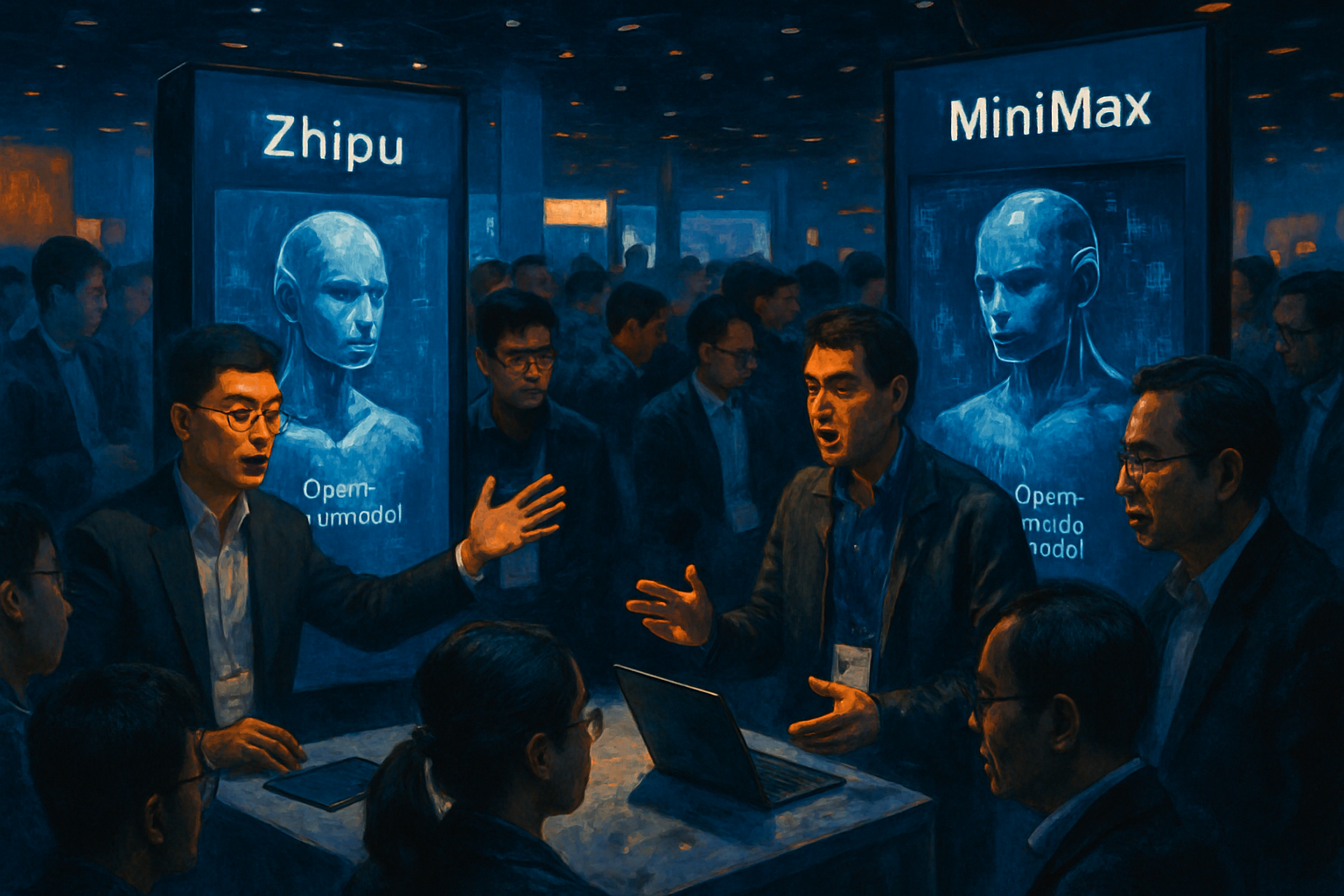
The Economic Challenges of Open-Weight AI Models in China
Open-weight artificial intelligence models developed in China, such as Zhipu's GLM 5.2, have garnered interest from developers due to their technical performance. However, financially, these models have not lived up to investors' expectations, as evidenced by their disappointing performance in the stock market.
Comparison with Open-Source Software
Open-source software is known for its ease of distribution and low costs. In contrast, open-weight AI presents distinct characteristics that complicate its profitability. Companies leveraging these Chinese open-weight models often manage to generate revenue, but this does not necessarily translate into success for the creators of these models.
The Illusion of Open-Source
It is crucial to understand that open-weight AI cannot be equated with open-source software. Open-source software, whose code is freely accessible, can prove to be highly lucrative. A notable example is Red Hat, which was acquired by IBM for the staggering sum of $34 billion. In contrast, open-weight AI models struggle to establish themselves as a viable business model. Zhipu, for instance, reported a loss of nearly $500 million last year, despite revenues of $107 million.
The Financial Setbacks of Zhipu and MiniMax
Zhipu, which developed the GLM 5.2 model, has seen its stock drop by over 40% in the past month, despite initial enthusiasm. MiniMax, another publicly traded Chinese AI lab, has also suffered significant losses, with $250 million in losses against revenues of only $79 million, and a decline of over 50% in its stock during the same period.
The Hidden Costs of Open-Weight AI
A Different Economy
The business model of open-weight AI fundamentally differs from that of open-source software. While software can be distributed at low cost, AI requires substantial investments in hardware, electricity, and data center capacity. Each new unit of artificial intelligence incurs significant additional costs.
The Example of Moonshot AI
The Moonshot AI lab recently illustrated these challenges. Its open-weight model, Kimi K3, impressed with its performance, but the company quickly had to suspend new customer sign-ups due to insufficient computing power. Unlike traditional software, where adding new users is straightforward, each new client for an AI model increases infrastructure costs.
Profit Capture by Other Players
The Role of Cloud Giants
Open-weight AI models operate through a process called inference, which further complicates their profitability. AI labs provide third parties with the numerical parameters of their models, which can then be executed by companies like Amazon, Microsoft, Google, Oracle, and Alibaba. These cloud giants, along with specialized providers like Fireworks AI and Baseten, capture the majority of the profits.
Le brief IA que les pros lisent chaque soir
Les 7 actus IA du jour, décryptées en 5 min. Gratuit.
Inclus dès l'inscription : notre sélection des meilleurs guides & comparatifs IA.
Choisissez votre rythme
Gratuit · Pas de spam · Désabonnement en 1 clic
A Challenging Business Model
Companies can choose to download and run these models themselves, but in most cases, they prefer to rely on cloud providers for data security reasons. This means that the creators of the models, who have invested heavily in their development, receive little ongoing revenue.
The Consequences for Model Creators
This situation places AI model creators in a precarious position. They have invested millions in developing these systems, but the profits are captured by other market players. Thus, while Alibaba's stock has risen by about 13% over the past month, AI labs like Zhipu and MiniMax have been heavily penalized.
The Absence of a Red Hat Model for Open-Weight AI
The Limits of the Business Model
Unlike open-source software, open-weight models do not generate significant revenue by selling support, services, or enterprise editions around the free offering. Their primary source of revenue comes from hosting the model and selling inference capabilities.
Market Competition
Raimo Lenshow, an analyst at Barclays, recently studied the AI sector in China and found intense competition in the domestic market, leading to increased price pressure. Although some models remain open-source or open-weight, this strategy accelerates commercialization but adds uncertainty regarding long-term profitability.
Why Opt for Open Models?
A Catch-Up Strategy
Open technology has often been used by challengers to catch up with market leaders. By widely disseminating their technology, new entrants can attract developers and make it more difficult for leaders' products to be sold at high prices.
The Chinese Strategy
This may be the strategy that China and its AI labs are adopting. Open-weight models put pressure on companies like OpenAI and Anthropic by offering competitive alternatives at lower prices. Even if Chinese labs make little profit, they can force their American competitors to reconsider their pricing.
Strategic Implications
Bhatia pointed out that Chinese labs could release open-weight models without worrying about short-term profitability. Openness could turn advanced AI into a commodity, weakening the business model of American companies.
Support from the Chinese Government
The Chinese government encourages this strategy. In a recent speech, President Xi Jinping urged countries to promote open-source, collaboration, and sharing. This statement is not merely a political suggestion but a strategic directive that Chinese tech companies must adhere to, even if it complicates their path to profitability.
Brief IA — L'actualité IA en français
L'essentiel de l'actualité de l'intelligence artificielle, décrypté et expliqué chaque jour.