Colorado: Battle for Water Between AI and Agriculture
Le brief IA que les pros lisent chaque soir
Les 7 actus IA du jour, décryptées en 5 min. Gratuit.
Inclus dès l'inscription : notre sélection des meilleurs guides & comparatifs IA.
Choisis ton rythme
Gratuit · Pas de spam · Désabonnement en 1 clic
An AI Data Center in Search of Water Amid Drought
California's Imperial Valley, a region historically challenged by drought, is now at the center of a complex legal battle over water access. A data center developer, seeking to tap into the Colorado River's water, has filed a lawsuit to obtain this precious resource, originally intended for agriculture. This situation raises fundamental questions about water management in the American West, where tensions over natural resources are increasingly intense.
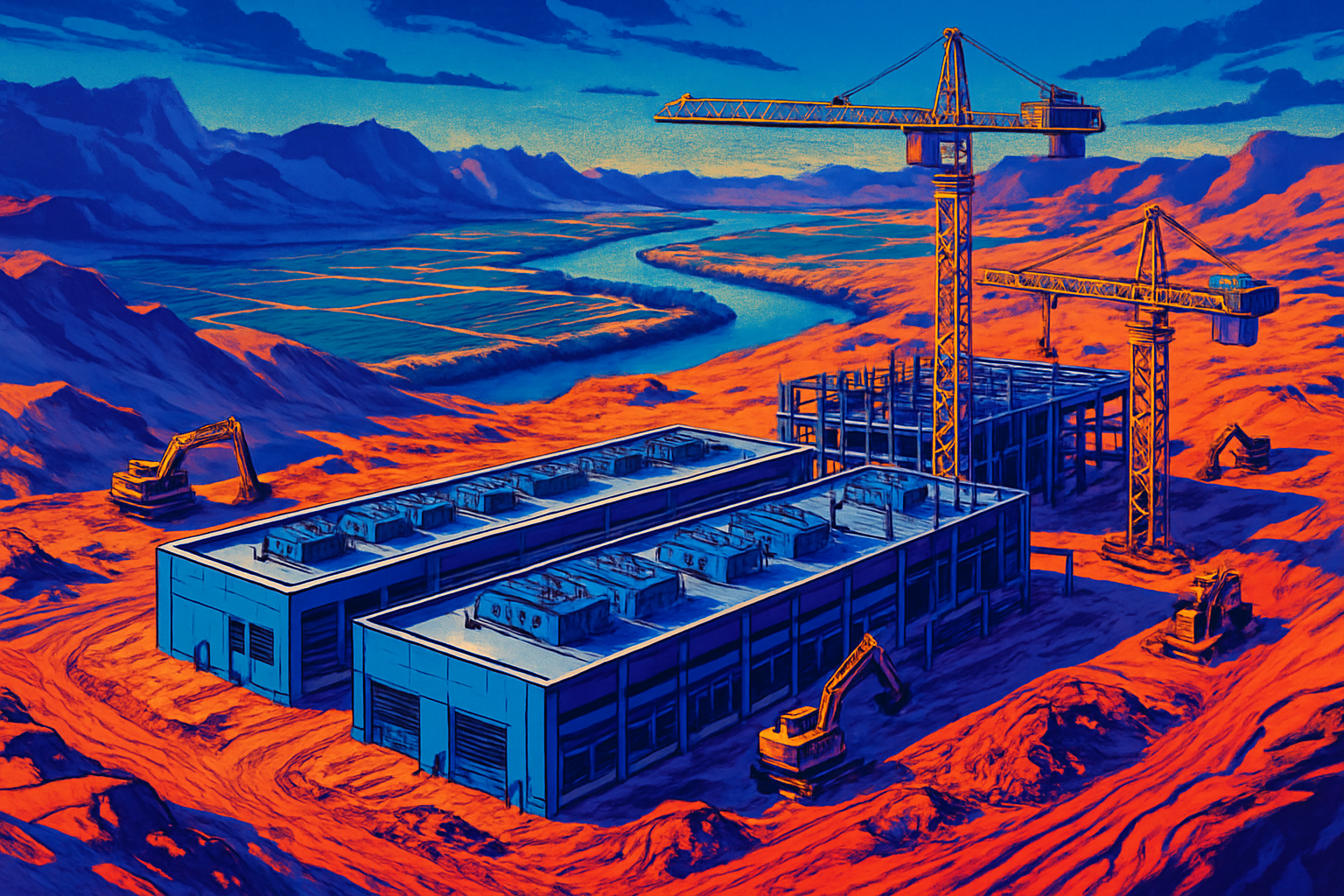
The project, led by Imperial Valley Computer Manufacturing, aims to create the largest AI data center in California. To achieve this, the company has filed a complaint to access 287 million gallons of water from the Colorado River, a vital resource for approximately 40 million people. If the 330-megawatt data center comes to fruition, it will become the largest in the state, marking a significant turning point in the use of water resources.
This legal action follows the Imperial Irrigation District's refusal to grant the company's request. This region, which relies exclusively on the river for its freshwater supply, has long faced drought issues, exacerbating tensions surrounding water use.
A Controversial Proposal for Water Use
Sebastian Rucci, the developer behind this ambitious project, asserted that the initiative would not increase pressure on the Colorado River. According to him, the company plans to fallow nearby agricultural land, redirecting water used for irrigation to cool the data center. Rucci argued that this approach would have a "zero impact" on overall water demand, comparing the center's consumption to that of a 160-acre farm.
However, water management experts and local advocates emphasize that this case raises a crucial question: as water becomes an increasingly scarce resource, should it be reallocated from agriculture to emerging industries like artificial intelligence? This reallocation poses ethical and economic questions about the future of natural resources in the region.
Potential Impact on Local Agriculture
The Imperial Valley has historically been tied to agriculture, producing crops such as cattle, hay, lettuce, and spinach. John Fleck, a water policy expert at the University of New Mexico, stated that removing land from agricultural production for other uses raises a question of values, even if the amount of water involved is relatively small. This transformation could alter the very identity of the region, which has traditionally been agricultural.
Michael Cohen, a senior researcher at the Pacific Institute, highlighted that the main issue is not the quantity of water, but the plan to reallocate agricultural land for industrial uses. This practice, known as "buy and dry," faces strong resistance in farming communities as it threatens local jobs. "There is a lot of resistance in every farming community to 'buy and dry' because it means jobs," he added.
Rucci clarified that his company has reached an agreement to purchase the land and water rights from farmers after its proposals to use recycled water were rejected. While this strategy may be profitable for some landowners, it could have negative repercussions for the local economy, particularly by reducing agricultural jobs. The consequences could be felt well beyond the fields, affecting the entire local economic ecosystem.
The economy of the Imperial Valley heavily relies on agriculture fed by the Colorado River. Rhett Larson, a water law expert at Arizona State University, emphasized that without this region, agricultural prices in the U.S. would be much higher. "If it weren't for this area around Imperial and Yuma, Arizona, no one in America could afford a salad in February," he stated. Although farmers may financially benefit from selling land or water rights, this practice could harm other local economic sectors, particularly those that indirectly depend on agriculture.
Rucci claimed that the data center could bring significant economic benefits to Imperial County, including the creation of 1,688 construction jobs and over 100 permanent jobs, with an estimated economic contribution of $2.95 billion over 30 years. He emphasized that economic diversification is exactly what the region needs, given the high unemployment rate, estimated at around 17% in May, according to state data.
Water Management: A Governance Challenge
Eric Reyes, executive director of Los Amigos de la Comunidad, expressed concerns about the attempt to circumvent the Imperial Irrigation District (IID), a public entity that manages water rights in the region. Reyes fears that the project could allow landowners to sell water intended for agriculture for more lucrative uses, undermining community control over this vital resource.
Rucci refuted these accusations, asserting that farmers have the right to reassign water under state law, and that the project would not require additional water from the Colorado River. Rhett Larson pointed out that conflicts over water in the West are not limited to conservation but involve difficult choices about the use of limited resources. "Everyone will say, 'Well, we need to conserve water,' but they often stop there," he said. "We need to ask another question: 'Why conserve?'"
Shifting water from agricultural land to data centers may be a decision that some communities choose to make, but it involves trade-offs. The Colorado River basin must decide its future and priorities for water use, as while resources may be sufficient for many projects, they are not enough for all. "We have enough water to do a lot of great things. But we don't have enough water to do all the right things," Larson concluded.
Brief IA — L'actualité IA en français
L'essentiel de l'actualité de l'intelligence artificielle, décrypté et expliqué chaque jour.