Conno Christou: AI as an Ally in the Fight Against Cancer
Le brief IA que les pros lisent chaque soir
Les 7 actus IA du jour, décryptées en 5 min. Gratuit.
Inclus dès l'inscription : notre sélection des meilleurs guides & comparatifs IA.
Choisis ton rythme
Gratuit · Pas de spam · Désabonnement en 1 clic
Meticulous Health Vigilance
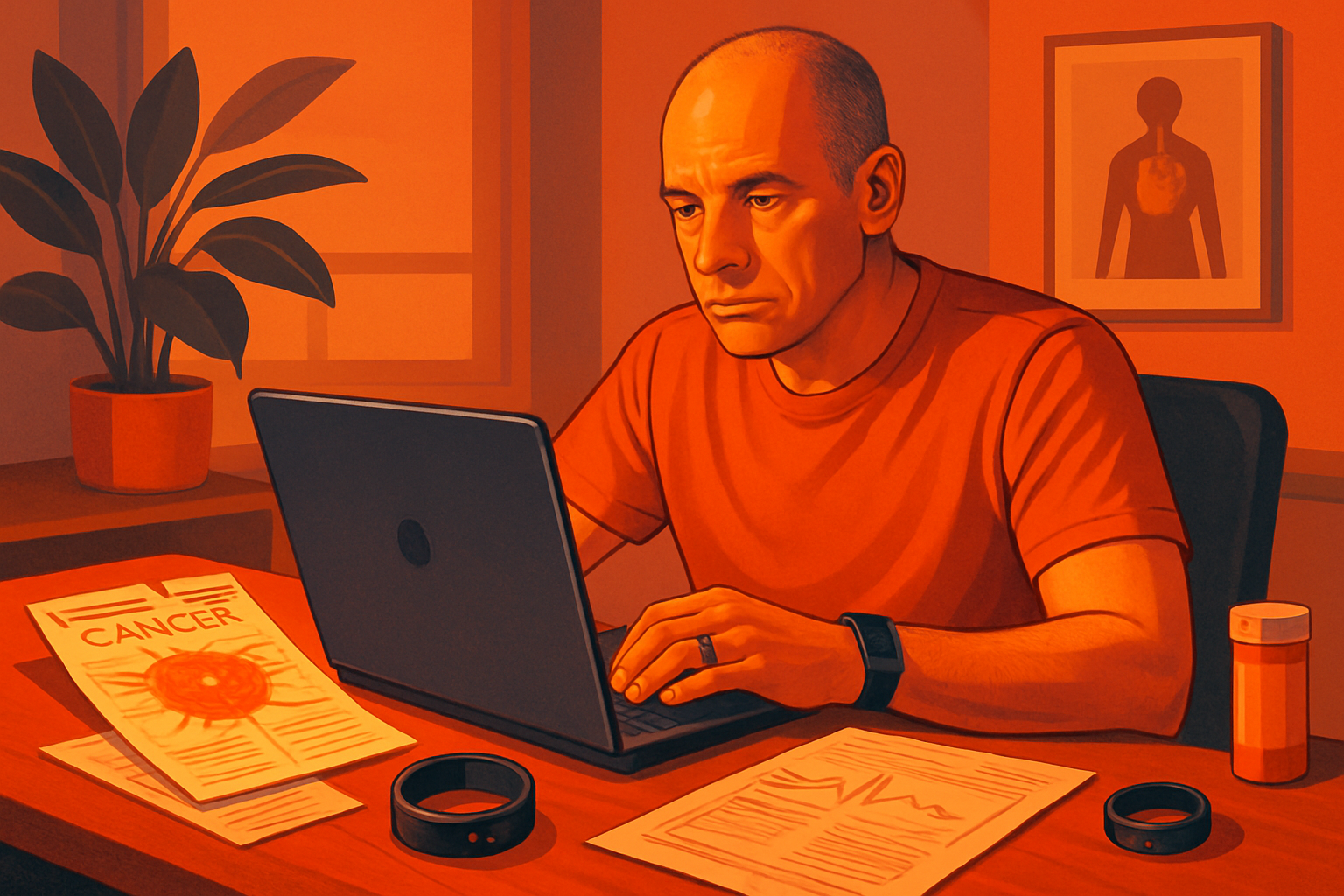
Conno Christou, a 35-year-old entrepreneur, is a staunch advocate of proactive health monitoring. He uses cutting-edge devices like the Whoop strap and the Oura ring to track his sleep and other vital parameters. Each year, he has nearly 100 biomarkers analyzed to ensure he is in perfect health. Inspired by longevity experts such as Peter Attia and Rhonda Patrick, he adjusts his supplements, circadian rhythm, and protein intake to optimize his well-being.
While working on his second company, Christou was at the forefront of health research. In 2025, his health report was exceptional, the best he had had in years, by his own account. It seemed that nothing could stop him in his quest for longevity and wellness.
An Unexpected and Alarming Diagnosis
However, after a workout, Christou noticed swelling in his arm. Thinking it was nothing serious, he waited a week before consulting a doctor. The doctor discovered two blood clots and scheduled surgery. However, preoperative tests revealed a much graver situation. A doctor returned with alarming news: a mass measuring 11 by 11 by 8 centimeters had been detected behind his sternum.
A biopsy confirmed a diagnosis that Christou had never considered: aggressive non-Hodgkin lymphoma, a rare form of cancer that affects about one in 420,000 people. This tumor, caused by a random genetic mutation, was not linked to his lifestyle or diet. It had developed in just three months and would have reached stage four in three additional weeks.
Navigating Complex Medical Decisions
Christou, who partially resides in Athens, quickly understood the limitations of the medical system. His first oncologist, a recognized expert, suggested a light chemotherapy treatment. However, Christou decided to seek a second opinion. The second doctor recommended a more aggressive treatment, with continuous infusions at the hospital every three weeks for six months, citing a success rate of 85% compared to 60% for the lighter treatment.
Rather than blindly following one of the recommendations, Christou consulted 12 experts using his professional network. Eleven of them supported the aggressive treatment. For Christou, this decision was not an act of bravery but a logical step based on data. He was already a data-driven person, and now the stakes felt existential.
A Methodical Approach to Treatment
During the six months of chemotherapy, Christou approached his treatment as he would manage a business: methodically and rigorously. He wore his Whoop throughout the process, noting its accuracy in predicting the days when his immune system would be weakened. He documented every symptom, side effect, and medication using voice transcription, focusing on sleep, nutrition, and psychology. “This makes more of a difference than anything else,” Christou said. “I never asked ‘why me’ — not once. That question has no useful answer.”
Christou integrated all this data into Claude, an AI model, to seek medical advice. Although experts warn against using chatbots for precise diagnoses, Christou found that the AI helped him ask the right questions. For a condition as rare as his — which an oncologist might see once a year — having access to a model that had absorbed the entire medical literature was, he said, simply incomparable to a Google search.
AI as a Valuable Ally
At the end of his treatment, a PET scan showed ambiguous results, and his oncologist considered radiation therapy near his heart and lungs. Christou discovered that for his type of lymphoma, the false positive rate on PET scans at the end of treatment was 60%. By analyzing his scans with Claude, he identified a thymic rebound phenomenon, a likely explanation at 90% according to the model.
After consulting three other experts, a fourth doctor confirmed this hypothesis, ruling out the need for radiation therapy. Christou was relieved to find that he did not have active disease. He sought three more opinions. The fourth doctor confirmed: thymic rebound. There was no active disease. No radiation therapy needed. He was in the clear.
A New Perspective on Health
This experience profoundly influenced Christou's view on health and the medical system. He founded Keragon, an AI platform to automate the administrative operations of medical practices. As a patient, he witnessed the challenges healthcare professionals face, often overwhelmed by administrative tasks. He received the same chemotherapy protocol as an 80-year-old woman, with side effects managed by a chain of additional medications, each causing its own problems. He is convinced that we will look back on this era of treatment and feel ashamed.
Today, Christou spends more time on his personal life, cherishing moments with friends and family. He recalls the words of a venture capitalist friend: Be happy now. This lesson, though difficult to apply, has taken on full meaning for him. He now takes Sundays off, primarily. He tries to be present — during lunches with friends, at home with his dog, in conversations that might have once seemed like distractions from work.
Christou is ready to share his experience with others facing similar situations, emphasizing that AI is already having a significant impact on medicine today. “It’s not in 10 years,” he says about what AI can already do for patients willing to use it. “It’s happening today.”
Brief IA — L'actualité IA en français
L'essentiel de l'actualité de l'intelligence artificielle, décrypté et expliqué chaque jour.