Nvidia Revolutionizes Physical AI with Cosmos 3, an Open Source Model
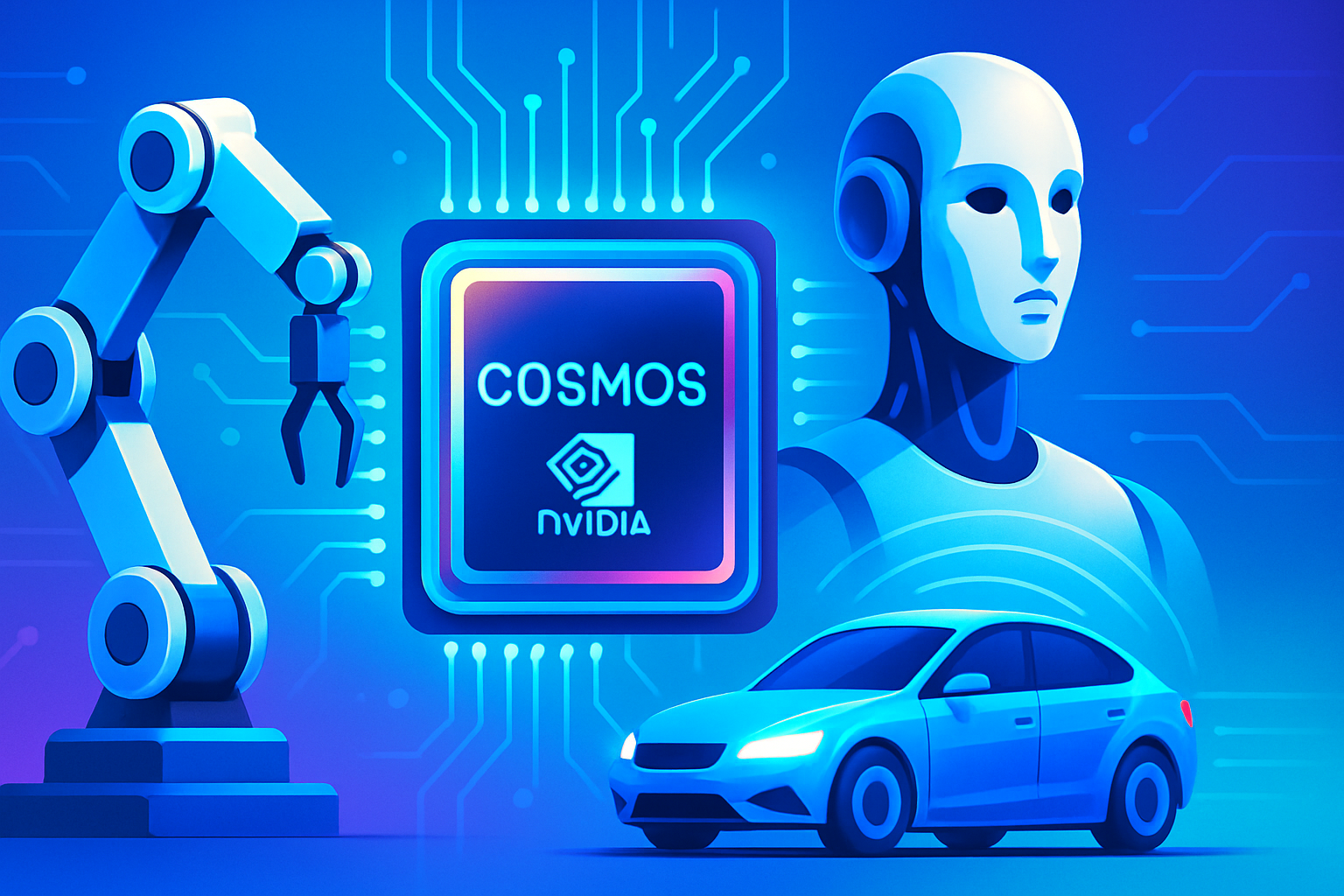
Nvidia Unveils Cosmos 3, a Major Advancement in Physical AI
At the GTC in Taipei, Nvidia unveiled Cosmos 3, a revolutionary open-source model dedicated to physical AI. This model, described as the first fully open omnimodel, is designed to enhance the understanding and interaction of intelligent machines, such as robots and autonomous vehicles, with their environment. In parallel, Nvidia also introduced the humanoid robot Isaac GROOT.
Two versions of Cosmos 3 are already available. The "super" version is optimized for tasks requiring high precision, while the "nano" version offers faster results. An "edge" version, intended for local use, is also in the works.
A Model Trained on Colossal Data
Cosmos 3 has been trained on an immense multimodal dataset, comprising 20 trillion tokens. This dataset includes nearly one billion images and around 400 million videos, both real and generated. It also incorporates audio data, text, and traces of human and robotic actions.
What sets Cosmos 3 apart is its ability to understand not only visual scenes but also the actions taking place within them. Ming-Yu Liu, Vice President of the Cosmos Lab at Nvidia, emphasizes the importance of modeling machine movements, a crucial aspect for physical AI.
Le brief IA que les pros lisent chaque soir
Les 7 actus IA du jour, décryptées en 5 min. Gratuit.
Inclus dès l'inscription : notre sélection des meilleurs guides & comparatifs IA.
Choisissez votre rythme
Gratuit · Pas de spam · Désabonnement en 1 clic
Nvidia claims that Cosmos 3 achieves an advanced level of physical understanding, which could reduce the time required to develop physical AIs from several months to just a few days.
Concrete Applications of Cosmos 3
Cosmos 3 provides developers with the ability to simulate actions in physical environments. It allows for the creation of specialized models for specific tasks, such as robotics or autonomous driving.
The model can generate detailed action data, such as the angles of a robot's joints, trajectories, and positions of mechanical grippers. These elements are essential for training machines to interact with the real world.
Nvidia also highlights Cosmos's ability to generate rare or dangerous scenarios, such as robot collisions or atypical road incidents. These situations, which are difficult to reproduce in reality, are invaluable for training autonomous systems.
Cosmos 3 is part of the open models from the Nemotron family, allowing manufacturers and developers to tailor it to their specific needs. Nvidia is collaborating with several partners, including Agile Robots, Black Forest Labs, and Runway, to accelerate the development of this ecosystem.
Brief IA — L'actualité IA en français
L'essentiel de l'actualité de l'intelligence artificielle, décrypté et expliqué chaque jour.