Danijar Hafner Launches a Humanoid Startup Trained by Global Models
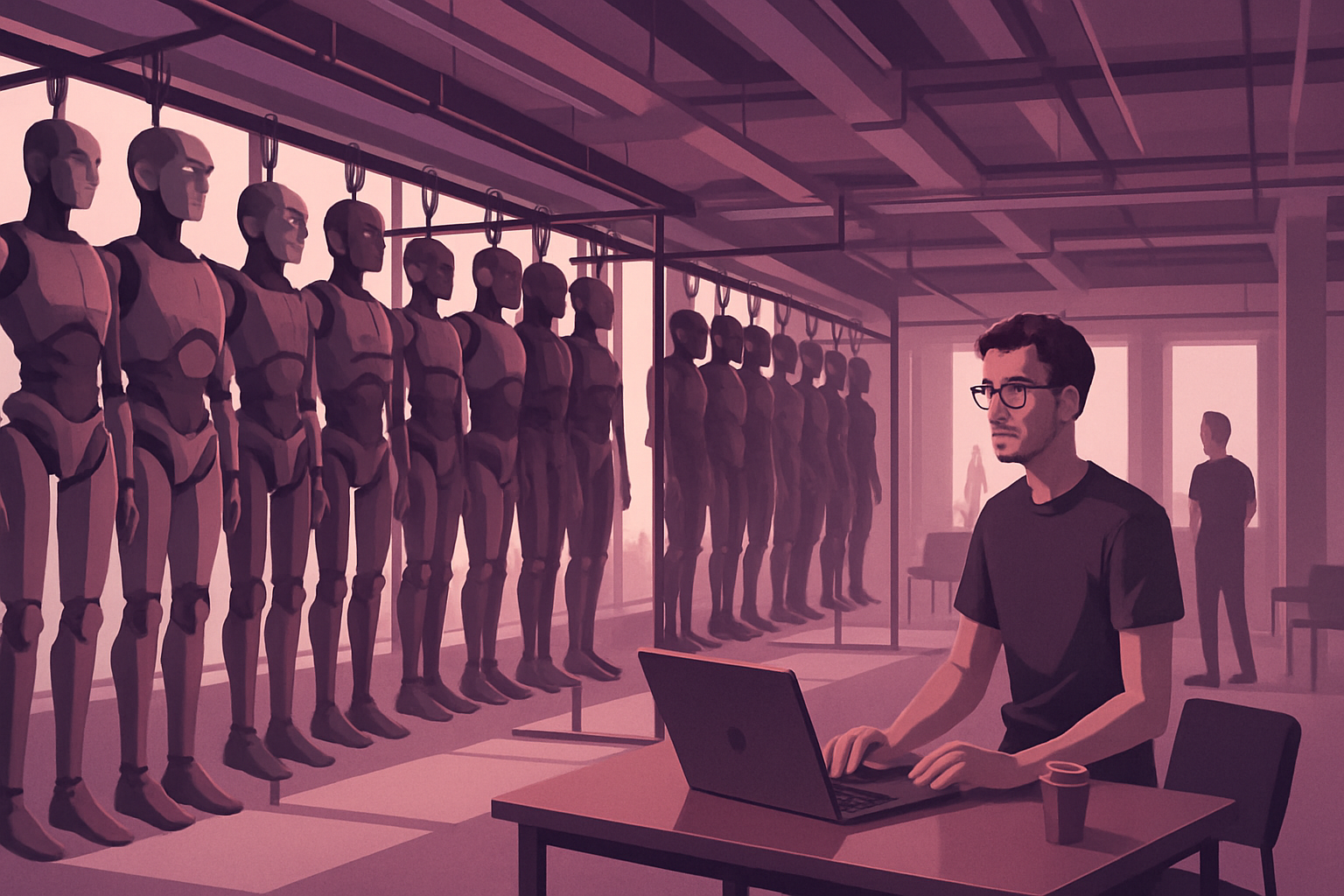
After leaving DeepMind in the fall of 2025, Danijar Hafner stealthily launched a startup in San Francisco. His goal: to develop robots capable of handling unprecedented situations, relying on world models and Dreamer, already tested from video games to robotics.
Published Results: From Games to Early Robots
Before founding his startup, Danijar Hafner made several agents from his research public. Dreamer 4 learned to extract diamonds in a video game solely from a set of videos, without ever directly interacting with the game. Dreamer 2 had previously achieved human-level performance on Atari 2600 games using a world model, while Dreamer 3 solved the diamond challenge in Minecraft by autonomously mining gems. More recently, the transition to physical reality began with DayDreamer, which enabled robots to operate in new environments and react to unforeseen situations, such as being pushed, without specific training. The approach aims to allow the execution of complex tasks without resorting to trial-and-error training in the real world, a common method in robotics.
A Stealthy Startup and a Workshop Filled with Humanoids
Danijar Hafner is currently working on a startup founded after his departure from Google DeepMind in the fall of 2025. The company operates in stealth mode and does not display its name on the door. The premises, located in SoMa in San Francisco, are largely empty: few pieces of furniture and, on that day, only one other person present. The space is occupied by humanoids of various shapes and sizes, suspended on racks and imported from China. These robots represent the next step in his approach and its physical realization. The stated goal is to enable the integration of robots into human spaces by making them capable of reacting to untested scenarios, such as navigating a house whose layout and furniture have never been seen. Hafner remains discreet about the next steps, while asserting his desire to solve a problem "that would change the world" and presenting the startup as a continuation of his work on unseen environments during training.
Le brief IA que les pros lisent chaque soir
Les 7 actus IA du jour, décryptées en 5 min. Gratuit.
Inclus dès l'inscription : notre sélection des meilleurs guides & comparatifs IA.
Choisissez votre rythme
Gratuit · Pas de spam · Désabonnement en 1 clic
The Technical Core: World Models for Anticipation
The method developed by Danijar Hafner is based on model-based reinforcement learning. It involves creating world models that mimic physical reality and training agents within them. These agents treat this model as a simulation, learn to act within it, and use these experiences to predict future outcomes, which Hafner describes as "dreaming" or "imagining." This mechanism allows agents, and the robots that carry them, to adapt to unprecedented real-world situations. To validate this approach, it was first tested on popular video games, with an initial breakthrough named PlaNet, which enabled agents to plan their actions in advance.
A Background from Google Brain and DeepMind
In 2015, while in his second year of engineering at the Hasso Plattner Institute in Potsdam, Danijar Hafner joined Google Brain as a student researcher. He then went on to complete a dozen internships and positions within Google, including at Google Brain and Google DeepMind in the UK, Canada, and the United States, entities that have since merged under DeepMind. He collaborated with Geoffrey Hinton and Ashish Vaswani, co-author of "Attention Is All You Need," which is the basis for the transformer technology used by today's large language models. Timothy Lillicrap, a former manager and co-author, ranks him among the top 1% of researchers at Google and notes that he has sometimes built systems alone that would have required entire teams. At 31 years old, Hafner grew up in rural northeastern Germany with classical musician parents, learned programming from a neighbor, and became passionate about online AI courses in high school, explaining his desire to mimic thought on a computer.
Brief IA — L'actualité IA en français
L'essentiel de l'actualité de l'intelligence artificielle, décrypté et expliqué chaque jour.