DeepSeek V4: China Challenges U.S. Sanctions
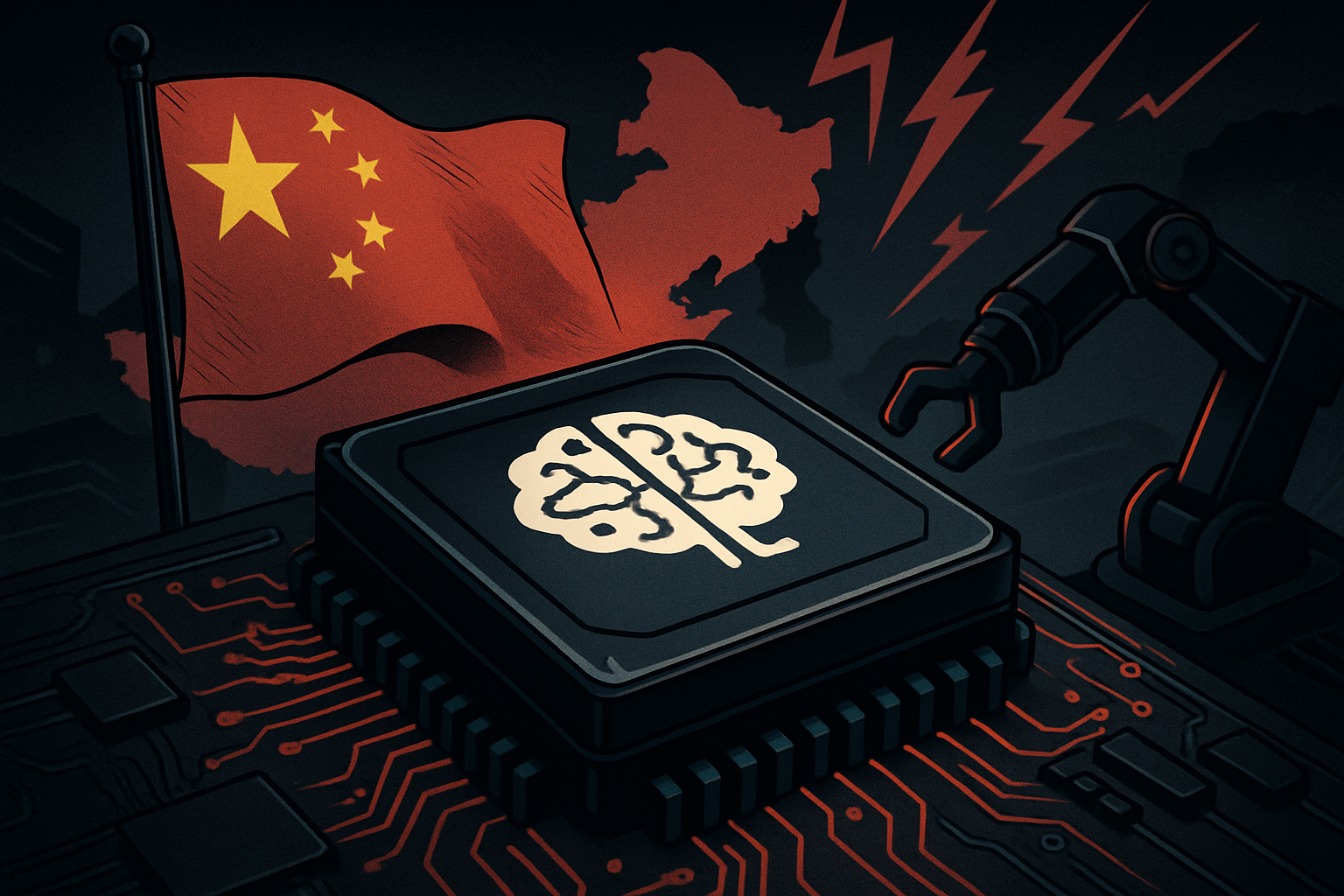
DeepSeek V4: A Symbol of China's Technological Ascendancy
Recent advancements in artificial intelligence in China, exemplified by the DeepSeek V4 model, challenge the effectiveness of Western protectionist strategies. AI has become the spearhead of a new geopolitical, industrial, and cultural confrontation. This dynamic echoes the space race, highlighting the absence of a clear strategy in Europe. Francis Lelong, an expert in technological sovereignty, provides an in-depth analysis of the societal implications of this technological race.
The rise of DeepSeek V4 is seen by Francis Lelong as an indicator of the ineffectiveness of American sanctions aimed at curbing the development of Chinese AI. These measures, far from slowing China down, have actually acted as a powerful catalyst, accelerating an already well-advanced strategy of technological independence. China is no longer just acquiring Nvidia chips; it is analyzing them to build its own infrastructure. According to Francis, "American sanctions will have absolutely no effect; they are merely delaying the emergence of a Chinese political strategic choice that was already on track."
This quest for near-total technological sovereignty spans from space to quantum, including energy and nuclear sectors. China aims for a complete vertical integration of the AI value chain, from rare earths, where it holds a significant competitive advantage, to the end uses of LLMs. The stakes go beyond the mere performance of a chatbot; it is about offering efficient, open, and customizable LLMs for businesses, akin to the success of Mistral AI in Europe. The competition between American and Chinese "stacks" is, paradoxically, beneficial for global customers, providing more choices, reduced costs, and increased innovation.
AI as a Lever for Soft Power and Societal Transformation
Beyond technical aspects, Chinese AI, embodied by models like DeepSeek V4, represents considerable soft power. AI models are never neutral; they reflect the cultural and political standards of their creators. Francis Lelong warns against the impoverishment of global cultural diversity if a single dominant model were to prevail. China, much like India with its dialects, integrates its values and culture into its AI tools, and Europe must do the same.
Le brief IA que les pros lisent chaque soir
Les 7 actus IA du jour, décryptées en 5 min. Gratuit.
Inclus dès l'inscription : notre sélection des meilleurs guides & comparatifs IA.
Choisis ton rythme
Gratuit · Pas de spam · Désabonnement en 1 clic
The notion of compute is also revisited. "Every time we open a data center, it's as if the country in question immediately has several million synthetic brains at its disposal," explains Francis Lelong. In a context of global aging and demographic decline, synthetic labor is expected to take on increasing importance, shifting the value from human labor to capital. AI thus becomes the essential growth engine to avoid economic stagnation.
Regarding talent retention, Lelong is more cautious. The Manus affair, where Beijing took control of a startup acquired by Meta, is viewed not as a sovereign success but rather as a "bad signal" sent to the market and young talents. This case reveals a political tactic and a form of insecurity from the regime rather than a genuine issue of technological sovereignty.
The Urgency of a European Strategy in the Face of Dominant Models
Between DeepSeek V4 and its Western competitors, Francis Lelong emphasizes the absolute necessity for Europe to define its own path, distinct from the closed and capitalist American model and the open yet heavily state-controlled Chinese model. Europe has significant advantages: its universities, researchers, and innovative startups at the top of the value chain (products and applications).
However, it is sorely lacking a clear and shared political strategic vision, as well as sufficient investments to build European leaders comparable to Airbus. The impact of AI on French and European society will be rapid and profound in the next five years, affecting employment, wealth, elections, security, justice, education, and health. Political leaders, according to Lelong, still underestimate the urgency of this transformation.
As for companies, particularly SMEs, the advice is clear: "The key point is not to become dependent on a single model. It is absolutely essential today to choose tools, develop, test... to be as agnostic as possible." Remaining agnostic and choosing based on performance, cost, and sovereignty needs while supporting European tools whenever possible is crucial.
Brief IA — L'actualité IA en français
L'essentiel de l'actualité de l'intelligence artificielle, décrypté et expliqué chaque jour.