Google Labs' Dreambeans: the AI that transforms your daily life
Le brief IA que les pros lisent chaque soir
Les 7 actus IA du jour, décryptées en 5 min. Gratuit.
Inclus dès l'inscription : notre sélection des meilleurs guides & comparatifs IA.
Choisis ton rythme
Gratuit · Pas de spam · Désabonnement en 1 clic
Dreambeans: Google Labs' AI that Revolutionizes Daily Routine
In the vast universe of artificial intelligence, where users spend their time interacting with chatbots, experimenting with image generators, or exploring coding tools, a new application from Google Labs stands out for its innovative approach. Named Dreambeans, it redefines how AI can be both useful and enjoyable. Emerging from Google's experimental branch, which is also responsible for NotebookLM, Dreambeans is not just an AI-generated news feed. Unlike the random streams found on Instagram or YouTube, Dreambeans is designed to be a personal assistant, a journal, and a motivational tool, all within a visually appealing and personalized interface.
The application does not aim to promote social interactions. Instead, it focuses on encouraging task completion and stimulating creativity. Each day, it offers a selection of ten stories, carefully curated to inspire and inform, allowing users to quickly disconnect and return to their daily activities. According to Gozde Oznur, the product manager who contributed to its creation, Dreambeans acts as a "morning coffee for your digital life," distilling a concentrated dose of inspiration from the information processed overnight.
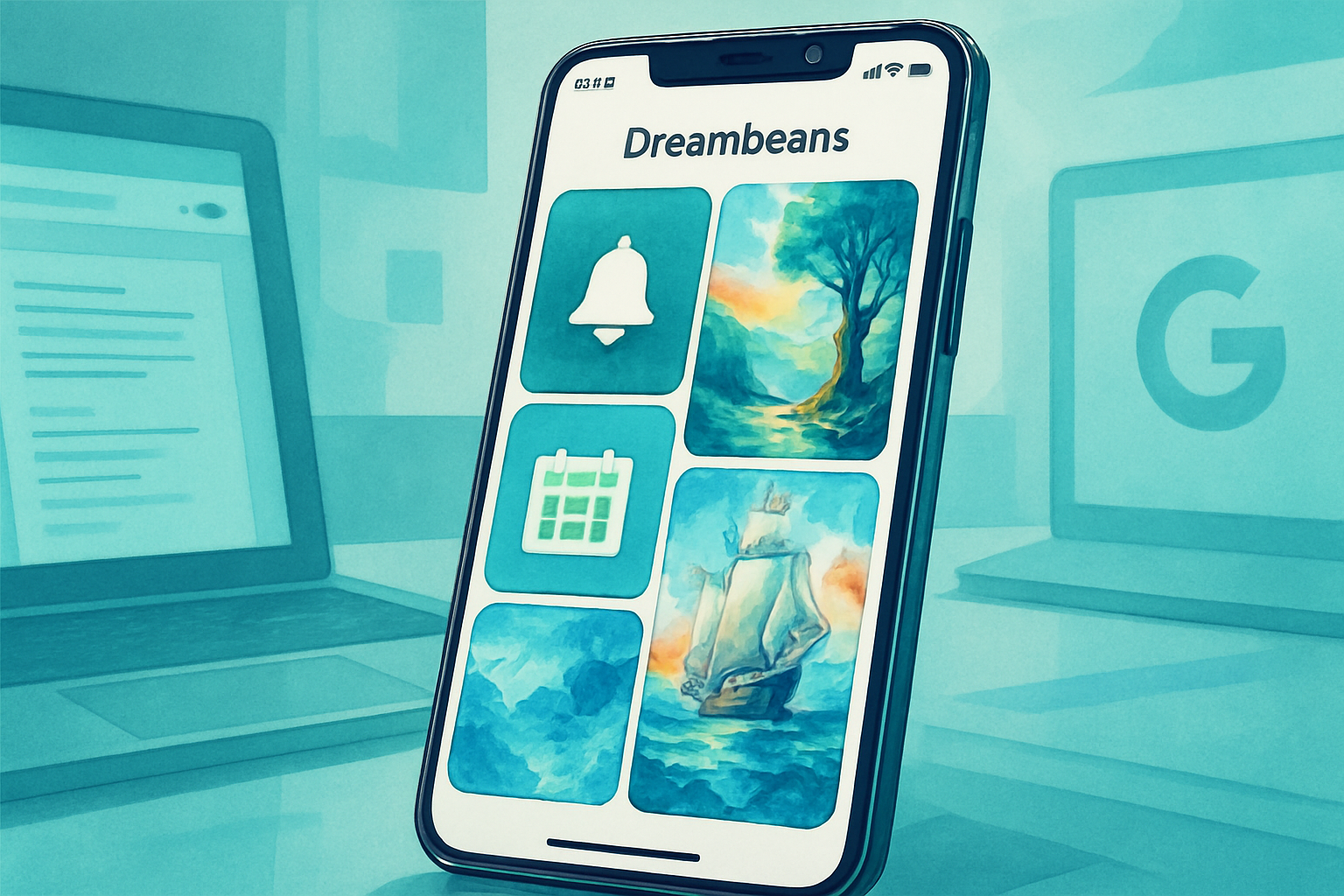
My Dreambeans feed extracted news articles it thought I would find interesting, as well as nearby events and restaurants to try. Google's AI models create the feed. Nano Banana generates watercolor-inspired images featuring you and your loved ones. Google's personalized intelligence extracts the topics and events that matter most to you, from reminders to upcoming events and news based on your interests and hobbies.
How the Application Works and Customization
One of the first impressions when using Dreambeans is its striking visual aesthetic. The application adopts a minimalist design but emphasizes personalized images that dominate the news feed. Each story can be explored in more detail, with AI suggestions for further research via Google Search.
However, the experience can be unsettling for some users. To fully benefit from its features, Dreambeans requires complete access to the user's Google applications, such as Workspace, Photos, YouTube, and search history. While this integration may seem intrusive, it allows the application to personalize stories based on the user's preferences and interests.
Users have the option to control the information shared with Dreambeans. At any time, they can disable access to certain applications or delete their data from the app. Dreambeans adheres to Google's privacy policy, ensuring that information is used to improve products. Currently, the application is available to subscribers of Google’s Ultra plan, at $100 per month, with a possibility of a waitlist for future free access.
Building the application to understand what matters most to each user was essential, says Oznur. The most important part of the application was the hardest to build: taking a person's digital footprint and distilling it into "a calm, non-repetitive daily experience that is genuinely interesting and useful," Oznur stated.
The tech stack works to find the most pressing stories for you each day, such as deadlines and upcoming events, not just those you might find interesting. This has been primarily true in my experience.
Integration into Daily Routine
Dreambeans quickly became part of my morning routine on my phone. After checking my texts, reminders, and emails, I would open my Dreambeans feed. Since it is a finite timeline, with only 10 to 14 stories per day, it added just a few extra minutes to my daily digital download. But it extracted information I wouldn't have obtained elsewhere.
"Our intention is to give you that perspective and inspiration," Oznur said. "You don’t have to scroll endlessly. You just click on it, and it’s good."
My disparate interests were well reflected: stories about Apple's WWDC and the latest updates from Claude Code were interspersed with information about spinning class playlists, making cold foam for my Nespresso coffees, a local food festival, and a new bookstore to explore.
The stories from Dreambeans were personalized based on my varied interests, from technology to exercise to seasonal cooking. It provided me with reminders and news alerts that I would have otherwise missed, so it wasn't a completely repetitive or solely entertaining experience. My timeline was a decent mix of fun and seriousness, but your feed will inevitably look different from mine, depending on the information you provide to Google. You can also give feedback to the app with "likes" and "dislikes." For example, I disliked a walnut bread recipe story and used the chat feature to tell the app to stop sending me such recipes because I am allergic to nuts.
The personalized intelligence was always at the forefront. Take this story, for example. The watercolor image of me is quite accurate, thanks to selfies in my Google Photos. The story discusses how to style a pair of new white Adidas sneakers, likely inspired by my shopping searches and Gmail receipts. But I’m also wearing a blue vest I recently bought, my gold necklace is always present, and I have a side part in my hair—ridiculously small but precise details.
I also received a few stories about events several months in advance, like a concert for which I have tickets in October. This included helpful tips on the arena's transparent bag policy and the best entrance to use, but it wasn't the information I needed on a June morning.
Free Will in the Age of Personalized AI?
Google's personalized intelligence, for better or worse, is extremely effective. But there is a key difference with this application: you choose.
You choose which applications to connect, and you can change your mind at any time. You decide how much you want this AI application to know about you. And in return, it offers you a short and entertaining feed with genuinely useful information.
This is not a groundbreaking achievement. But in this age of AI, where you cannot disable Google's AI search summaries or escape Gemini, this small allotment of agency, of choice, is significant. The optimistic side of me hopes this is a positive sign for future AI tools from Google.
At the very least, Google has finally created a product that makes me want to provide my information, rather than accepting that I have to do so to use it. Dreambeans is a rare combination of useful and fun—something that keeps me coming back to the app.
Brief IA — L'actualité IA en français
L'essentiel de l'actualité de l'intelligence artificielle, décrypté et expliqué chaque jour.