Shahed Drones: Russian AI Could Soon Select Its Targets
Le brief IA que les pros lisent chaque soir
Les 7 actus IA du jour, décryptées en 5 min. Gratuit.
Inclus dès l'inscription : notre sélection des meilleurs guides & comparatifs IA.
Choisis ton rythme
Gratuit · Pas de spam · Désabonnement en 1 clic
The Evolution of Shahed Drones Towards AI Autonomy
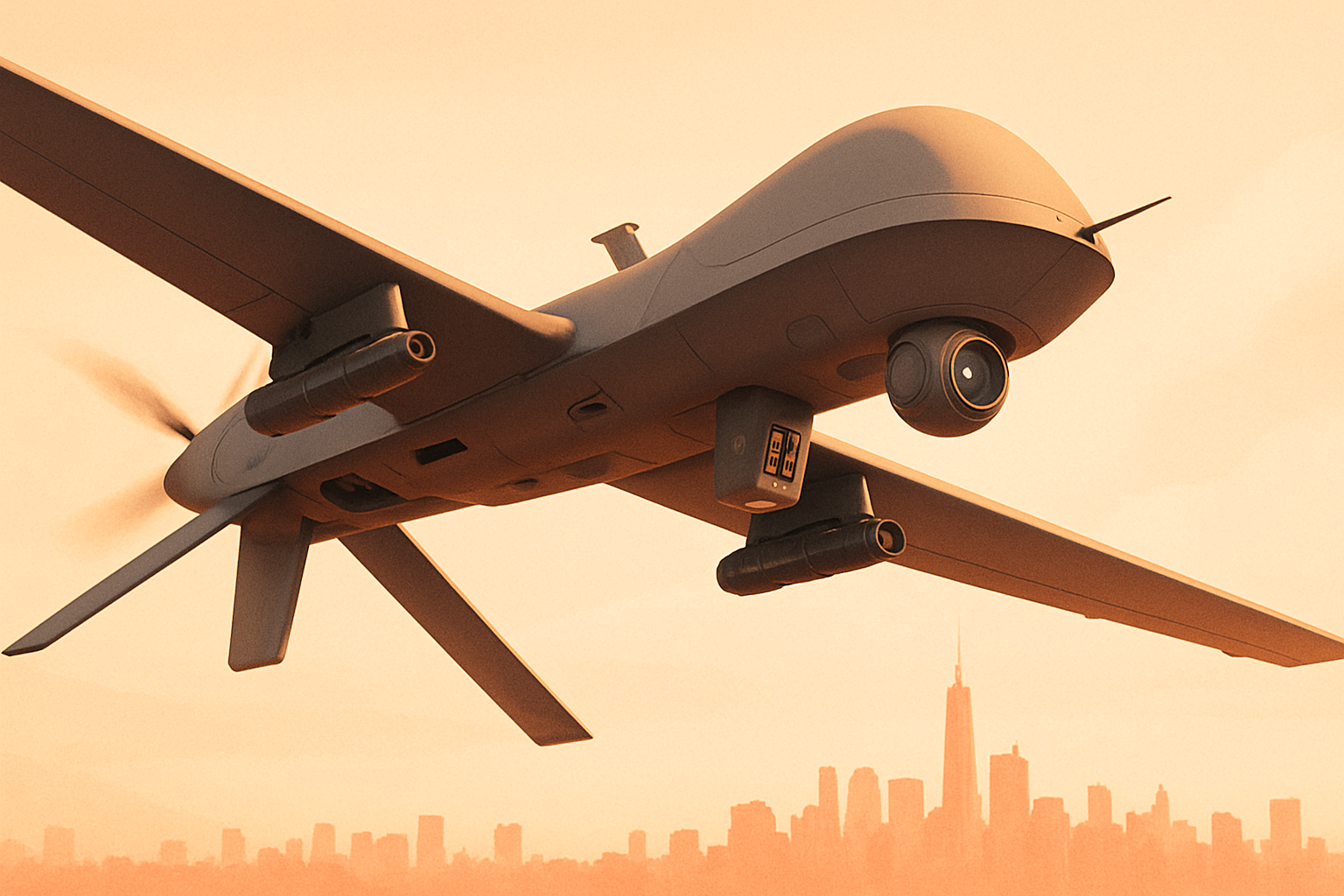
The Shahed drones used by Russia are at a technological turning point where artificial intelligence could enable them to select and attack targets autonomously. According to Serhii "Flash" Beskrestnov, a Ukrainian drone expert, while Russia does not yet possess all the necessary technologies, it could already equip these drones with AI target recognition and terminal guidance.
A Near Future for Attack Drones
Serhii Beskrestnov, an advisor at the Ukrainian Ministry of Defense, recently discussed the future of attack drones like the Shaheds. He believes these drones will soon be capable of analyzing and prioritizing targets, then deciding to attack them autonomously. This evolution is part of a global trend where attack UAVs are increasingly integrating artificial intelligence.
The Shaheds, from Iran to Russia
The Shahed drones, originally designed by Iran, are now being mass-produced by Russia under the name Gerans. Every month, thousands of these drones are manufactured and launched in large waves against Ukrainian targets. Currently, their flight paths are pre-programmed, but they are continuously being improved with technologies such as anti-jamming tools and cameras to avoid interceptors.
Current Technology of Russian Drones
Beskrestnov, known for his expertise in drone analysis, states that Russia is already using advanced video cameras, often manufactured in China, to identify and track targets. These cameras allow drones to keep targets in sight, which is no longer a novelty in the field.
Challenges of Total Autonomy
The next step, where AI could choose and attack targets autonomously, is still in the testing phase. Beskrestnov indicates that this technology is being tested by both sides, Ukrainian and Russian. Terminal guidance, which would allow AI to direct a drone to its target, is particularly complex for fixed-wing drones like the Shaheds, but it is already being implemented.
Drone Action Videos
Videos released by Russian forces show drones using AI to recognize targets and facilitate attacks. These sequences, although not independently verified, depict buildings and vehicles framed, suggesting AI-assisted recognition.
Towards a War of Autonomous Drones
The integration of AI into drones could enable complete autonomy in combat, a concept that many military analysts consider the future of drone warfare. This technology would also make interception by electronic warfare means more difficult, which often relies on disrupting radio communications or manipulating GPS signals.
Ukraine and AI in Drones
Ukraine has also begun integrating AI systems into its drones, particularly for targeting and terminal guidance. These drones, capable of striking targets at distances ranging from 30 to 300 km, are used to attack Russian logistical infrastructures and command posts, even in areas heavily protected by jammers.
Brief IA — L'actualité IA en français
L'essentiel de l'actualité de l'intelligence artificielle, décrypté et expliqué chaque jour.