EDM: Producers Track AI Amid Suspicions and Successes
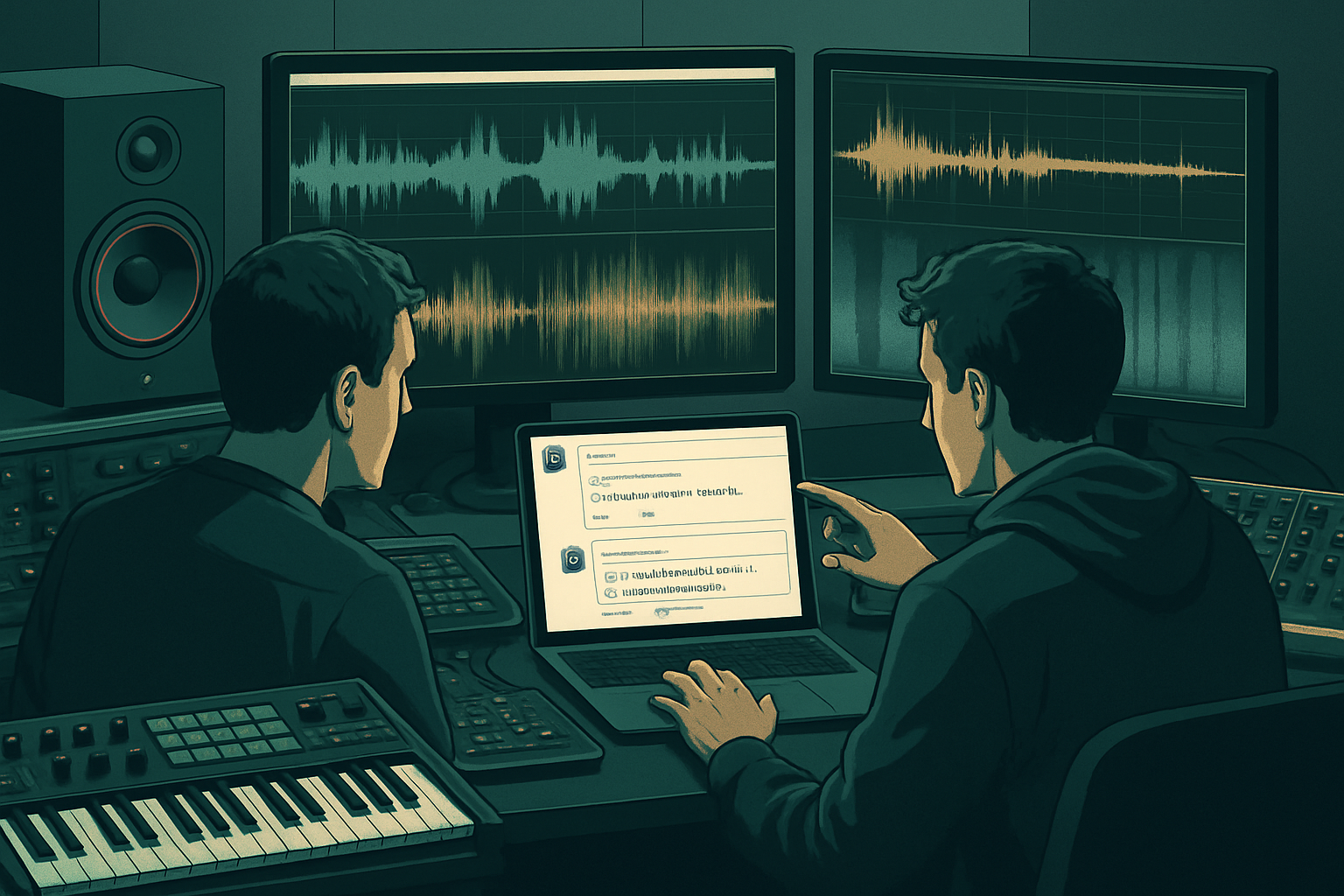
Electronic producers are organizing to identify tracks suspected of being generated by AI, as these titles gain visibility in the charts. Their "audit" methods rely on auditory and visual clues, but evidence is often lacking, and denunciations can lead to backlash.
AI-Related Titles Reach Billboard and TikTok
Tracks associated with AI tools are entering the mainstream. In 2024, Metro Boomin used a beat whose voices, melodies, and instruments were generated by Udio for "BBL Drizzy," which went viral after its release on SoundCloud and an invitation for other artists to add a verse. Drake himself sampled this beat in "U My Everything" by Sexyy Red, which reached number 44 on the Billboard Hot 100. Other instances confirm this visibility: the song "A Million Colors," created via Suno by Vinih Pray, reached number 44 on TikTok's Viral 50 chart, and AI artists Breaking Rust and Cain Walker entered Billboard's Country Digital chart.
Denouncing Exposes One to Harassment and Client Loss
Public statements trigger hostile reactions. After his posts on Threads regarding the use of Suno, Nihil Young claims to have faced hacking attempts and a wave of online harassment, suspecting the purchase of fake followers to inflate his Spotify numbers and damage his credibility. Frightened, this father of a young girl, who had just released an album, suspended his denunciations while maintaining that AI harms human artists. He also reports that music production is his main source of income and that he began losing many clients almost immediately after the rollout of AI. He has worked on mixing and mastering for Sony Music, Warner, and Universal. The idea that music is consumed today like fast food is also expressed.
Technical and Visual Clues to Identify Generated Tracks
Producers describe recurring markers associated with certain platforms. Max Harris observes that in many tracks generated by Suno, voices and melodic elements start to stutter at the same moment, which he believes indicates that the models struggle to separate different parts and treat the whole as a single instrument, which would not align with human compositional choices. He also mentions a high-pitched whistle often present in generated tracks, which he attributes to models starting from a block of white noise. On the visual side, anomalies in videos serve as clues: disappearing and reappearing fingers in Lionsaddle content, or excessive brightness in Midnite Manna videos reminiscent of "AI soup."
Le brief IA que les pros lisent chaque soir
Les 7 actus IA du jour, décryptées en 5 min. Gratuit.
Inclus dès l'inscription : notre sélection des meilleurs guides & comparatifs IA.
Choisissez votre rythme
Gratuit · Pas de spam · Désabonnement en 1 clic
Contested Cases and a Climate of Distrust in EDM
Several artists are cited by producers as releasing generated tracks, without definitive proof. Max Harris mentions "Midnight on My Mind" by MANSA and "Take Me (To The Moon)" by Danny and Ian Asher as examples, and fans claim to have noticed similarities with another generated track, but MANSA, Danny, and Ian Asher have not commented, and no conclusive evidence supports the use of AI for "Midnight on My Mind." This uncertainty fuels a culture of distrust. Harris accuses users of uploading protected tracks, citing Madonna, to have them remixed by AIs, and blames Suno for the recent rise of this type of music online, while relying on platform specifics to target his reports. Nihil Young, for his part, speaks of the "Suno sound" and cites the cover of "Like a Prayer" by Josh Fawaz, now credited to AI after online reactions, warning that the same process could target any artist by generating "new" songs from existing catalogs.
Between Craftsmanship Demands and Automated Generation Tools
Denouncers contrast a demanding creative process with practices perceived as automated. Max Harris describes a work involving multiple decisions, from the initial idea to mixing, and associates artistic quality with a deep understanding of the medium. He criticizes AI for short-circuiting the reflection on the construction of works and for muddling the listening experience of human EDM. In contrast, Nihil Young emphasizes the ease of generating entire songs via platforms like Suno, believes that many users lack a genuine creative process, and asserts that some probably don't even write their own prompts. He points out that Suno's simple mode allows users to choose a genre and then click to produce a title.
A Vigilance Movement Born from a Changing Scene
The proliferation of generative tools and the influx of content foster a vigilance dynamic driven by the musicians themselves. In this context, some creators acknowledge the use of AI, while others deny it until pushed. The line between authentic and generated content becomes an identity issue for producers, while professional courtesy hinders public statements. Max Harris, 26, has nonetheless taken on this challenge through public videos, defending a vision of art based on expression and informed choices. His journey and arsenal of production tools illustrate this artisanal approach. On Nihil Young's side, his interventions on Threads even inspired Harris to take action, signaling that the response is self-organizing within the scene.
Brief IA — L'actualité IA en français
L'essentiel de l'actualité de l'intelligence artificielle, décrypté et expliqué chaque jour.