Europe: Ban on Nudification AIs and Regulatory Breather
Le brief IA que les pros lisent chaque soir
Les 7 actus IA du jour, décryptées en 5 min. Gratuit.
Inclus dès l'inscription : notre sélection des meilleurs guides & comparatifs IA.
Choisis ton rythme
Gratuit · Pas de spam · Désabonnement en 1 clic
The European Parliament Adopts Major Revision of the AI Law
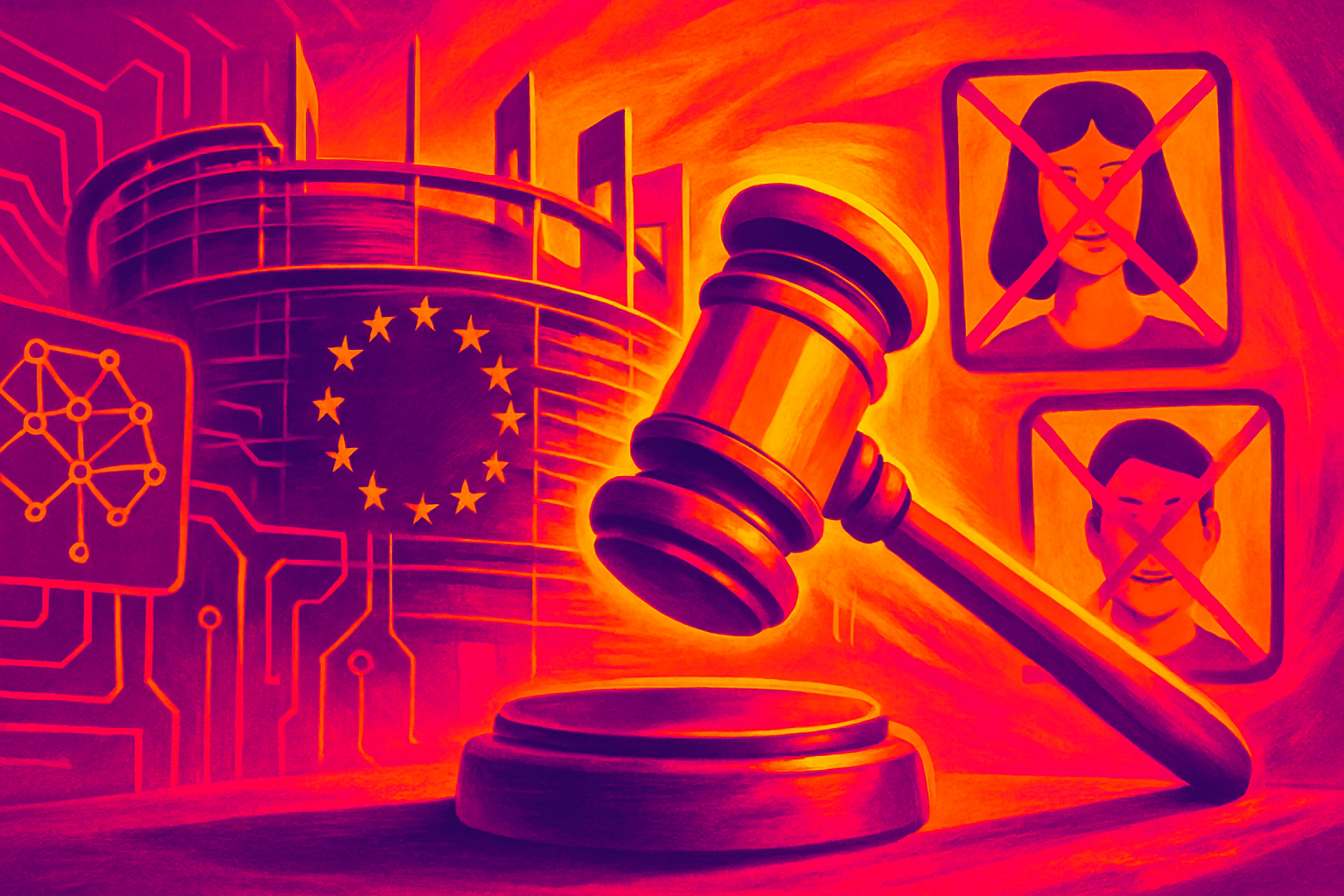
On June 16, the European Parliament overwhelmingly approved a targeted revision of the artificial intelligence law, with a vote of 423 in favor, 57 against, and 174 abstentions. This revision is part of the digital omnibus package and introduces two flagship measures: the ban on AI nudification tools and the extension of compliance deadlines for companies. Before it becomes effective, the text must still be formally adopted by the Council.
Extended Deadlines for Companies Facing AI Obligations
The revision, proposed by the European Commission last November, aims to make the AI law more accessible for businesses while maintaining a risk-based approach. High-risk AI systems, such as automated recruitment tools, credit assessment software, and surveillance systems, will benefit from additional time to comply with the new rules. For systems operating independently, compliance is pushed back to December 2, 2027. For those integrated into regulated physical products, such as industrial machines, medical devices, or smart elevators, the deadline is extended to August 2, 2028.
Another notable relaxation concerns the requirement to apply a digital watermark to AI-generated content. This invisible signature, which must be embedded in images, videos, or texts to indicate their machine production, is postponed until December 2, 2026. In the meantime, machine-readable labeling remains mandatory, requiring that content includes metadata indicating its artificial origin, even if it is not visible to the naked eye.
Finally, administrative exemptions, previously reserved for SMEs, are now extended to medium-sized enterprises. These companies, too large to be considered small but not sufficiently equipped to bear the burden of regulatory compliance without harm, will benefit from these relaxations.
Strict Ban on AI Nudification Tools
The strongest measure in the text concerns the prohibition of AI systems capable of generating images, videos, or sounds depicting the intimate parts of a real and identifiable person without their consent. These technologies, commonly referred to as nudification deepfakes, are now banned. Tools that enable the creation of AI-assisted child pornography are also targeted. In clear terms, technologies that allow for the virtual "undressing" of anyone or the fabrication of sexual content involving minors will no longer be permitted in the European market.
Providers of these technologies must prove that their systems incorporate sufficient safeguards to prevent any drift towards nudification. Without this proof, access to the European market will be denied. Similarly, deployers—those who use these systems in their own services or applications—are also affected if their tools are used to produce such content. In both cases, the deadline for compliance is set for December 2, 2026.
Michael McNamara, co-rapporteur of the text and member of Renew, Ireland, emphasized that these tools impact real people, predominantly women, with the aim of humiliating, degrading, and objectifying them. He noted that this ban should come into effect before the end of the year, provided that the Council formally adopts the text, the final step before its implementation.
Brief IA — L'actualité IA en français
L'essentiel de l'actualité de l'intelligence artificielle, décrypté et expliqué chaque jour.