Figma Integrates Design, Code, and AI on a Single Canvas
Le brief IA que les pros lisent chaque soir
Les 7 actus IA du jour, décryptées en 5 min. Gratuit.
Inclus dès l'inscription : notre sélection des meilleurs guides & comparatifs IA.
Choisis ton rythme
Gratuit · Pas de spam · Désabonnement en 1 clic
Figma Integrates Design, Code, and AI on a Single Canvas
Summary
- Creative materials to transition from design to code
- Intelligent tools for teams and agents
- A trajectory that methodically bridges design and code
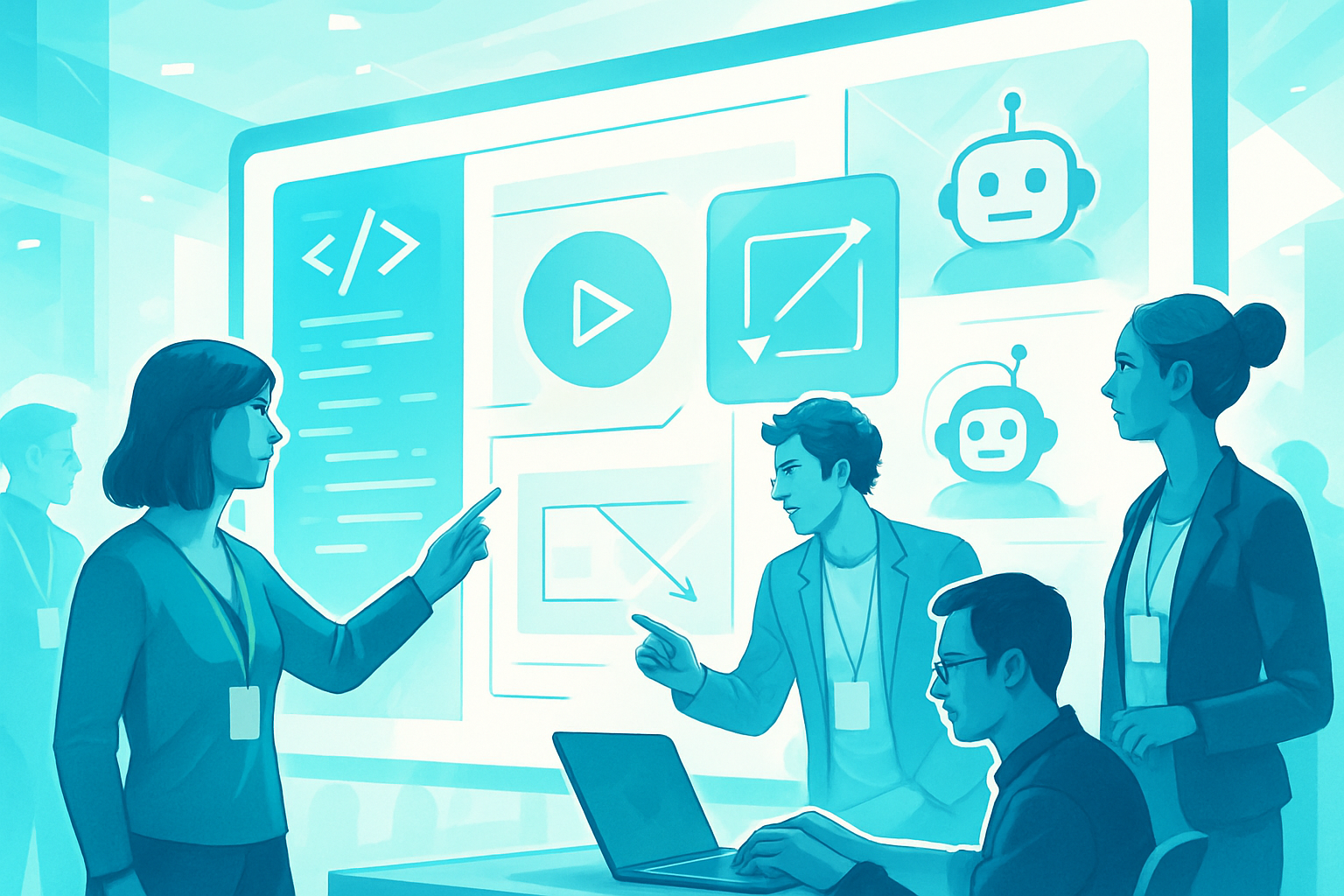
Figma is holding its first major product conference since going public, taking the opportunity to reposition the core of its tool. At Config 2026, its annual conference in San Francisco, Figma unveiled a series of innovations that bring together design, code, creative materials, and agents within a single space, which it describes as an intelligent canvas for fullstack creation. This direction extends the canvas's openness to AI agents that began in the spring.
Creative Materials to Transition from Design to Code
The first component gathers what Figma calls new creative materials, designed to expand what can be produced directly on the canvas. The most significant addition is the introduction of code on the canvas: teams can now clone a repository, develop it within Figma Design, and generate new directions with the Figma agent.
The flow works both ways, as it becomes possible to extract a flow of code into editable design layers and then resynchronize changes back to the code. In practical terms, design and development rely on the same foundation, eliminating the usual divide between mockups and integration.
The three other materials extend this logic of creation directly on the canvas:
-
Figma Motion: a module for animations, transitions, and native 3D scenes, usable via prompts, through predefined styles, or on a timeline. Motion is connected to design systems and generates ready-to-deliver code.
-
Shaders: prompt-based generation of custom visual effects (halftoning, pixelation, advanced blurs) powered by WebGPU, directly on the canvas and without external tools.
-
Figma Weave Workflows: over 20 Weave tools integrated into the canvas to transform complex AI workflows into simple functions. Figma presents this step as the first of a complete integration with Weave (formerly Weavy), expected by the end of the year.
Intelligent Tools for Teams and Agents
The second component focuses on agents, which Figma aims to make more autonomous and better contextualized:
-
Agent skills and expanded context: repetitive tasks can be transformed into shareable skills for the entire team, and the agent can be enhanced through third-party connectors, web searches, and attachments.
-
Creating plugins with the agent: it becomes possible to build custom, reusable plugins from prompts, without installation or technical skills.
-
Agents in FigJam and Slides: the agent extends to other products, to create and analyze diagrams in FigJam, and generate content, make bulk edits, or synthesize feedback in Figma Slides.
Availability of Figma's New Features
The features announced at Config 2026 will be rolled out gradually in the coming weeks, with availability varying by tool. The complete integration between Figma and Figma Weave is expected by the end of 2026.
A Trajectory that Methodically Bridges Design and Code
These announcements extend a strategy that has been underway since the beginning of the year. After integrating Claude Code and then Codex in February, Figma opened its canvas to third-party agents in March via the use_figma tool, before deploying its own native AI agent in May. "Too often, the tools we have for creation force us to make false choices between design and code, between humans and agents," said Dylan Field, co-founder and CEO of Figma, in the announcement's press release.
This acceleration comes in a tense competitive context. Google is pushing its design tool Stitch, now equipped with a free multiplayer agent, while Canva and Adobe are also enhancing their creative assistants. It remains to be seen whether this expanded canvas will be enough to maintain Figma's lead in a market where the boundary between design and development is shrinking month by month.
Brief IA — L'actualité IA en français
L'essentiel de l'actualité de l'intelligence artificielle, décrypté et expliqué chaque jour.