Google and Full-Stack AI: A Explained Technological Revolution
Le brief IA que les pros lisent chaque soir
Les 7 actus IA du jour, décryptées en 5 min. Gratuit.
Inclus dès l'inscription : notre sélection des meilleurs guides & comparatifs IA.
Choisis ton rythme
Gratuit · Pas de spam · Désabonnement en 1 clic
Understanding Google's Full-Stack Approach to AI
In the ever-evolving world of artificial intelligence, the term full-stack AI is becoming increasingly common. This approach, adopted by giants like Google, aims to provide powerful and cost-effective solutions for both seasoned developers and everyday users. But what does it really mean for a system to be "full-stack"? To shed light on this concept, Richard Seroter, an expert at Google and head of developer experience at Google Cloud, shares his insights. According to him, this strategy allows Google to make AI accessible to billions of people around the world.
Richard Seroter's Role at Google
Richard Seroter joined Google as a product manager and has been leading the developer relations and technical writing teams for three years. His team is at the heart of the success of developers using Google Cloud, creating programming languages, frameworks, and sharing best practices with the community. Their mission is to empower developers with the confidence they need to successfully execute their projects using Google tools.
Defining "Full-Stack" in Technology
The concept of "full-stack" emerged about a decade ago in software development, primarily referring to applications. Traditionally, creating an application required several specialized teams: front-end developers for user interfaces, back-end developers for server logic, and a dedicated team for databases. The full-stack engineer emerged as a professional capable of managing all these functions, enabling the transformation of an idea into a complete software solution without going through multiple intermediaries.
Applying Full-Stack to AI
Google has translated this principle to artificial intelligence. To create value with AI, developers have two options: assemble disparate components from different providers themselves or use an integrated system where all necessary elements are already connected. Google has chosen the latter option, integrating all essential components into a single solution.
Components of a Complete AI Stack
A complete AI stack requires several essential layers:
- Computing infrastructure
- AI model
- Orchestration platform
- User interfaces
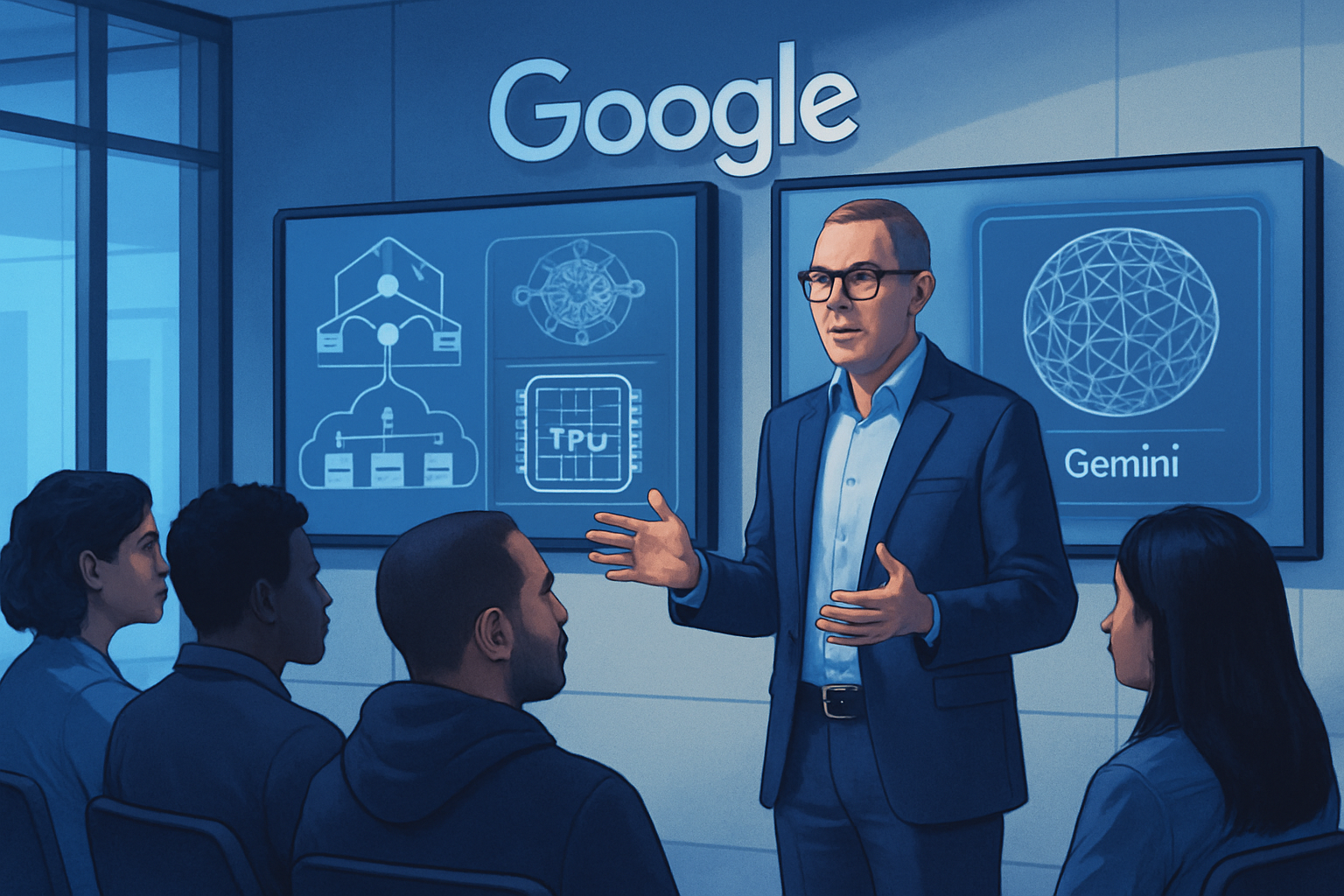
Google has invested in each of these layers, providing hardware such as Tensor Processing Units (TPUs), advanced models developed by Google DeepMind like the Gemini family, and platforms like the Gemini Enterprise Agent Platform. User interfaces include familiar tools like Maps and Gmail. In this way, Google has brought together all the necessary elements into an integrated solution.
A Long-Standing Deliberate Strategy
Google's full-stack approach is not a coincidence but the result of a carefully considered strategy developed over decades. For instance, the development of custom TPUs began more than 10 years ago. Google recognized early on the importance of owning its supply chain and infrastructure to provide top-tier Internet services. This end-to-end mastery allows Google to ensure a level of service, performance, and reliability that is difficult to achieve with multiple providers.
Implications for Developers
While adopting a full-stack platform may seem restrictive, Google strives not to lock its users in. The company is a strong advocate of open source, regularly sharing essential technologies and source code with the industry. Google describes its AI platform as "opinionated but extensible," providing everything needed to develop and run an application while allowing for the integration of third-party solutions if necessary.
Advantages of Full-Stack AI
By controlling the entire technology stack, Google ensures exceptional reliability. In the event of a technical issue, the mastery of the platform allows for quick detection and resolution of malfunctions without waiting for intervention from an external provider. This autonomy also translates into an economic advantage, with clients benefiting from competitive pricing due to the absence of third-party vendor fees.
Getting Started with Google's Full-Stack AI Technology
Google aims to make its technology accessible to a broad audience, including those without engineering training. To achieve this, the company offers several entry points based on user needs:
- Google AI Studio for quickly creating web application prototypes and deploying them on Cloud Run.
- The Gemini Enterprise Platform, a low-code option for automating daily tasks without writing code.
- The Antigravity platform, for orchestrating complex applications without requiring advanced programming knowledge.
Conclusion
Whatever your project or skill level, Google offers full-stack tools tailored to your needs. This approach aims to democratize access to AI, making its powerful technologies accessible to everyone.
Brief IA — L'actualité IA en français
L'essentiel de l'actualité de l'intelligence artificielle, décrypté et expliqué chaque jour.