Google and AI: A Controversial Historic Advertisement
Le brief IA que les pros lisent chaque soir
Les 7 actus IA du jour, décryptées en 5 min. Gratuit.
Inclus dès l'inscription : notre sélection des meilleurs guides & comparatifs IA.
Choisis ton rythme
Gratuit · Pas de spam · Désabonnement en 1 clic
A Bold Google Ad Reinterprets American History
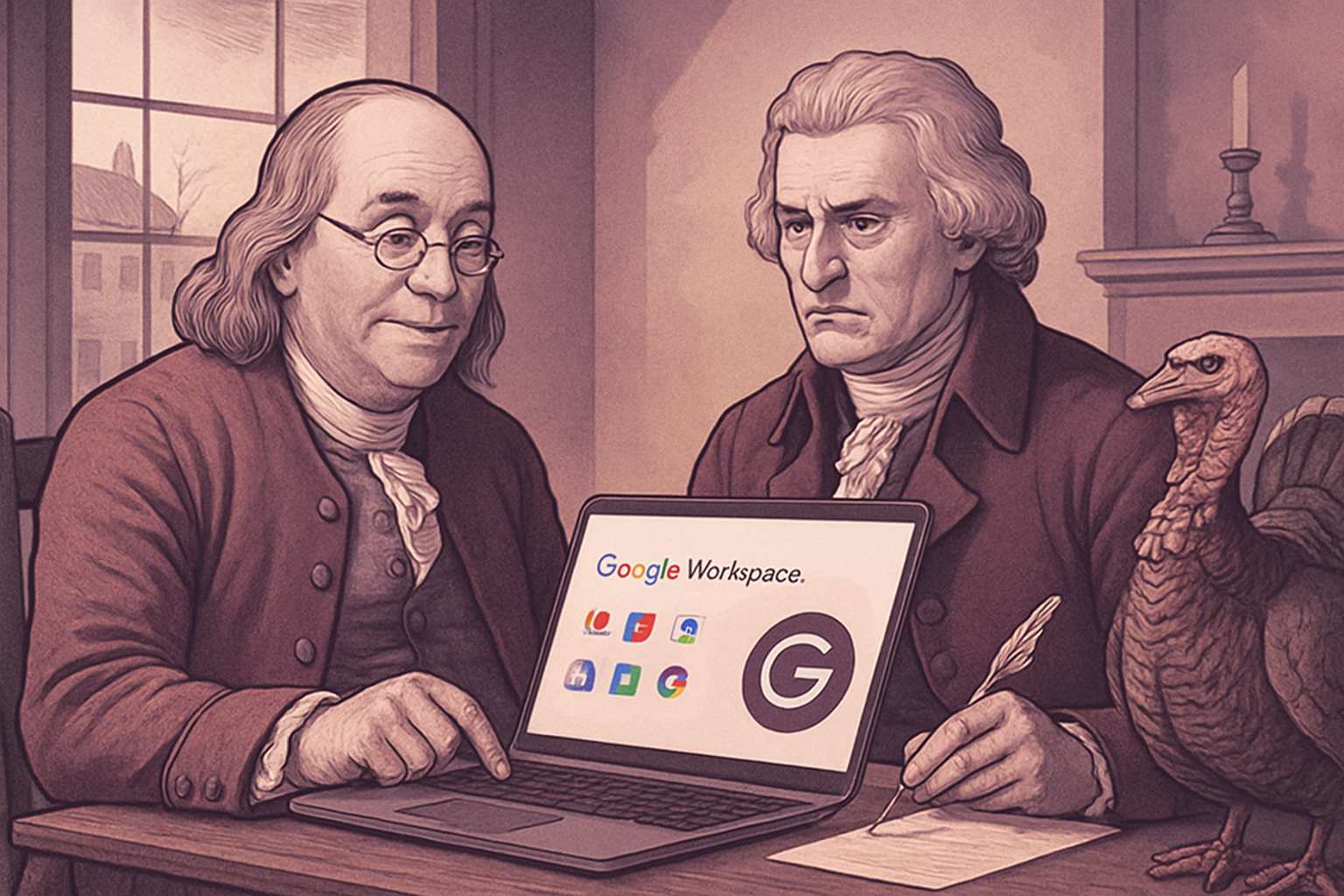
Google recently launched an advertising campaign that sparked intense reactions by revisiting a key moment in American history through the lens of artificial intelligence. The idea was to show how the drafting of the Declaration of Independence might have unfolded if the Founding Fathers of the United States had access to modern tools like Google Workspace and Gemini.
This initiative aimed to be fun and innovative, but it instead generated a certain discomfort among viewers. Here are the reasons behind this controversy.
A Historical Scene with a Modern Twist
The advertisement opens with a fictional scene titled: “A Group Project, but in 1776.” We see Benjamin Franklin sending a message to Thomas Jefferson to inquire about the progress of the Declaration of Independence.
In this reenactment, Jefferson uses his draft, which he photographs, allowing Gemini to automatically transcribe it into Google Docs. The other contributors, Franklin and John Adams, then participate in suggestion mode to make changes to the text.
Meanwhile, Gemini organizes a meeting, takes notes during a call via Google Meet, and facilitates collaboration among the writers.
A Touch of Humor That Divides
The advertisement continues with a humorous scene where Nano Banana proposes a seal for the United States, replacing the eagle with a turkey. This nod references the anecdote that Benjamin Franklin preferred this bird as a national symbol.
However, the scene that elicited the most reactions is the one where, just before signing the document, the Founding Fathers ask Gemini if it would be relevant to grant King George III a right to modify the Declaration of Independence. This joke did not sit well with everyone.
Reactions and Criticism
Many observers deemed this campaign inappropriate. For them, transforming such a significant episode in history into a demonstration of AI capabilities is not only clumsy but also potentially ridiculous.
Among the critics, Angus Johnston, a history professor at CUNY, expressed his skepticism on Bluesky. He sarcastically stated that, even as a joke, this advertisement failed to prove that AI could be an effective tool for political organization, writing, or human collaboration.
Brief IA — L'actualité IA en français
L'essentiel de l'actualité de l'intelligence artificielle, décrypté et expliqué chaque jour.