Google and Meta Confront Computing Power Shortage for AI
Le brief IA que les pros lisent chaque soir
Les 7 actus IA du jour, décryptées en 5 min. Gratuit.
Inclus dès l'inscription : notre sélection des meilleurs guides & comparatifs IA.
Choisis ton rythme
Gratuit · Pas de spam · Désabonnement en 1 clic
Google and Meta Face a Shortage of Computing Power for AI
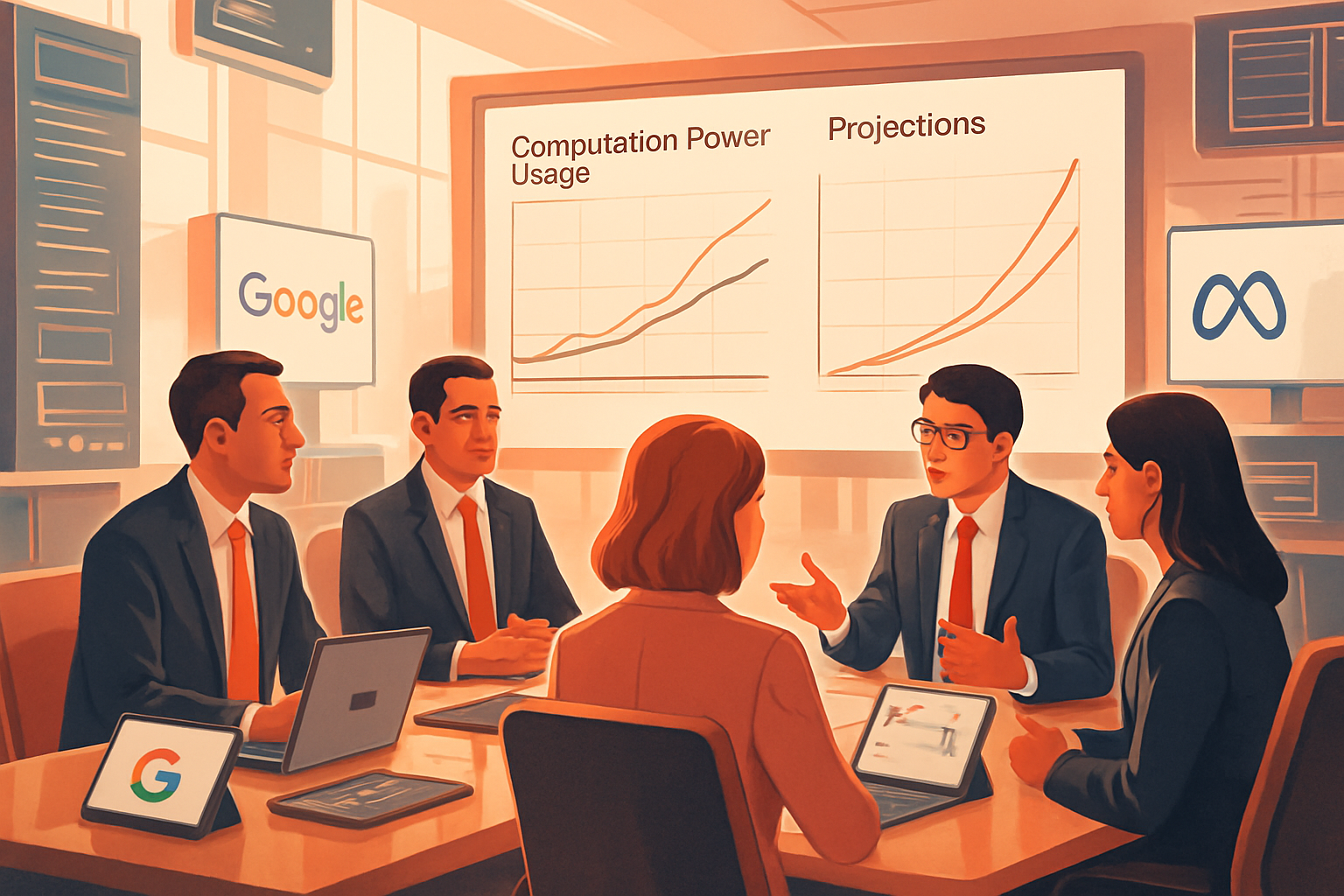
Tech giants like Google and Meta are confronted with a major strategic dilemma: determining how much computing power to sell. Global demand for this precious resource exceeds the available supply, and these companies must balance their internal AI needs with sales opportunities.
Meta CEO Mark Zuckerberg recently emphasized the importance of not giving away too many resources. As these companies invest heavily in infrastructure to meet the growing demand for artificial intelligence, they face a crucial question: how much computing power should they keep for themselves, and how much can they sell without compromising their own development?
During a recent second-quarter earnings call, Zuckerberg addressed this topic. Currently, Meta does not sell computing power to external clients, but the idea is not ruled out for the future. Zuckerberg clarified that a significant portion of Meta's computing power is dedicated to training its AI models, powering its agents, and growing its core business. "We also plan to develop a significant business serving large clients," he stated.
Investments and Financial Impacts
Tech giants like Google and Meta are ramping up their investments to bolster their computing capacity, thus responding to the increasing demand for AI. Google, for instance, has slightly raised its investment forecasts for the year and anticipates an even more significant year in 2027. Microsoft, on the other hand, has chosen to maintain its investment forecasts.
These investments are beginning to reflect in the companies' financial results. For the first time, Google’s cash flow turned negative in the second quarter, while Meta's dropped by 91% compared to the previous year. Selling computing power could help alleviate these cash flow issues, but it also carries a significant opportunity cost.
The Dilemma of Selling Computing Power
Leaders of these companies acknowledge that there is not enough computing power for everyone. In this race for AI, employees sometimes compete for access to this valuable resource. This is a problem that also affects Microsoft, as highlighted by Dan DeFrancesco. Microsoft must decide whether it is better to capitalize on current demand or focus on its long-term goals.
During a recent earnings call, Microsoft CFO Amy Hood stated that "customer demand continues to exceed available capacity" for its cloud business.
The Stakes of Short-Term Monetization
Zuckerberg reiterated this dilemma during Wednesday's call. "It’s clear that we often have to choose between monetizing something today and developing assets for the future," he explained. "It would be foolish to sell all the computing power for short-term profit," he added, emphasizing that improving artificial intelligence will increase the value of this power.
Keeping too much computing power could also harm the lucrative cloud businesses of hyperscalers like Google. "If you don’t have enough computing power for enterprises, they will go straight back to Amazon or Microsoft," warned Bernstein analyst Mark Shmulik in a research note on Google.
Last week, Google announced its intention to purchase more third-party computing power to meet customer demand while developing its own internal capacity. Google is also building its own chips, called tensor processing units (TPUs), which it integrates into other data centers with partners to increase its capacity.
"Our priority is to ensure that we allocate what we need to remain competitive at the forefront of AGI development," said CEO Sundar Pichai during last week's earnings call, referring to Google’s use of TPUs. "This is the foundation of everything we do."
As Google relies on its cloud business to drive growth, it must also retain enough computing power to protect its advantage in search, Shmulik noted in his report last week. It is also crucial to keep developers satisfied and engaged in its ecosystem, which again involves allocating more computing power.
Brief IA — L'actualité IA en français
L'essentiel de l'actualité de l'intelligence artificielle, décrypté et expliqué chaque jour.