Google Faces AI Talent Drain to OpenAI and Anthropic
Le brief IA que les pros lisent chaque soir
Les 7 actus IA du jour, décryptées en 5 min. Gratuit.
Inclus dès l'inscription : notre sélection des meilleurs guides & comparatifs IA.
Choisis ton rythme
Gratuit · Pas de spam · Désabonnement en 1 clic
A Wave of Departures at Google
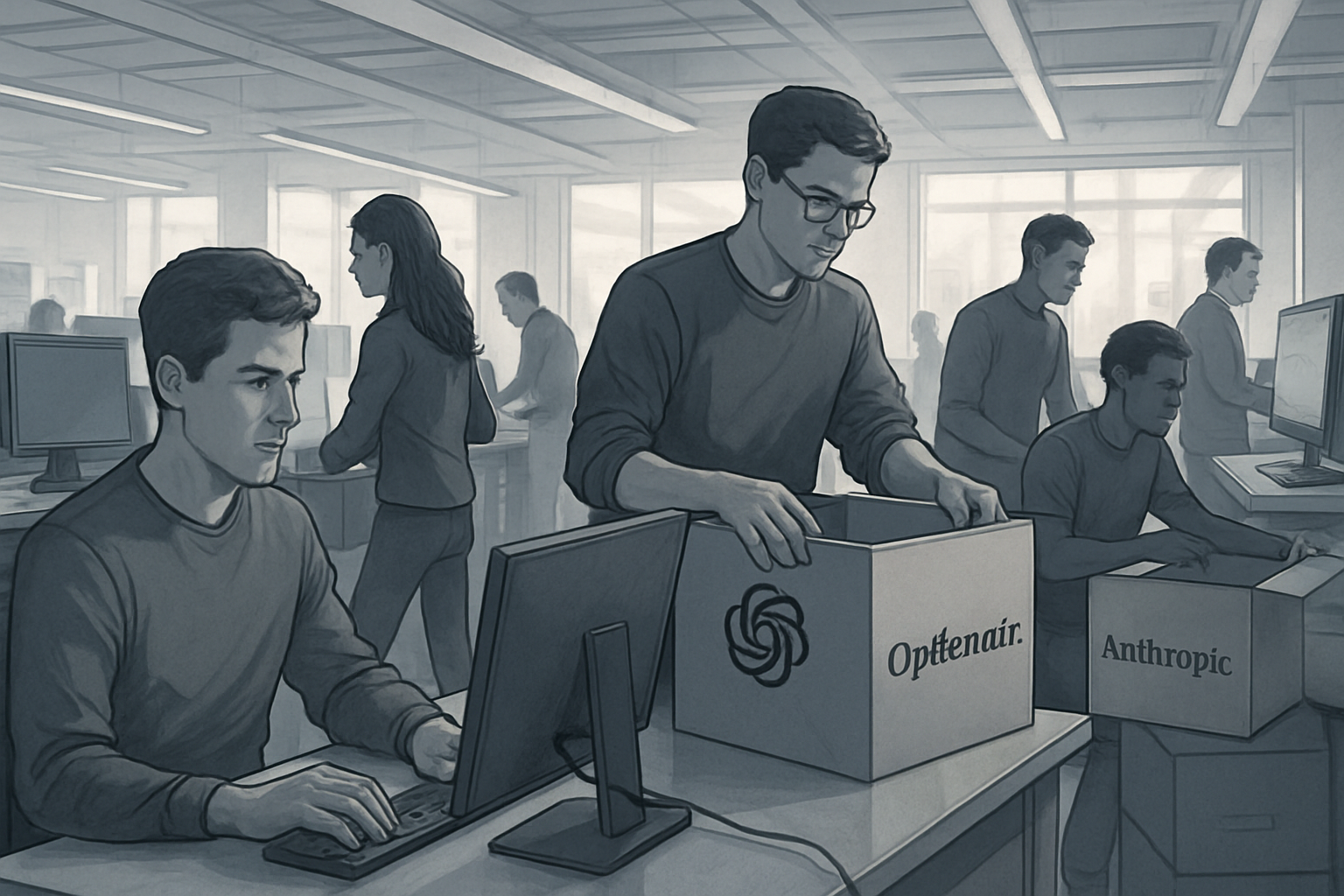
Noam Shazeer, a prominent figure in artificial intelligence at Google, has recently decided to join OpenAI. This move is part of a broader trend where several talented researchers are leaving Google for companies like Anthropic and OpenAI. These emerging firms have a strong appeal for AI talent, particularly due to enticing financial prospects. Shazeer's career choices exemplify the new opportunities available to AI experts.
In the highly competitive environment of Silicon Valley, mentioning "pre-IPO stock" is enough to capture attention. This phrase evokes financial opportunities that make the eyes of many professionals light up.
The Reasons Behind the Departures
The recent wave of AI talent departures from Google may be less about dissatisfaction and more about a well-known financial strategy in Silicon Valley: maximizing potential gains from stock options. According to Bloomberg, Jonas Adler and Alexander Pritzel, two influential researchers from Google's Gemini project, have left the company to join Anthropic. These departures add to those of Noam Shazeer and John Jumper, a Nobel Prize winner.
It would be easy to view these departures as a critique of Google's AI strategy. While that may be a factor, a simpler explanation lies in the financial benefits offered by startups like Anthropic and OpenAI, which focus exclusively on AI.
The Appeal of Growing Startups
For top-tier talent in Silicon Valley, moving from an established company to a burgeoning startup is often an effective way to generate considerable wealth, especially if the startup plans to go public. At Google, compensation is primarily based on RSUs from a company already valued at over $4 trillion, offering stable but predictable earning potential.
In contrast, at Anthropic or OpenAI, researchers can obtain stock options before the IPO. If these companies go public, potentially by 2026 or 2027, these shares could see their value skyrocket once restrictions are lifted.
Shazeer's Lucrative Journey
Noam Shazeer is a striking example of how a company change can be financially advantageous amid the AI boom. In 2021, he left Google to co-found Character.AI. Three years later, Google acquired the startup for about $2.7 billion, allowing Shazeer to realize hundreds of millions of dollars by selling his stake, as reported by the Wall Street Journal.
About 20 months after this transaction, Shazeer shifted gears again by joining OpenAI, which has recently filed a confidential application for an IPO. By potentially obtaining new shares, Shazeer positions himself for another significant financial gain.
A Talent War Driven by the Future and Profits
AI researchers often claim that the competition for talent is driven by the desire to build the future. However, it is also about owning a larger share of that future. The recent talent movements from Google to startups like OpenAI and Anthropic illustrate this dynamic, where the allure of financial gains plays a crucial role.
Brief IA — L'actualité IA en français
L'essentiel de l'actualité de l'intelligence artificielle, décrypté et expliqué chaque jour.