Google Photos: Moods, the AI Filter That Transforms Your Photos
Le brief IA que les pros lisent chaque soir
Les 7 actus IA du jour, décryptées en 5 min. Gratuit.
Inclus dès l'inscription : notre sélection des meilleurs guides & comparatifs IA.
Choisis ton rythme
Gratuit · Pas de spam · Désabonnement en 1 clic
Google Photos Innovates with Moods, a Revolutionary AI Filter
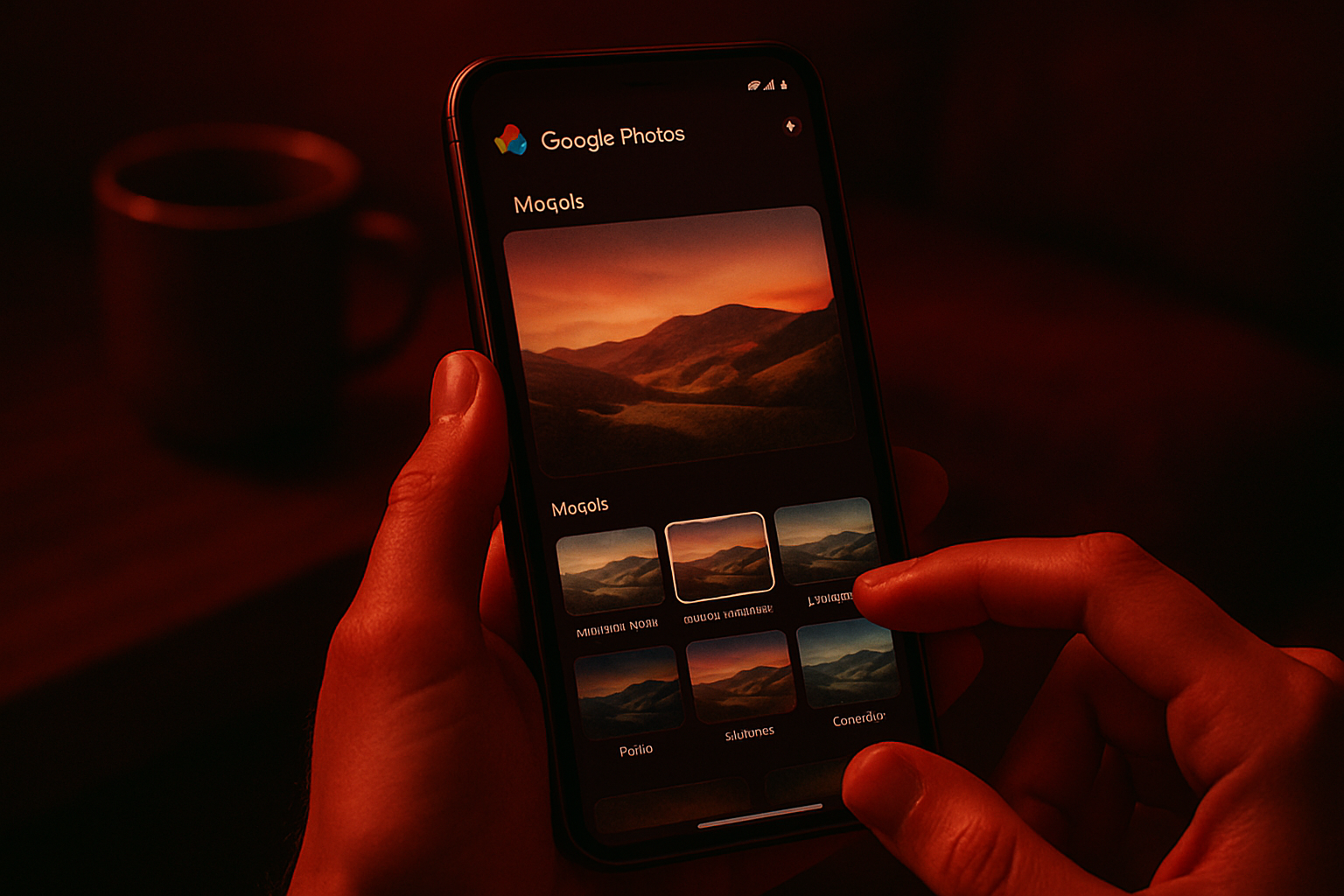
Google Photos, well-known for its image storage service, is set to launch a new feature called Moods. This AI-based filter promises to transform your photos without requiring complex human intervention. Google's goal is to go beyond simple storage to offer automated photo editing that adapts to the content of each image. According to information from Android Authority, Moods relies on AI analysis of imported photos, which could radically change the way users edit their snapshots on a daily basis.
Simplifying Photo Editing with AI
With Moods, Google Photos aims to simplify photo editing, often perceived as too technical. The app will offer eight predefined styles that are easily accessible, automatically adjusting parameters such as light, contrast, and colors. Users will no longer need to master complex settings.
The system relies on cloud analysis that interprets the elements of the image, transforming Google Photos into a true visual assistant. Unlike traditional filters that apply uniform effects, Moods tailors each rendering to the detected scene. The proposed styles include a variety of inspirations, ranging from film-like effects to modern cinematic renderings.
Among the options, there is a thirty-five millimeter effect reminiscent of the contrasts found in film photography, as well as a 2000s cinema style featuring warm, nostalgic colors. Other styles highlight textures to enrich digital photos.
An AI for Personalized Photo Aesthetics
Moods does not simply apply standardized visual effects. The AI analyzes the natural contrasts of each image and adjusts the parameters for a more realistic and coherent rendering. This approach differs from classic filters that are applied uniformly.
Each photo could thus benefit from a unique treatment based on its content. For example, nighttime scenes could be enhanced by a style that softens lights, while another filter could emphasize shadows for a dramatic and retro effect. Google Photos is also experimenting with a 2000s night style featuring distinctive digital grain.
This innovation could appeal to those seeking quality renderings without having to learn complex techniques. However, the feature is still hidden in the code of the current version of the app, and no official launch date has been announced by Google. We will have to wait for a public beta version to assess the real impact of this technology. For now, Moods represents a promise of creative automation that is still in advanced development.
Brief IA — L'actualité IA en français
L'essentiel de l'actualité de l'intelligence artificielle, décrypté et expliqué chaque jour.