Hasbro and Peppa Pig: The Controversy Over AI-Cloned Child Voices
Le brief IA que les pros lisent chaque soir
Les 7 actus IA du jour, décryptées en 5 min. Gratuit.
Inclus dès l'inscription : notre sélection des meilleurs guides & comparatifs IA.
Choisis ton rythme
Gratuit · Pas de spam · Désabonnement en 1 clic
For several months, a growing concern has taken hold of the entertainment world: the use of artificial intelligence to replicate the voices of actors. This already controversial practice is now extending to children's voices, provoking a strong reaction from industry professionals.
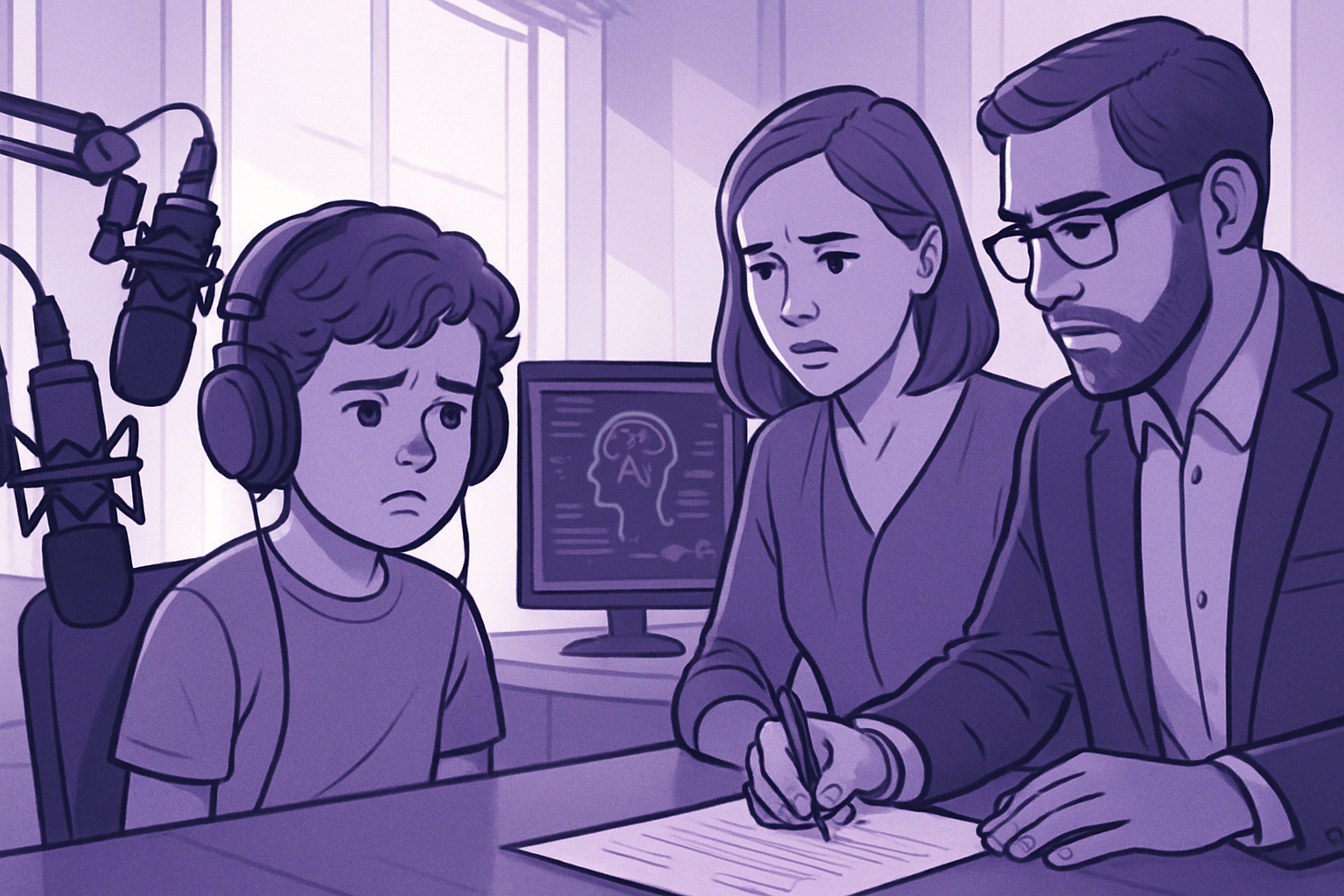
According to Deadline, Hasbro, the American giant known for its Peppa Pig franchise, has reportedly introduced a clause in the contracts of young actors in the animated series. This clause would require children to relinquish their voice rights to an artificial intelligence, thereby allowing their voices to be reproduced indefinitely.
This revelation has sent shockwaves through professional organizations. The Association of Young Artists Agents (AYPA) quickly responded by publishing an open letter, signed by over 1,000 industry professionals. The message is clear: any use of AI concerning a child's voice must be strictly prohibited.
Hasbro in Turmoil
Although the document does not explicitly mention Hasbro, it refers to "a major studio holding the rights to an international children's franchise producing a long-running animated series." For Deadline, there is no doubt that this description targets Hasbro and the clauses in its contracts.
The letter emphasizes that the consent of children must be treated with extreme caution. It highlights that children cannot provide informed and legal consent, and that parental approval should not be a loophole for the use of their voice by AI.
Hasbro's Response
In the face of the controversy, Hasbro has attempted to reassure the public. In a statement to Deadline, the company affirmed its commitment to protecting young artists and its willingness to address AI-related issues in a "responsible and transparent" manner.
A spokesperson for Hasbro confirmed that the company was aware of the open letter. "We cannot comment on ongoing negotiations or contractual agreements," he stated, adding that "the protection of child artists is at the heart of Hasbro's identity; it is part of our DNA."
A Concerning Trend
This case highlights a troubling trend in the entertainment industry. Companies are no longer content with claiming rights over the voices of adult artists; they are now also targeting young talent. These young performers are being asked to sign clauses allowing an AI to reuse their voices for years.
The issue is not limited to dubbing. More and more studios are considering entrusting animation itself to AI, an idea that has sparked fierce opposition from the public, especially when it appears to threaten the jobs of creators.
Award-winning Emmy Awards writer and director Jorge Gutierrez recently found himself at the center of this controversy. After announcing a partnership with MGM Studios (Amazon) to develop an animated series using AI, he faced a storm of criticism on social media. Accused of betraying artists, he ultimately decided to abandon the project.
Brief IA — L'actualité IA en français
L'essentiel de l'actualité de l'intelligence artificielle, décrypté et expliqué chaque jour.