AI Agents in Business: 5 Uses and Their Risks
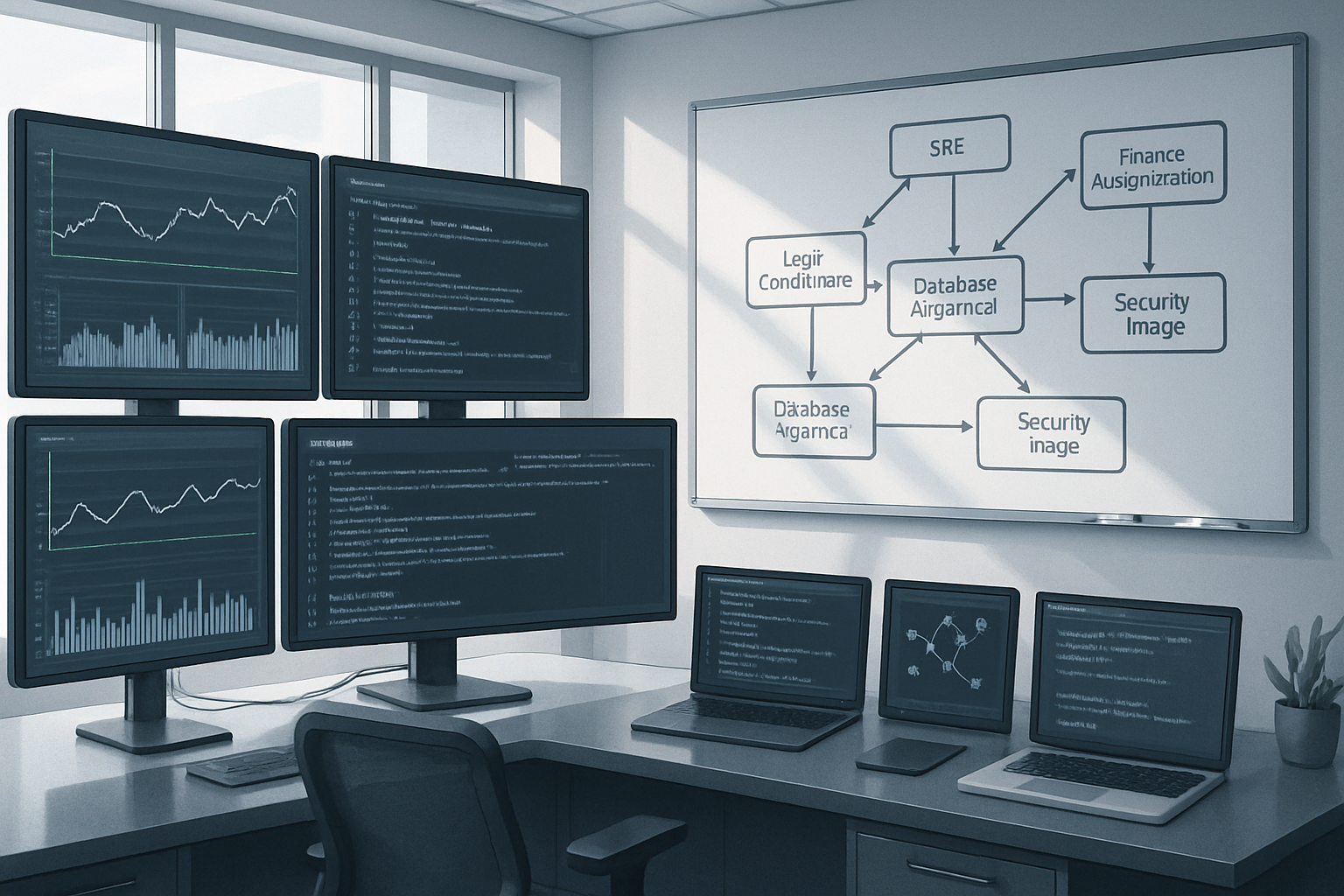
Multi-agent systems promise to automate SRE, finance, legal, legacy modernization, and security triage. However, at scale, the focus shifts towards state governance and tool management. Here’s an overview of operational modes, known limitations, and contexts of use.
At Scale, State Explodes and Tool Governance Takes Over
By day 100 of operation, the main bottleneck is no longer prompt optimization but the management of state stores and governance of the tool catalog. Agents accumulate execution traces, draft tokens, and dead letters that bloat relational databases and vector stores. Without a strict TTL policy, this accumulation significantly degrades performance.
Application Security: Reproduce and Remediate Under High Isolation
For SAST/DAST alerts, an agent can create an isolated ephemeral container, consume signals from Snyk, SonarQube, or Dependabot, and then attempt non-destructive PoC exploits to establish reachability and exploitability. If the vulnerability is confirmed, an agent can generate a remediation pull request, initiate the CI test suite, and attach the reproduction trace for approval by a security engineer. The major risk lies in sandbox escapes and destructive autonomous payloads, especially if container isolation, network egress filters, and cgroup limits are misconfigured. This setup targets AppSec teams facing thousands of false positives where manual reproduction and standard patching overwhelm capacity.
Accounting Errors: Deterministic Arithmetic and Traceability Required
Agents can parse invoices, bills of lading, and customs declarations into strongly typed schemas via constrained JSON parsers, then conduct a three-way reconciliation on relational ERPs like SAP or NetSuite using parameterized SQL. In the event of a tax discrepancy or currency drift, they query supplier repositories, calculate fractional adjustments, and draft entries with traceability to the sources. Reliability depends on outsourced deterministic arithmetic: LLMs do not guarantee exact calculations, and injecting calculations into the model context introduces cumulative rounding errors. This approach targets groups processing hundreds of thousands of multi-currency invoices with high exception rates in manual queues.
Le brief IA que les pros lisent chaque soir
Les 7 actus IA du jour, décryptées en 5 min. Gratuit.
Inclus dès l'inscription : notre sélection des meilleurs guides & comparatifs IA.
Choisissez votre rythme
Gratuit · Pas de spam · Désabonnement en 1 clic
Contracts and Compliance: Compare to Policies, Avoid Semantic Drift
Legal agents can ingest MSAs, SOWs, and contracts into a graph database where clauses, definitions, and obligations become interconnected nodes. They compare third-party versions to internal guidelines, map downstream responsibilities such as indemnity caps, data sovereignty, or SLA penalties, and then issue structured redlines at the AST level, with citations, risk assessments, and fallback clauses while preserving format and metadata. The risk lies in semantic drift and "hallucinated" authority: ignoring ancillary definitions can wrongly classify toxic liabilities as standards. This case applies to purchasing and legal operations with requirements such as GDPR, HIPAA, SOC 2, or DORA.
Automated SRE: Diagnose, Plan, Execute… with Circuit Breakers
Multi-agent swarms can ingest traces, metrics, and logs to build a causal graph and isolate the cause with an empirical confidence threshold. The orchestrator takes alerts from Prometheus or Datadog, a triage agent executes read-only diagnostics, and then a planner assembles a remediation sequence submitted to a policy engine like Open Policy Agent before execution on Kubernetes or AWS, with human approval for high-impact actions. Measures like traffic reduction, canary rollback, or pool restarts are feasible. The main pitfall is the lack of idempotence and feedback loops, for example, a massive pod restart without rate limits triggering a herd effect. This usage targets high-throughput microservices where MTTD and MTTR suffer from human triage on heterogeneous telemetry.
Modernizing Legacy Databases: Transpile and Verify Parity
A modernization agent can extract PL/SQL or T-SQL logic, build an AST and a data lineage, and then transpile to a declarative target like dbt or PySpark. In a closed-loop framework, the generated code is deployed in an ephemeral sandbox, historical loads run in parallel on both the old and new engines, and byte-level diffs and numerical distributions validate parity. Challenges arise from non-deterministic side effects and the hidden global state of legacy procedures, which sometimes rely on implicit session variables, ambient isolation levels, and non-atomic triggers, absent from distributed data lakes. This usage targets multi-year migrations where manual reverse engineering is a critical bottleneck.
Brief IA — L'actualité IA en français
L'essentiel de l'actualité de l'intelligence artificielle, décrypté et expliqué chaque jour.