AI in Business: Bans and Legal Framework
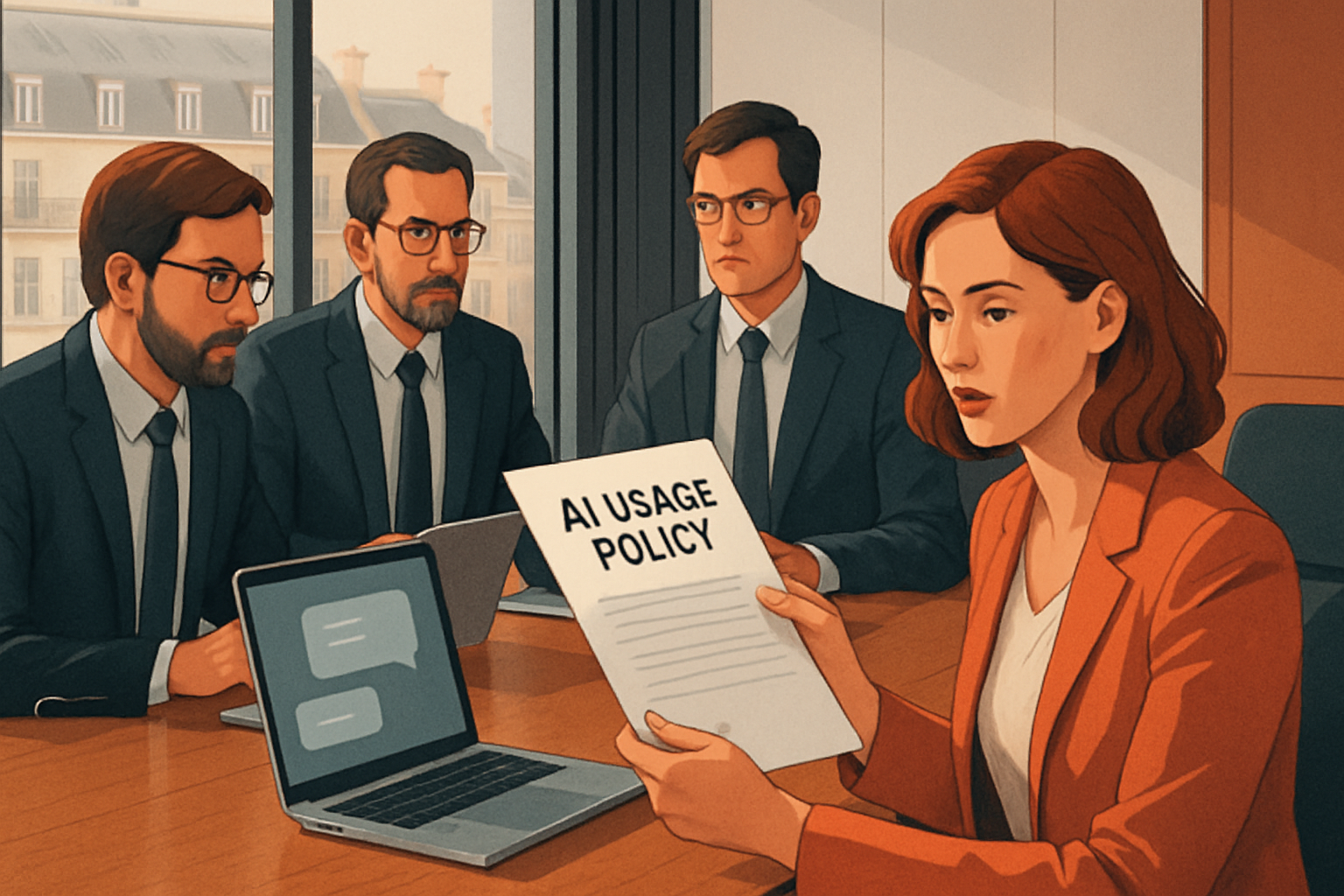
The power of direction allows an employer to restrict or ban AI tools like ChatGPT. However, this power is exercised under certain conditions: proportionality, information and training of employees, and a formal framework. Here’s an overview of the levers and limits for regulating generative AI at work.
Train and Guide Before Punishing: AI Committees and Evolving Policies
An employer who has not trained their teams on the risks and proper uses of AI will struggle to justify a sanction, according to Yann-Maël Larher. The lawyer believes it is unreasonable to blame an employee for misusing a tool whose limitations have not been explained to them. Some companies establish a multidisciplinary AI committee, bringing together human resources, IT management, the data protection officer, and legal experts. This committee selects tools, ensures compliance with rules, and adapts them as necessary. Given the rapid evolution of tools and their uses, the AI policy must remain relevant and should not be limited to a document signed upon hiring.
Established Fault and Loyalty: When a Sanction Becomes Possible
A disciplinary sanction can only be imposed in the case of concrete fault, not merely for the use of AI. If the use of AI does not violate any specific prohibition or obligation, a sanction would be difficult to justify. However, using an AI tool in violation of a prohibition outlined in the IT charter, or introducing confidential data into it, could lead to a sanction that may include dismissal for serious misconduct, according to Yann-Maël Larher. Emmanuel Maudet reminds us that the obligation of loyalty applies: if the employer requests to be informed about the use of AI and the employee fails to do so, this breach can be sanctioned.
Le brief IA que les pros lisent chaque soir
Les 7 actus IA du jour, décryptées en 5 min. Gratuit.
Inclus dès l'inscription : notre sélection des meilleurs guides & comparatifs IA.
Choisissez votre rythme
Gratuit · Pas de spam · Désabonnement en 1 clic
The Employer Can Decide to Ban Generative AI in the Workplace
The employer has the authority to organize the digital tools used within the company, which includes the ability to prohibit generative AI services like ChatGPT. Emmanuel Maudet believes that this power of direction allows for the prohibition or restriction of the use of these tools. This measure is particularly considered given that most consumer versions of AI tools do not guarantee the security or confidentiality of the data that employees might input.
Mandatory Proportionality: A General Ban is Risky
The employer's power of direction is not without limits. Article L. 1121-1 of the Labor Code requires that any restriction on employees' rights be justified by the nature of the task and proportionate to the intended goal. A total and indiscriminate ban on AI could be challenged in labor courts. Conversely, restricting the use of AI in a targeted manner can be justified based on the missions or the sensitivity of the information, for example, in a medical office for reports containing health data. Prohibiting a communications officer from using an AI tool to rephrase an advertising hook would, however, be considered excessive. The evaluation is made based on specific situations.
Agreements and Charters: Tools to Frame Professional Use
To limit risks, it is preferable to define a framework in advance rather than sanction afterward. Emmanuel Maudet recommends negotiating a company agreement with social partners, union representatives, or, if not possible, the CSE, to establish principles for the use of AI. If no agreement is reached, it is possible to frame or prohibit the use of AI tools through a dedicated charter or by modifying the IT charter, provided that the adoption procedure that makes it applicable is followed. Permitted or prohibited practices must be clearly indicated, rules regarding confidentiality must be established, the issue of intellectual property for generated content must be addressed, and concrete training measures must be included.
Brief IA — L'actualité IA en français
L'essentiel de l'actualité de l'intelligence artificielle, décrypté et expliqué chaque jour.