AI in Business: Personalization, the Key to Efficiency
Le brief IA que les pros lisent chaque soir
Les 7 actus IA du jour, décryptées en 5 min. Gratuit.
Inclus dès l'inscription : notre sélection des meilleurs guides & comparatifs IA.
Choisis ton rythme
Gratuit · Pas de spam · Désabonnement en 1 clic
The Importance of Diversifying AI Models in Business
In the business world, artificial intelligence (AI) cannot be reduced to a single model. To maximize efficiency, it is crucial to select models suited to each specific task. This involves combining fast, specialized, or high-end models to optimize costs, quality, and productivity throughout the project lifecycle.
Traditionally, companies have adopted AI in a manner similar to purchasing software: they choose a vendor, adopt a single model, and then apply it across the entire organization. This approach is based on the idea that one model could solve all encountered problems. However, a high-performing model for generating code may not be as effective for security analysis, and a cutting-edge model ideal for prototyping may not meet data residency requirements.
To overcome these limitations, it is necessary to adopt a flexible approach in deploying AI models. Some teams require large-scale models for advanced reasoning, while others need specialized models for tasks specific to their domain. The ability to combine and adapt these models based on the task is essential.
AI and the Software Development Paradox
Currently, the adoption of AI primarily focuses on accelerating code generation. Yet, writing code represents only a small part of developers' work. According to GitLab's 2026 Global DevSecOps Survey, development teams spend only about 15% of their time writing code. The rest is devoted to planning, code review, testing, debugging, managing dependencies, coordinating with colleagues, and meeting compliance requirements.
This phenomenon creates a paradox: AI accelerates code writing, but fragmented tools and manual coordination slow overall productivity, costing nearly a full workday per developer each week.
To resolve this paradox, AI must be integrated throughout the development cycle, not just limited to code generation. The various activities in the software development cycle have different performance requirements:
-
Tasks requiring speed, such as code autocompletion or suggesting fixes, demand very short response times, favoring the use of lightweight, local models.
-
Tasks where quality is crucial, such as architectural planning or security analysis, justify investing in cutting-edge models with advanced reasoning capabilities.
-
Tasks executed in large numbers and sensitive to cost, such as testing or updating dependencies, require economical solutions.
Multimodal customization thus becomes essential. Not all tasks in the development cycle hold the same value, and a single model can lead to excessive costs for certain functions or underutilize others.
Strategies for Prioritizing the Use of Premium Models
It is crucial to align the model's cost with the task's value. For routine, high-volume tasks, such as writing commit messages or summarizing log files, teams prioritize economical and fast options, including open-source models when possible. For tasks requiring complex reasoning, they are willing to invest in superior capabilities. Specialized models, which are more deterministic, can justify an additional cost for tasks like generating Infrastructure as Code or high-precision data transformation.
The ability to choose between different models based on the task provides protection against performance variations, price fluctuations, and the risk of vendors discontinuing their products or exiting the market.
This flexibility relies on three approaches, each with its advantages and disadvantages:
-
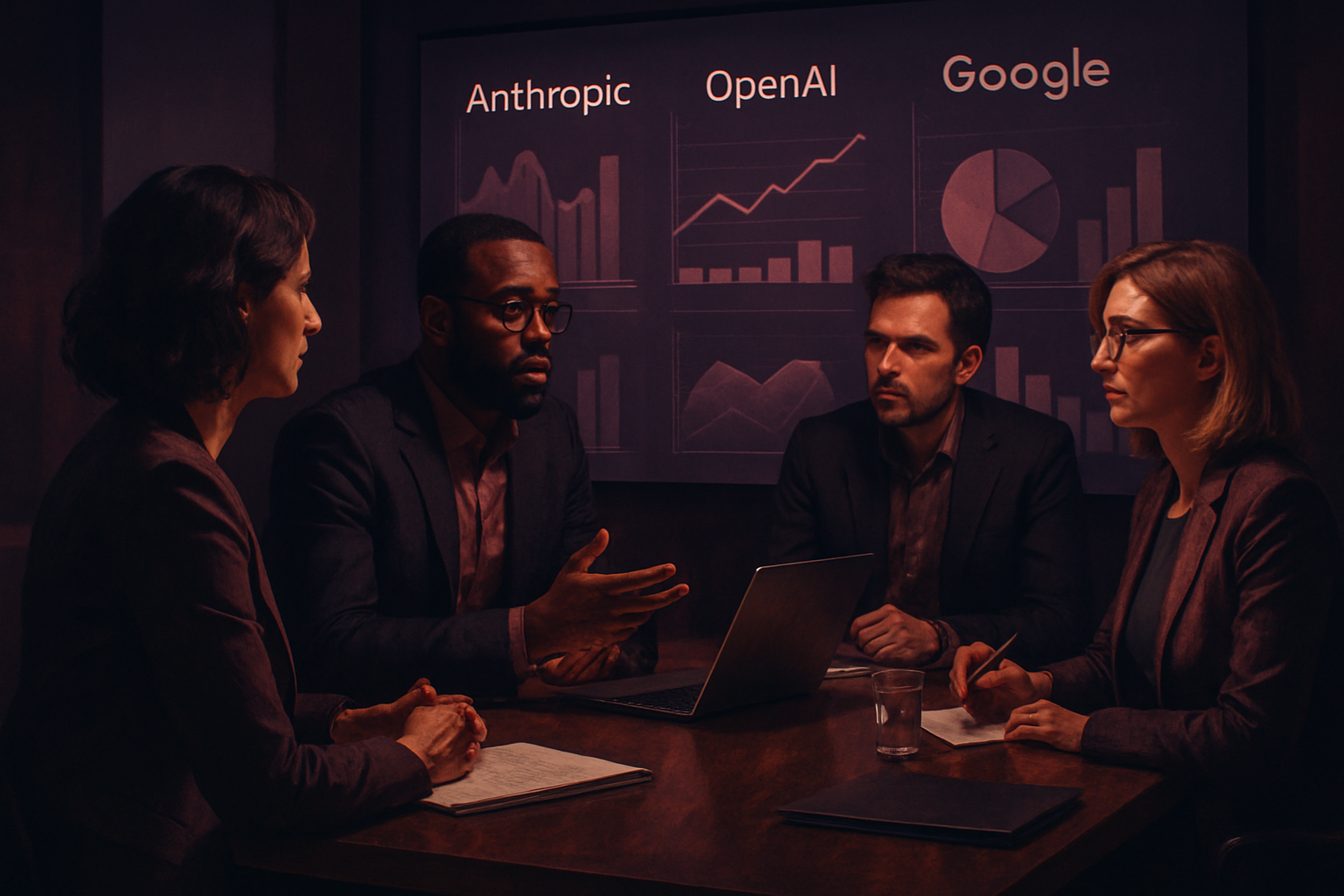
Cutting-edge commercial models offered by companies like Anthropic, OpenAI, and Google provide strong performance and continuously improve, but they create dependency on vendor roadmaps and pricing.
-
Self-hosted commercial or open-source models offer control over data residency, costs, and availability, but require infrastructure management and, in the case of open-source models, do not yet support agentic workflows.
-
Domain-specific models, trained by the company, can outperform generalist models on targeted high-stakes tasks, but they require specialized expertise and can be costly to maintain.
Each approach involves trade-offs. The key is to design systems that strategically leverage these three approaches.
Brief IA — L'actualité IA en français
L'essentiel de l'actualité de l'intelligence artificielle, décrypté et expliqué chaque jour.