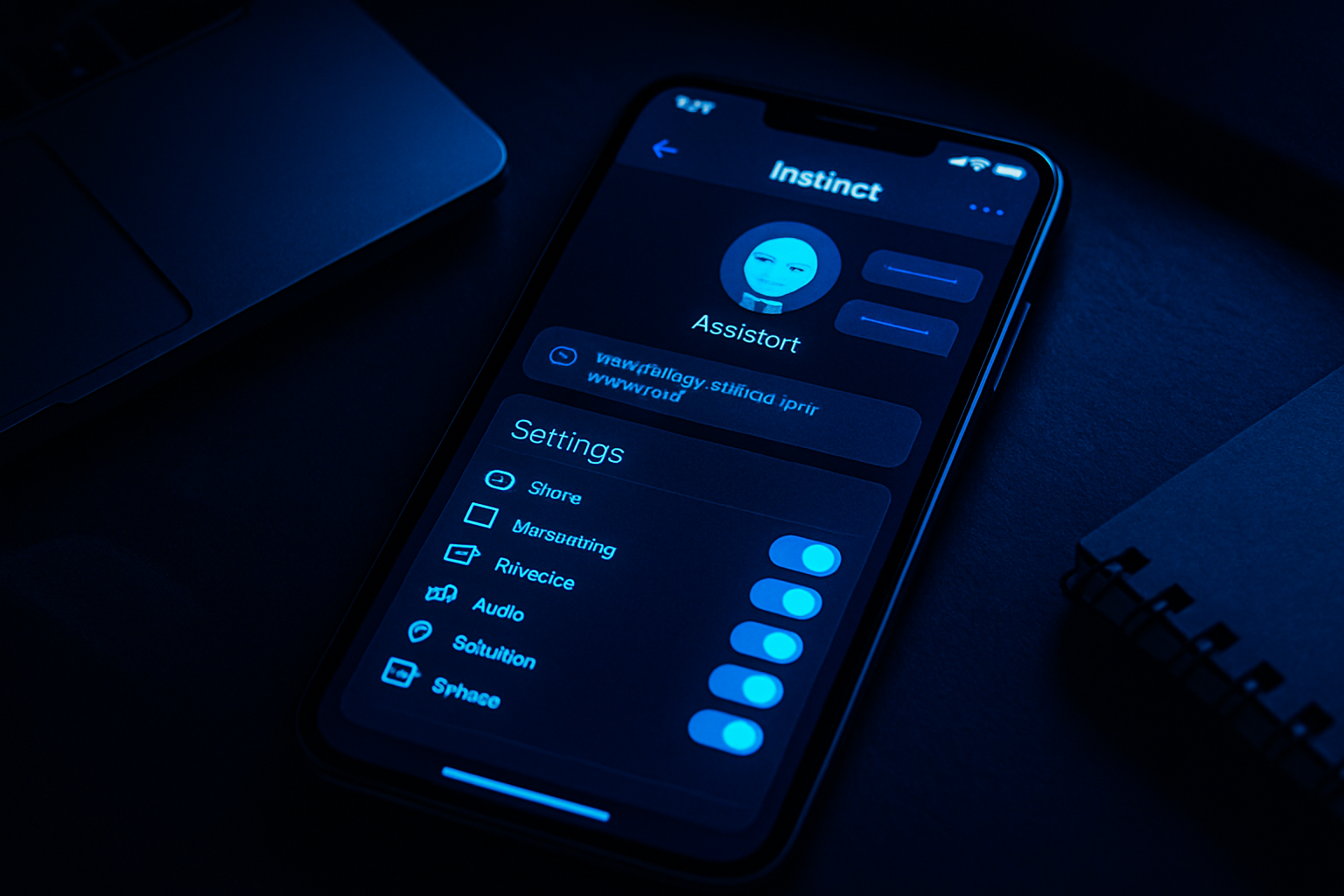
Instinct, AI Assistant: Privacy Alerts
Le brief IA que les pros lisent chaque soir
Les 7 actus IA du jour, décryptées en 5 min. Gratuit.
Inclus dès l'inscription : notre sélection des meilleurs guides & comparatifs IA.
Choisis ton rythme
Gratuit · Pas de spam · Désabonnement en 1 clic
The personal assistant Instinct, still limited to private testing, combines enthusiastic feedback and criticism regarding its data protection model. Broad terms of use, incidents reported by testers, and the lack of public response fuel the debate, while prominent investors are reportedly already betting on the startup.
Public Silence on X and Funding Rounds Announced as Closed with Kleiner Perkins and Conviction
The Instinct team has not addressed the concerns or complaints raised on X and maintains a low profile. Inquiries sent to the startup's main email and to Noah Shinn have not received a response at this stage. Meanwhile, several investors indicate that Kleiner Perkins and Conviction have invested in the company and that these funding rounds are now closed. The Instinct bot cites Luca Borletti, who also previously worked at Sierra, among those involved, a piece of information that has not been confirmed.
Reported Incidents: Impossible Deletion, Clear Storage, Unverified Email
Peter Yang found that Instinct did not delete its Gmail records upon request; he claims that the team subsequently added an external data deletion tool in the settings. Claire Vo reports that Instinct continued to summarize her inbox after access was revoked; the bot confirmed to her that her emails were stored in clear text for future searches. Another tester expressed concern upon discovering that the agent could retrieve a registration code from her messaging to book via Resy. Alex Cohen explains that he deleted his account after deeming the agent easily "phishable." Katie Jacobs Stanton indicates that an email was sent in her name without prior validation, which broke her trust; she says she primarily uses the tool for personal purposes and disconnected her email after the incident. A cybersecurity commentator deems the offering unacceptable from a "cyberhealth" perspective, while praising the transparency of the policy and asserting that the responsibility induced by the required accesses should not be entrusted to any company.
Terms of Use and Technical Access Grant Vast Privileges to the Agent
Instinct's terms grant a perpetual and irrevocable license to access, use, host, cache, store, reproduce, transmit, display, publish, distribute, and modify user content, including for training its models. They specify that the service may receive information from devices, such as screenshots, cursor movements, and keystrokes. The agent is also authorized to enter into agreements, commitments, or transactions on behalf of the user, with binding effect. Functionally, the agent connects to email, messaging, calendar, and can access audio, location, and screen. It can be reached via SMS or through messaging apps to perform tasks such as bookings and appointments, organizing a trip to the airport, cleaning the inbox, sorting important information, managing purchases, or searching for low-cost flights.
Enthusiasm from Early Users and a Booming Agent Market
One user says they have been using Instinct daily for a week for travel and restaurant bookings, email follow-ups, CRM management, and even work on a data room, after testing Hermes, OpenClaw, Tasklet, and GrokBot, which they consider inferior. Testers also describe the tool as "magical" and one of the standout launches since OpenClaw. Michael Mignano anticipates an impact on public security standards and an increasing delegation of passwords to third-party applications, often without visibility into their storage practices. The renewed interest in personal AI fits into a broader trend: OpenClaw gained popularity before its founder joined OpenAI to work on the next generation of agents, and Poke was acquired by Cognition.
Project Status and Structure: Private Test, San Francisco, and Stealth Mode
Instinct remains limited to a private test for now, which explains why the criticisms have not yet reached the general public. The project was initiated by a small team led by Noah Shinn, previously at Sierra. Based in San Francisco, the solution is operated by Spear Street Technology, according to its terms and filings in California, and operates in stealth mode according to PitchBook.
Brief IA — L'actualité IA en français
L'essentiel de l'actualité de l'intelligence artificielle, décrypté et expliqué chaque jour.