Europe Confronts the AI Challenge: Beyond Funding, Sustainability
Le brief IA que les pros lisent chaque soir
Les 7 actus IA du jour, décryptées en 5 min. Gratuit.
Inclus dès l'inscription : notre sélection des meilleurs guides & comparatifs IA.
Choisis ton rythme
Gratuit · Pas de spam · Désabonnement en 1 clic
The Rise of the European AI Market
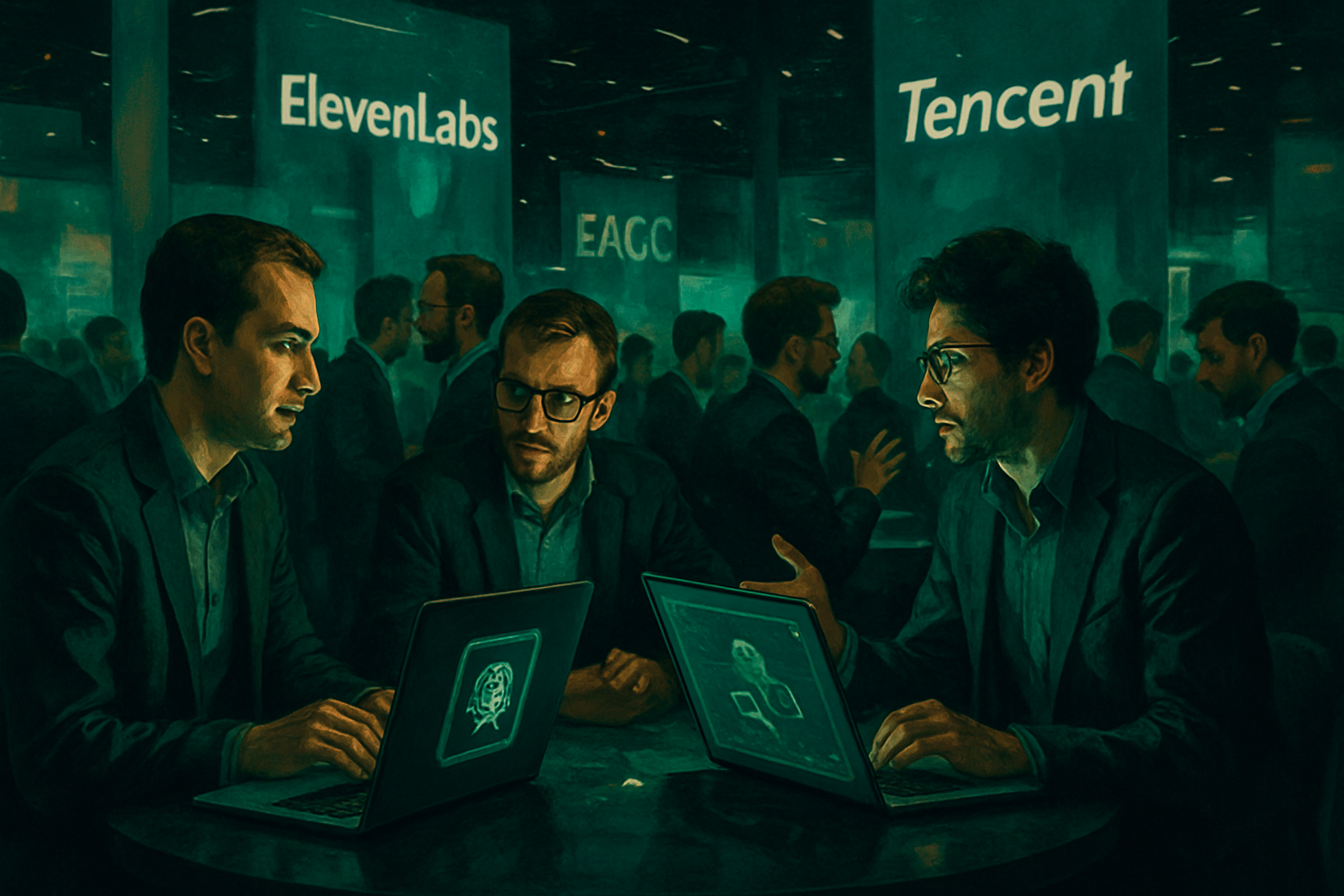
The artificial intelligence market in Europe is experiencing rapid growth, with startups specializing in agentic and generative AI successfully raising an impressive total of 20 billion euros since 2024. Just this year, these companies have secured 8 billion euros in funding, according to data provided by Sifted. This momentum reflects the growing interest in AI technologies across the continent.
Among the companies standing out in the field of generative AI is Elevenlabs, a major player in voice synthesis, which raised 500 million dollars at the beginning of the year. Meanwhile, agentic AI startups are focusing on creating autonomous agents to optimize work processes. Companies like the Swedish legaltech Legora and the Berlin-based firm N8n, which specializes in workflow automation, are at the forefront of this innovation.
However, as the market matures, these companies must consider strategies to ensure their long-term sustainability.
The Importance of a Long-Term Vision
According to Dr. Ling Ge, head of investments and strategy for the EMEA region at Tencent, the companies that will succeed in the long run are those that manage to establish strong customer adoption, defend their market position, and develop products with lasting relevance. The "honeymoon phase" of experimentation in the European AI market is now over, and investors, like founders, are focusing on how AI products can reliably generate value over time.
Tencent, which has been integrating AI into its products and services for nearly a decade, is not just investing in companies that are merely following current trends. On the contrary, the company is looking for founders with a long-term perspective. "The best founders are not building for the next funding round; they are building products that customers will still depend on in five or ten years," explains Ge.
Tencent's investments in Europe span various sectors, from video games and digital entertainment to emerging companies in AI and deep tech, such as the Finnish mobile gaming giant Supercell and Horizon Quantum, which focuses on software infrastructure for quantum applications.
Capital Efficiency as a Priority
Building AI products requires a long-term investment cycle, and investors are increasingly emphasizing capital efficiency. Today, it is common to see companies dedicating a large portion of their funding to computing, but sustainable growth comes from combining technological investment with customer value.
"One of the biggest risks is to scale before there is enough evidence of customer demand," highlights Ge. "We often see companies investing aggressively before fully understanding where long-term value lies or how customers will use the product in practice."
Ge advises companies to first build a unique product based on proprietary data, industry expertise, or workflow integration that cannot be easily replicated. Once product-market fit is established, they can then commit capital for scaling.
These companies may also find that by going to market to sell, they can find buyers in Europe rather than relying heavily on American customers, a situation that industry players have long desired. "Companies are increasingly willing to buy from European suppliers rather than defaulting to American vendors," says Gambhir.
Upcoming Challenges for the AI Market
Startups should not simply assume that foundational AI models will continue to improve and that they can build on them, warns Hollingsworth. "We have spent years observing how professionals actually manage their inboxes. A foundational model built in a lab cannot learn that."
The companies that will define the next era of the AI market are those that understand their customers better than any general-purpose AI. In addition to developing an advantage around proprietary data and industry expertise, companies must also rethink their internal teams, adds Ge.
The most critical operational hire for AI companies is what she calls a ‘product empathy’ — someone who can understand customer pain points and translate them into products that can solve them.
The companies that are getting ahead are also those that combine both AI and human knowledge. For example, when it comes to building AI for scientific research, the goal is not to create an autonomous scientist, but rather a co-scientist, explains Ge. "The aim is not to replace the scientist but to reduce data processing tasks so that scientists can spend more time on hypothesis generation, experimentation, and discovery."
Towards a New Era of AI in Europe
While funding for European AI startups has increased, there is also growing scrutiny from investors, adds Gambhir. "Exploratory budgets and pilot pipelines will not be enough. Expectations are shifting towards demonstrated adoption by businesses and true customer loyalty."
The companies that will endure will be those that have genuine research and the discipline to continue investing in it even as the landscape evolves. "The field is changing so rapidly that what worked six months ago may no longer work. You need the best people capable of holding both sides of the equation — advancing science while staying focused on what truly matters to a customer."
Gambhir predicts that three types of applied AI companies will emerge over the next five years:
-
Foundational model labs, as Europe has exceptional research depth, and some of them will become serious global players.
-
Neo-labs and companies with domain-specific expertise after training. These are companies with genuine industry or modality expertise built on foundational capabilities.
-
AI-focused companies in traditionally slower sectors, such as healthcare, energy, finance, and manufacturing.
Brief IA — L'actualité IA en français
L'essentiel de l'actualité de l'intelligence artificielle, décrypté et expliqué chaque jour.