Cheap Chinese AI: An Unexpected Asset for Silicon Valley
The Impact of Chinese AI Models on Silicon Valley
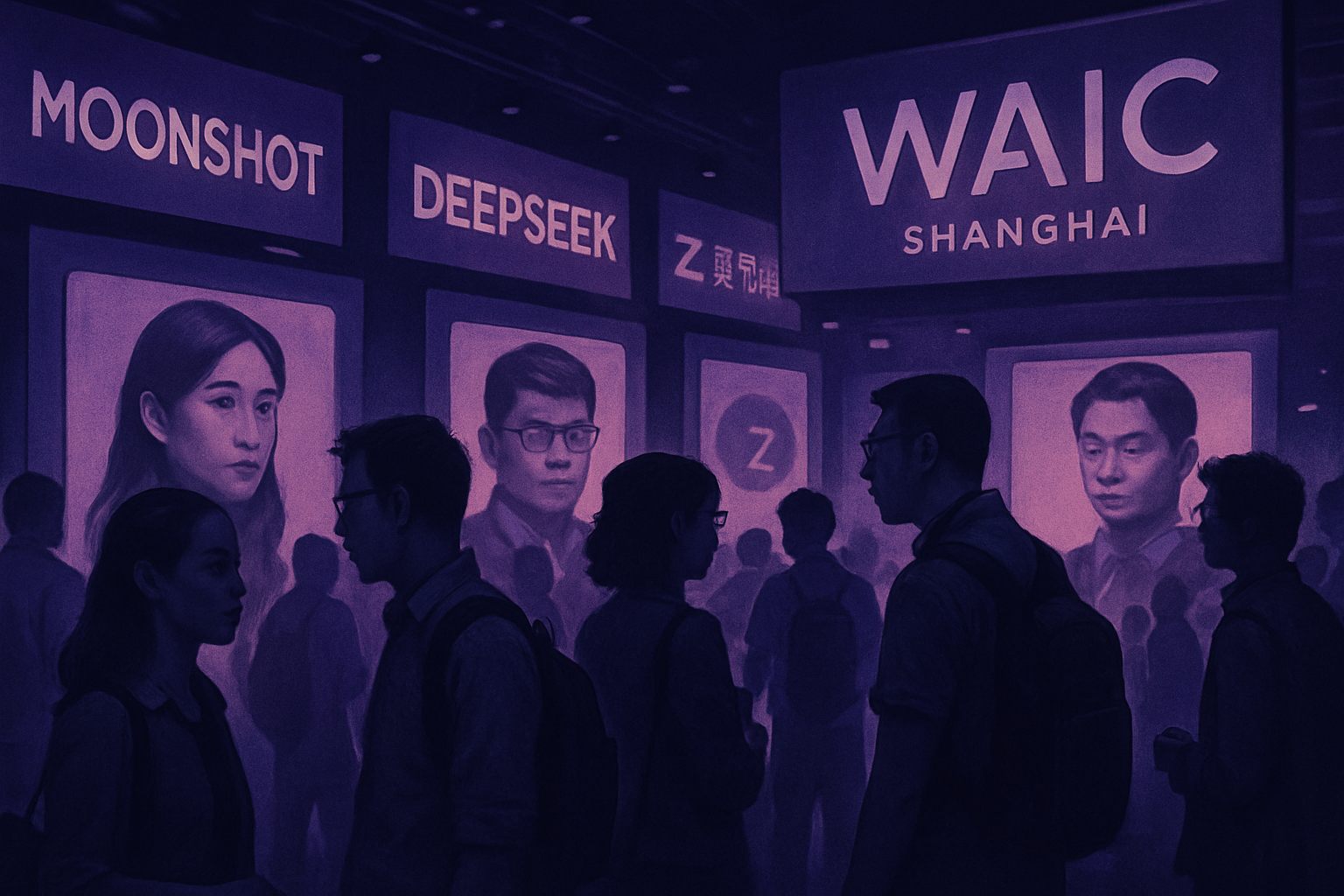
At the World Artificial Intelligence Conference held in Shanghai, Chinese President Xi Jinping highlighted an open technological strategy. This approach has allowed Chinese AI models, both economical and accessible, to position themselves as valuable resources for Silicon Valley. American software companies, in particular, have seen their stocks rise due to the emergence of these new Chinese models. Venture capital investors, for their part, are eager for these affordable solutions that support American startups.
Media attention surrounding AI has often focused on the companies it could potentially eliminate. There are concerns that software companies are under pressure, with customers preferring to turn to powerful AIs developed by giants like OpenAI, Anthropic, or Google. However, another dynamic is emerging. Ironically, the software industry, which was feared to be disappearing, could be one of the biggest beneficiaries of the influx of cheap and open Chinese models.
Chinese Models: An Economic Alternative
Chinese companies such as Moonshot, DeepSeek, and Z.ai are launching models that compete with the top-performing American systems, but at a much lower cost. These models, often referred to as "open weight," allow software companies to download essential components, run them on their own infrastructure, and adapt them to their products, thereby reducing their reliance on expensive external providers.
This evolution is changing the economic rules of software provision in the AI era. Instead of paying high fees for each AI request from a client, companies can choose from a multitude of competing models. They reserve closed and high-end American models for complex tasks while using open and less expensive alternatives for more routine operations.
The Growing Adoption of Open-Weight Models
Developers are already adopting this strategy. Guillermo Rauch, CEO of Vercel, noted that open-weight models represented about 55% of the tokens passing through his company's AI gateway in July, up from just 4% in January. This shift accelerated with the launch of DeepSeek V4, Z.ai's GLM-5.2, and Moonshot's Kimi K3. Although OpenAI, Anthropic, and Google still dominate spending, their combined share has significantly decreased as developers explore more affordable alternatives, according to Vercel's data.
Le brief IA que les pros lisent chaque soir
Les 7 actus IA du jour, décryptées en 5 min. Gratuit.
Inclus dès l'inscription : notre sélection des meilleurs guides & comparatifs IA.
Choisissez votre rythme
Gratuit · Pas de spam · Désabonnement en 1 clic
Beneficial Competition for Software
This competition is precisely what software companies hoped for. Analysts at William Blair recently stated that cheaper and more open AI models are "undeniably good" for software companies, as AI simply represents an entry cost. As these costs decrease, profit margins improve, allowing companies to integrate AI into a greater number of products.
Software companies are also gaining autonomy by combining different models rather than relying on a single provider, or by downloading the weights of Chinese models to create a new AI model that they own and control. Cursor has successfully undertaken this approach, and other American companies are following suit.
With the emergence of powerful new Chinese models last month, enterprise software stocks have seen a notable rebound after a challenging first half of 2026. HubSpot rose nearly 30% last month, while Adobe increased by over 20%. Intuit, Salesforce, ServiceNow, and Asana all recorded gains of at least 12%. Rather than fearing that AI would replace SaaS, a growing awareness is emerging: many software providers can leverage cheaper Chinese AI models rather than being pushed out.
A Promising Future for Startups
This is why venture capital investors are closely monitoring this trend. Bill Gurley, former partner at Benchmark, argues that startups, cloud providers, chip companies, enterprises, and researchers all benefit when powerful AI models remain open and inexpensive. For startups in particular, these free models mean they can develop AI products without incurring high costs for each customer use, while avoiding dependence on a single AI provider.
A less often discussed reality of Silicon Valley is that many current "AI startups" are not building large foundational models from scratch. They are developing software based on existing models. Their competitive advantage lies in user experience, industry knowledge, and the data they combine with AI, rather than in inventing the underlying intelligence.
Cheap open-weight Chinese models make these companies much more attractive by reducing one of the highest costs associated with adding AI features. This is good news not only for startups but also for venture capital firms betting on them. If these models remain freely available, a much broader generation of software companies will be able to afford to compete.
This illustrates how the balance of power in AI may be shifting. If intelligence becomes cheap and interchangeable, the real value shifts from the AI itself to the software that surrounds it. The winners become the companies with trusted customer relationships, unique data, and products that people already use daily.
For at least a year, software companies have feared that AI would take their market share. Instead, thanks in part to an unexpected wave of cheap Chinese models, they could benefit from the largest reduction in the industry's history.
Brief IA — L'actualité IA en français
L'essentiel de l'actualité de l'intelligence artificielle, décrypté et expliqué chaque jour.