AI Redefines Customer Experience with Total Assessment
Le brief IA que les pros lisent chaque soir
Les 7 actus IA du jour, décryptées en 5 min. Gratuit.
Inclus dès l'inscription : notre sélection des meilleurs guides & comparatifs IA.
Choisis ton rythme
Gratuit · Pas de spam · Désabonnement en 1 clic
The Limits of CSAT in Evaluating Customer Experience
The Customer Satisfaction Score, or CSAT, is a tool traditionally used to measure customer satisfaction. However, it only captures about 10% of customer interactions. This low response rate is often biased, as it tends to reflect the opinions of extremely satisfied or dissatisfied customers, leaving out the silent majority. This lack of feedback creates a significant blind spot for companies, which rely on a non-representative sample to guide their strategies and train their teams.
CSAT also has the drawback of condensing various issues into a single score. A negative rating can stem from multiple factors such as a defective product, a frustrating policy, or poor service, without being able to pinpoint the exact cause. This forces companies to spend more time interpreting the data than leveraging it to improve the customer experience. Real issues, such as repeated explanations or multiple transfers, often remain hidden.
With the rise of artificial intelligence in managing customer interactions, this gap widens further. An increasing portion of the customer experience escapes direct human scrutiny, while CSAT continues to reflect only a fraction of conversations.
Towards Comprehensive Coverage Through AI
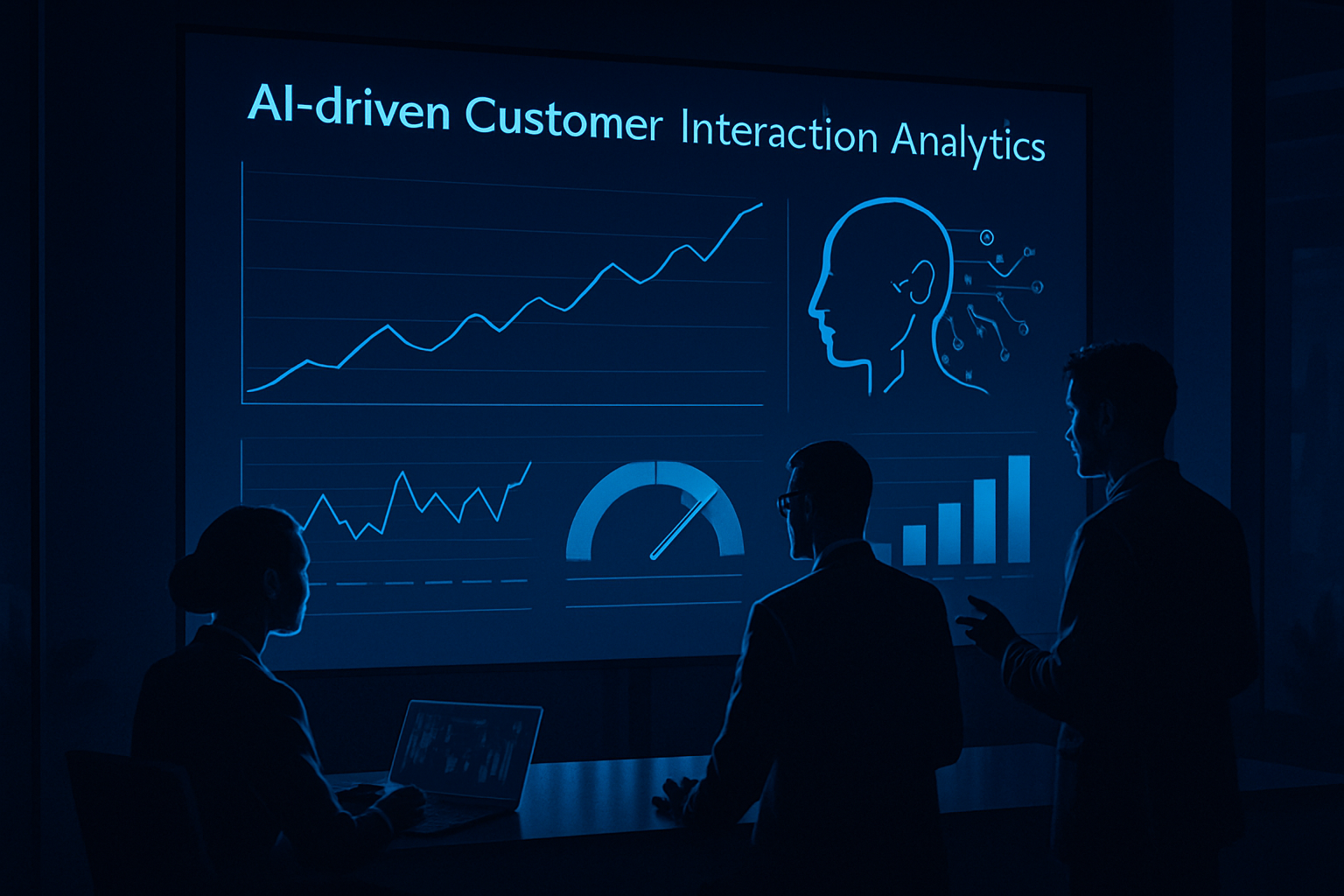
Artificial intelligence offers support teams the opportunity to move from partial sampling to a comprehensive evaluation of every conversation. Instead of waiting for customers to express their satisfaction, AI enables the automatic assessment of each interaction. This provides an accurate overview of service quality, problem resolution, and customer effort—aspects that a simple survey could never reveal.
For example, the Fin solution uses the CX Score to provide this comprehensive coverage. Each interaction, whether handled by AI or a human, is rated on a scale of 1 to 5, with an explanation of the reasons behind each score. This allows for five times the coverage offered by CSAT alone. Even if another solution is used, the principle remains the same: total visibility into each conversation is essential.
While CSAT retains its usefulness as a direct feedback channel for customers, it is the systematic rating of each interaction that reveals the true state of the customer experience, especially as AI scales.
Redefining Goals with New Metrics
With the introduction of new metrics like the CX Score, it is impossible to continue applying the old CSAT objectives. Given the different coverage, goals must be defined based on the new data available.
At Fin, the CX Score has been correlated with operational metrics such as first response time and closure time. This has allowed for the establishment of relevant goals for human support while delving deeper into the performance of the Fin Agent.
The CX Score has been broken down into underlying attributes such as response quality, customer effort, and product feedback. The response quality of the Fin Agent has proven to have the greatest impact on the overall score, guiding improvement efforts.
With an automation rate of around 80%, Fin has modeled the impact of eliminating low-quality responses on the overall score. Initial goals were set based on this, with 80% for Fin support and 70% for human support, goals that were raised as performance improved.
From Measurement to Concrete Action
When each conversation is rated and the reasons behind each score are visible, it becomes possible to trace recurring issues. Teams can identify the causes of negative scores, their frequency, and determine whether the source of the problem lies in support, the product, or a specific workflow.
This allows for insights into which topics and types of conversations receive poor scores, how scores vary across channels, and between interactions with the Agent and human interactions, as well as which operational issues create friction for customers.
This approach transforms the operational loop. Instead of relying on a limited number of survey responses, teams can direct issues to the right stakeholders, resolve them at the source, check if the solution worked, and prevent the same problem from affecting the next customer.
The Impact of Insights on Support
With complete visibility into the customer experience, managers can identify patterns that would never have emerged from individual survey responses. This includes recurring pain points, friction during transfers, and topics where response quality is consistently low.
A manager might find that a particular topic is poorly handled within the team and use this information to update content or organize targeted training. Each identified pattern leads to a specific action, rather than a vague signal indicating a potential problem.
It is important to contextualize scores: a team handling complex issues will receive a different score than a team managing transactional inquiries. It is essential to compare similar elements to obtain an accurate assessment.
An Opportunity Amid Improvement
Traditionally, quality improvement has focused on reducing bad experiences. However, with visibility into every conversation, a new opportunity emerges: improving interactions that are neither bad nor memorable.
The "good" level can be high. What keeps these intermediate conversations at a score of 3, and what would elevate them to 4 or 5?
As Jared Ellis from Culture Amp pointed out, the ability to see what happens in each conversation allows for moving beyond merely fixing what is broken and starting to improve what is invisible. This includes the "good but forgettable" middle ground that traditional surveys would never have detected.
Brief IA — L'actualité IA en français
L'essentiel de l'actualité de l'intelligence artificielle, décrypté et expliqué chaque jour.