AI at Work: Efficiency Challenged by Workday
Le brief IA que les pros lisent chaque soir
Les 7 actus IA du jour, décryptées en 5 min. Gratuit.
Inclus dès l'inscription : notre sélection des meilleurs guides & comparatifs IA.
Choisis ton rythme
Gratuit · Pas de spam · Désabonnement en 1 clic
AI at Work: Effectiveness Questioned by Workday
Artificial intelligence, often touted as a revolutionary tool for increasing productivity, may actually have the opposite effect. This is revealed by a global study conducted by Workday, titled "Beyond Productivity: Measuring the Real Value of AI." This study is based on a panel of 3,200 people surveyed in November 2025 and highlights a surprising paradox.
The Illusion of Increased Productivity
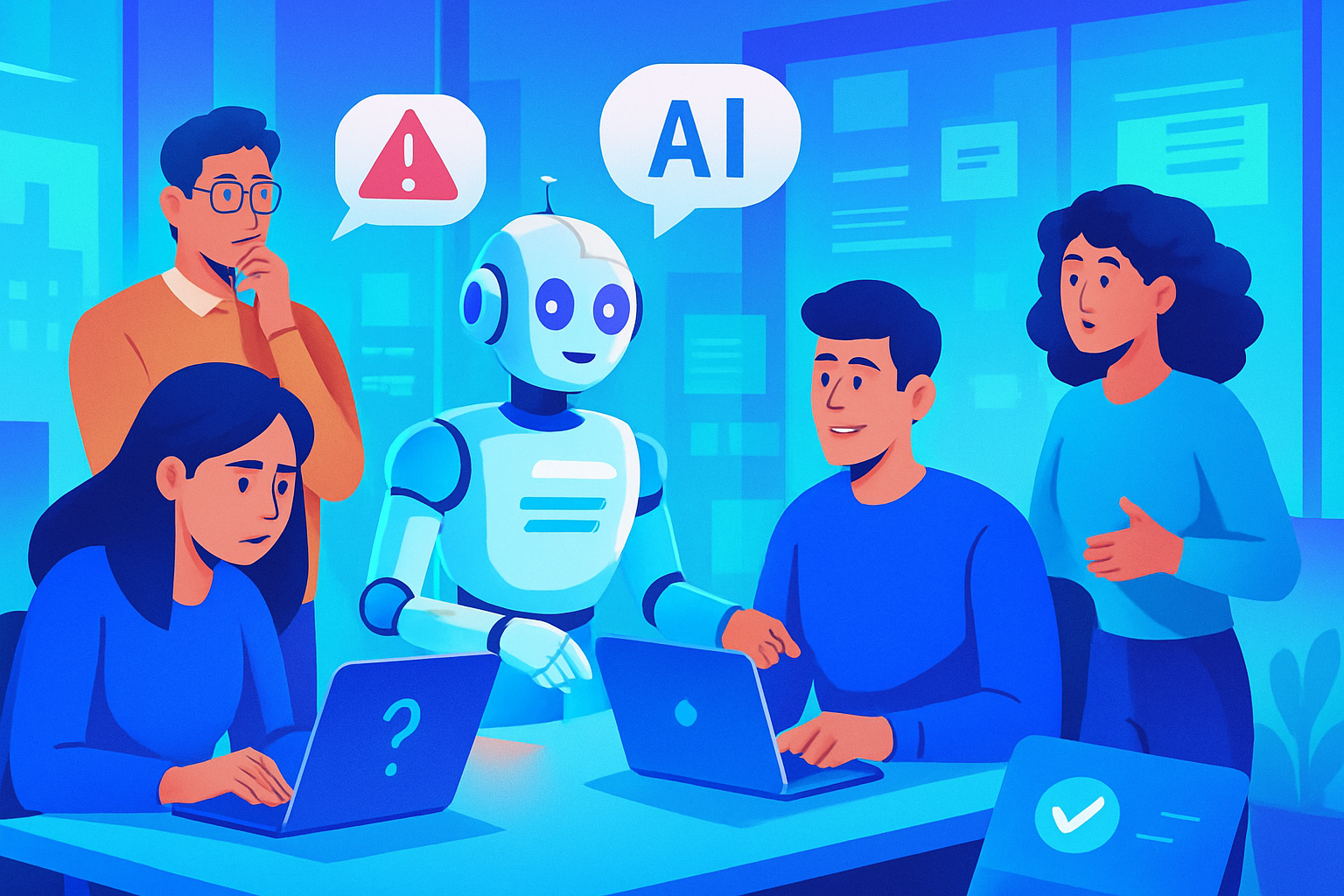
AI is supposed to alleviate the burden of repetitive and tedious tasks, allowing employees to save valuable time. However, Workday's study indicates that AI could actually waste time for teams. Indeed, while AI can enhance efficiency, the quality of the results produced often requires corrections and revisions. The report demonstrated the existence of a hidden cost of AI: approximately 37% of the time saved through AI is offset by the work needed to correct AI errors. Furthermore, only 14% of employees see a real benefit after accounting for the time spent rectifying deliverables.
The study illustrates that for every 10 hours of efficiency gained through AI, nearly 4 hours are lost correcting the results. This problem is widespread across most sectors globally, distancing companies from optimal outcomes, as it forces teams to dedicate a significant portion of their time to correction tasks rather than higher-value activities.
Inequalities and Lack of Training
Another issue raised by the study is that leaders tend to measure AI performance solely in terms of hours saved, without considering the quality of the results obtained. This approach can obscure the true impact of AI on work processes, making it difficult to assess its actual effectiveness.
The introduction of AI has also exacerbated inequalities within companies. The study shows that those aged 25-34 and human resources teams spend a lot of time correcting deliverables, while technical teams manage to transform AI into real productivity gains. This underscores the importance of mastering the tool to improve outcomes.
However, the study reveals a concerning training deficit. While 66% of leaders consider upskilling a priority, only 37% of employees have received adequate training. In France, only 39% of leaders report prioritizing the reinvestment of productivity gains into employee training.
To reverse this trend and reduce wasted time, it is essential to invest in training and clarify AI-related skills in job descriptions. The study concludes that companies that reinvest in human capital rather than focusing solely on technology create more sustainable value. As the report emphasizes, "companies reinvesting AI gains in people outpace those betting everything on technology, creating more sustainable value."
Brief IA — L'actualité IA en français
L'essentiel de l'actualité de l'intelligence artificielle, décrypté et expliqué chaque jour.