Google Takes on the Zero-Click Challenge: A Strategy to Calm the Web
Le brief IA que les pros lisent chaque soir
Les 7 actus IA du jour, décryptées en 5 min. Gratuit.
Inclus dès l'inscription : notre sélection des meilleurs guides & comparatifs IA.
Choisis ton rythme
Gratuit · Pas de spam · Désabonnement en 1 clic
Google Attempts to Restore Trust with the Web
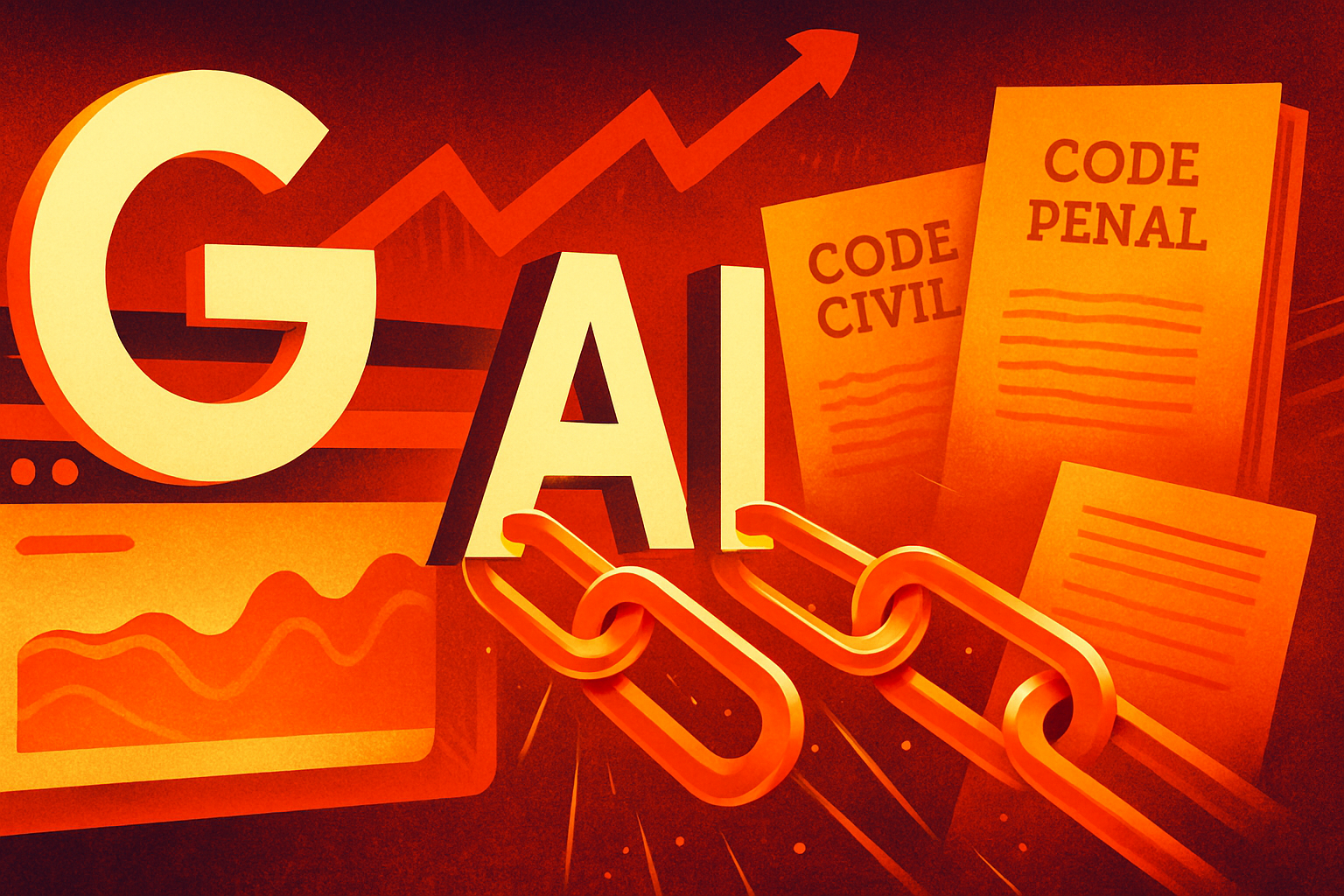
Google recently announced that it will integrate more links to sources directly into the responses provided by its artificial intelligence tools, including AI Overviews and AI Mode. This initiative aims to "facilitate site exploration" and address the growing criticism regarding the "zero-click" phenomenon. Indeed, these tools are accused of diverting web traffic by keeping users on Google's platform, to the detriment of third-party sites.
Currently, these new features are not available in France. Google clarified that the integration of links and sources at the core of its AI-generated responses aims to soothe an increasingly discontented ecosystem. Google's promises, such as "facilitating site exploration" and "connecting to original content across the web," have been communicated via its social media channels and a blog post.
Specifically, the update to AI Overviews will include more links to sources directly within the text generated by the AI. Users will also benefit from site previews when hovering the mouse on PC, as well as a highlight of the sources they are subscribed to. Google emphasizes the importance of allowing users to easily find their favorite sources and maximize the use of their subscriptions.
These improvements should be well-received by users of these features. They will apply to both AI Overviews and AI Mode, an AI version of the search engine launched in the fall of 2025. However, behind these announcements lies a strategy by Google to limit criticism from the web ecosystem, which is dissatisfied with the rise of generative AI. Due to its dominant position, Google faces numerous criticisms and seeks to ease tensions.
The Challenge of "Zero Click"
Google has been striving for several years to transform its search engine into a response engine. This trend has intensified with the emergence of generative AI, of which AI Mode and AI Overviews are concrete examples. Since their launch, these tools have been criticized for breaking the tacit contract of the web: by displaying answers directly via AI, Google keeps users on its platform without encouraging them to visit other sites. This leads to a decline in audience and revenue for these sites.
For many observers, Google finds itself in a delicate position: by depriving content creators, media, and sites of traffic, its generative AI could lack reliable and original data to remain relevant. In other words, Google could jeopardize its own long-term viability.
These updates therefore aim to restore a semblance of outgoing traffic or, at the very least, to give the impression of a fair partnership. It remains to be seen whether users will actually click on the proposed links.
France on the Sidelines
A notable aspect of this overhaul by Google is that it does not directly concern French internet users. To date, AI Overviews and AI Mode are not officially available in France. Accessing them requires using a VPN to simulate a location abroad. Thus, users in France are observing from a distance the era of "zero click," where visits to sites are declining.
This situation is not due to a technical delay, but rather to Google's caution in the face of French legislation on neighboring rights, which concerns the remuneration of the press for the use of its content. The mobilization of the French press is slowing the arrival of these mechanisms without guarantees.
Google's caution is also explained by legal precedents. In another case, the company was fined €250 million by the Competition Authority for using press articles without transparency or prior agreement to train its Gemini model. A few years earlier, another penalty of €500 million had been imposed in a similar case.
Brief IA — L'actualité IA en français
L'essentiel de l'actualité de l'intelligence artificielle, décrypté et expliqué chaque jour.