Scaleway and Europe: A Strategic Challenge in the AI Race
Le brief IA que les pros lisent chaque soir
Les 7 actus IA du jour, décryptées en 5 min. Gratuit.
Inclus dès l'inscription : notre sélection des meilleurs guides & comparatifs IA.
Choisis ton rythme
Gratuit · Pas de spam · Désabonnement en 1 clic
Scaleway, a Key Player in European Sovereign Cloud
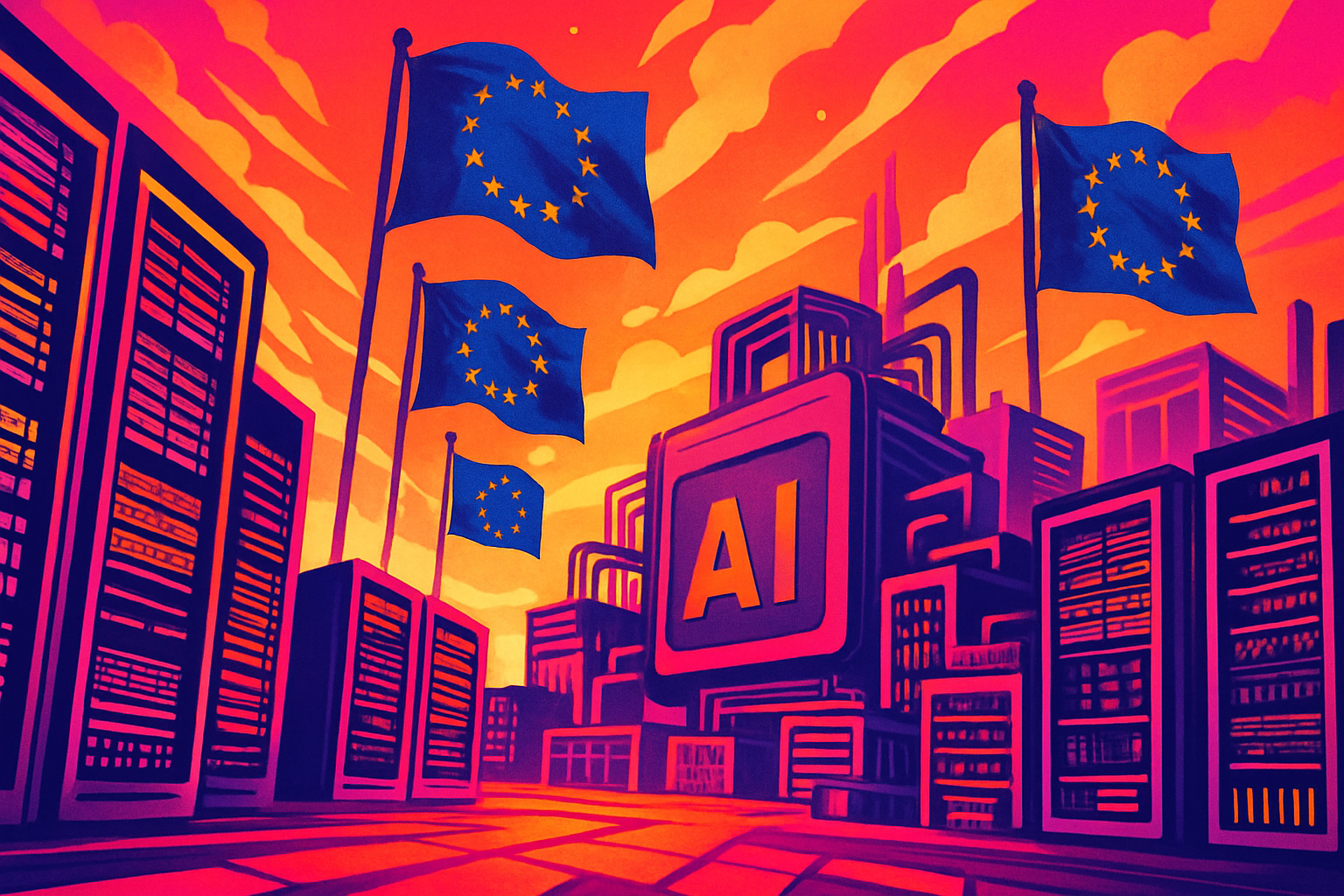
Scaleway, a subsidiary of Iliad, the parent company of Free, stands out in the French and European tech landscape. The company recently secured two major contracts that strengthen its position in the sovereign cloud sector. The first contract involves hosting the Health Data Platform, previously managed by Microsoft. The second is a win in a European Commission tender worth 180 million euros. At the same time, Scaleway is co-leading the AION consortium, which aims to create an AI Gigafactory in France, designed to produce industrial-scale computing capabilities.
As VivaTech 2026 approaches, a major event in the technology sector of which Clubic is a media partner, Damien Lucas, CEO of Scaleway, shared his insights on the company's recent successes and the future of artificial intelligence in Europe.
The AI Gigafactory: An Ambitious Project for Europe
According to Damien Lucas, the AI Gigafactory represents a significant advancement for Europe in terms of industrial computing dedicated to artificial intelligence. He describes this facility as a "token factory," where tokens are the essential units that AI models use to understand and generate responses. With the rise of AI models, the ability to produce and process these tokens becomes crucial.
Behind this infrastructure are thousands of chips, sophisticated software, cooling systems, and specialized teams to manage the entire setup. The strategic goal is to equip France and Europe with the necessary means to develop and leverage their own AI technologies, independent of foreign platforms.
Europe Facing Global Competition in AI
Damien Lucas emphasizes that Europe has not yet lost the race for artificial intelligence. He warns against repeating past mistakes, particularly those made in the cloud sector, where Europe fell behind due to a lack of initial investment. Today, Europe has many advantages: talented researchers, skilled engineers, innovative start-ups, renowned industrial players, and largely decarbonized electricity.
However, without its own computing capacity, Europe remains dependent on foreign platforms. The AI Gigafactory aims to bridge this gap by providing Europe with the means to remain competitive and create its own tech champions.
The Risks of Technological Dependence
Damien Lucas highlights the inherent risks of technological dependence, particularly regarding data security. The risk of hacking exists everywhere, but it is especially concerning for medical, public, or critical data. Access to this data is also a matter of power and control. When this data is hosted on non-European technologies operated by companies subject to extraterritorial laws, it creates a strategic vulnerability.
Recent incidents have demonstrated how dependent our societies are on certain critical technologies. A simple software failure can disrupt essential infrastructures like airports, hospitals, or banks. This dependence is even more concerning when these technologies may be subject to decisions made outside of Europe, such as court injunctions or sanctions. The framework of the Cloud Act is particularly mentioned as a non-theoretical risk, raising questions about data access and control exercised by non-European entities.
The Future of Artificial Intelligence in Europe
Scaleway is not looking to develop the next public ChatGPT. Its role is to provide the technological infrastructure necessary for companies to create and deploy their own applications. The challenge is to enable these companies to develop their solutions in a secure environment, compliant with European standards, while retaining control over their data and models.
The question is not whether these computing capabilities will exist, but rather where they will be developed, with what energy resources, and under what environmental regulations. If Europe does not take the initiative to build them, they will be developed elsewhere, likely with less stringent environmental standards, which would be detrimental to the climate, the economy, and European technological independence.
Accessibility and Costs of AI
Damien Lucas warns against the risk of AI becoming a privilege reserved for large companies. The costs associated with chips, energy, and computing capacity are high, and global competition for these resources is intense. This is why Europe must avoid scattering its efforts among many small players. Size is a major asset for acquiring the right chips, utilizing them efficiently, amortizing costs, and offering competitive prices.
The goal is to foster a few European champions capable of pooling these resources and making them accessible to a wide range of players, from start-ups to large enterprises.
The Future Impact of Quantum Computing
Damien Lucas envisions a future where quantum computing will play a crucial, albeit often invisible, role in our daily lives. Even though we will likely not own personal quantum computers in the near future, their impact on complex fields will be significant. Quantum technology could accelerate medical research, design new materials, optimize logistics or energy networks, and enhance cybersecurity.
Cloud algorithms will benefit from the acceleration provided by quantum processors. Just as the current combination of CPUs and GPUs is used for AI, quantum processors will transform our approach to complex problems, paving the way for new technological possibilities.
Brief IA — L'actualité IA en français
L'essentiel de l'actualité de l'intelligence artificielle, décrypté et expliqué chaque jour.