Microsoft Solara: Android at the Heart of Tomorrow's AI Gadgets
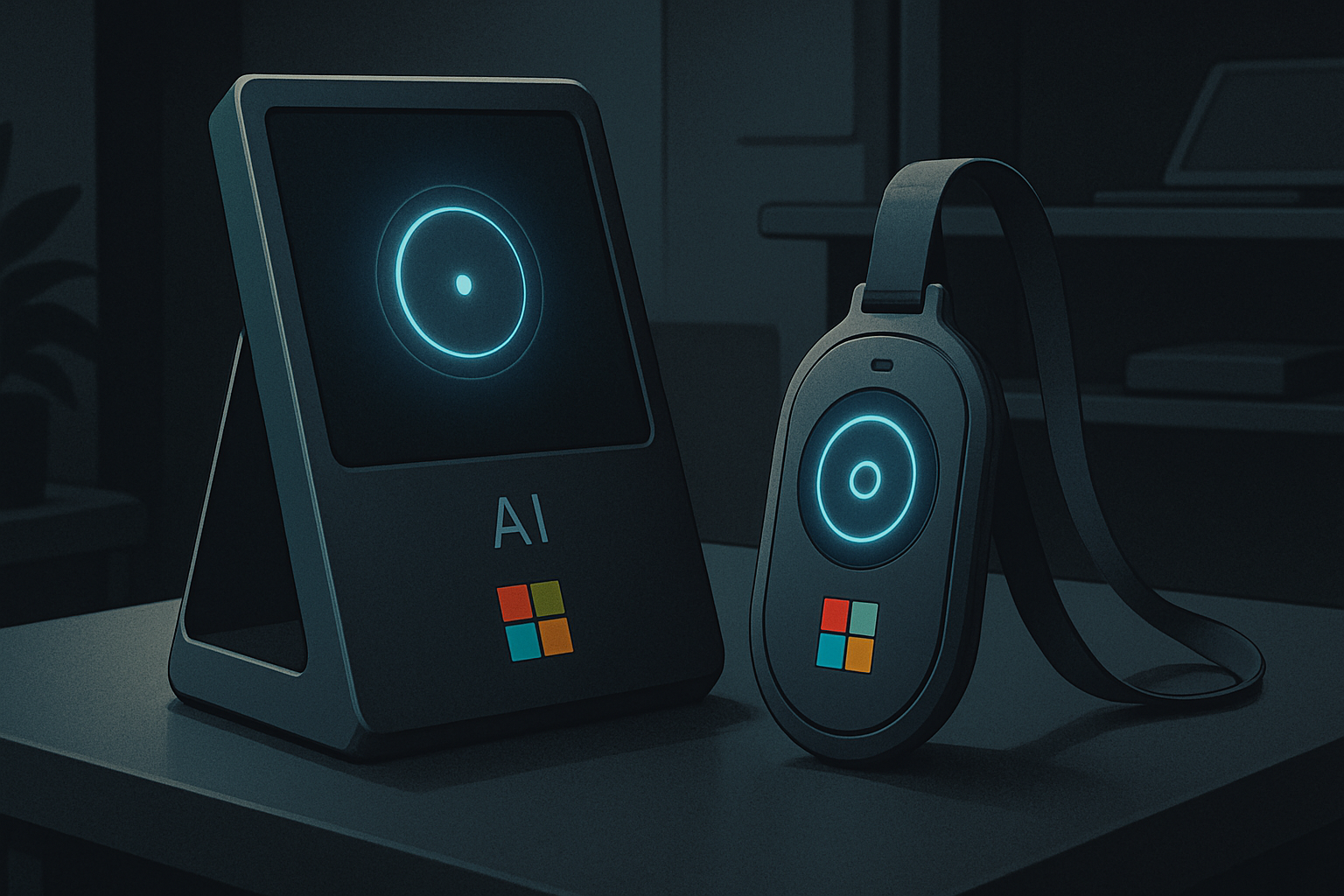
Microsoft recently unveiled Project Solara, an innovative operating system designed for gadgets powered by artificial intelligence agents. This announcement took place during the Build 2026 conference, where the company presented this platform as a solution built from the ground up to fuel agent-driven experiences. Contrary to expectations, Solara is based on Android rather than Windows.
Innovative Concepts
Two device concepts were revealed to illustrate the potential of Project Solara. The first is a desktop concept, reminiscent of the Amazon Echo Show. This device uses facial recognition to unlock and grants access to AI agents.
The second concept is a wearable badge, similar to a professional access badge. Equipped with a camera and a fingerprint scanner, it allows users to activate an AI agent with a simple press. This device can instantly record and transcribe conversations, and the built-in camera enables the agent to see what the user sees.
A Flexible Platform
Although Microsoft does not plan to commercialize these devices, they will serve as reference models for other manufacturers. According to GeekWire, companies like AccuWeather, Best Buy, CVS Healthcare, and Target are considering launching pilot projects with this hardware. Steven Bathiche, a researcher at Microsoft, describes the platform as "very flexible," suitable for agent-focused devices.
Le brief IA que les pros lisent chaque soir
Les 7 actus IA du jour, décryptées en 5 min. Gratuit.
Inclus dès l'inscription : notre sélection des meilleurs guides & comparatifs IA.
Choisissez votre rythme
Gratuit · Pas de spam · Désabonnement en 1 clic
Android Instead of Windows
The choice of a version of Android, dubbed Microsoft Device Ecosystem Platform, allows Solara to operate on smaller, less power-hungry devices while providing the management and security features expected by IT departments. This strategic choice aligns with Microsoft's desire to become more involved in AI hardware, a rapidly growing sector.
Competition and Outlook
As Microsoft positions itself in this niche, competitors like Google and Meta are also developing their own AI gadgets. Meanwhile, OpenAI is collaborating with Jony Ive to design similar devices. Project Solara thus marks a significant step in Microsoft's strategy to establish itself in the realm of AI hardware technologies. Work on this initiative is still in its early stages, but Microsoft anticipates rapid growth in this category in the months and years to come.
Brief IA — L'actualité IA en français
L'essentiel de l'actualité de l'intelligence artificielle, décrypté et expliqué chaque jour.