OpenAI in the Storm: Financial Viability Under Question
Le brief IA que les pros lisent chaque soir
Les 7 actus IA du jour, décryptées en 5 min. Gratuit.
Inclus dès l'inscription : notre sélection des meilleurs guides & comparatifs IA.
Choisis ton rythme
Gratuit · Pas de spam · Désabonnement en 1 clic
OpenAI and the Pressure of Computing Power
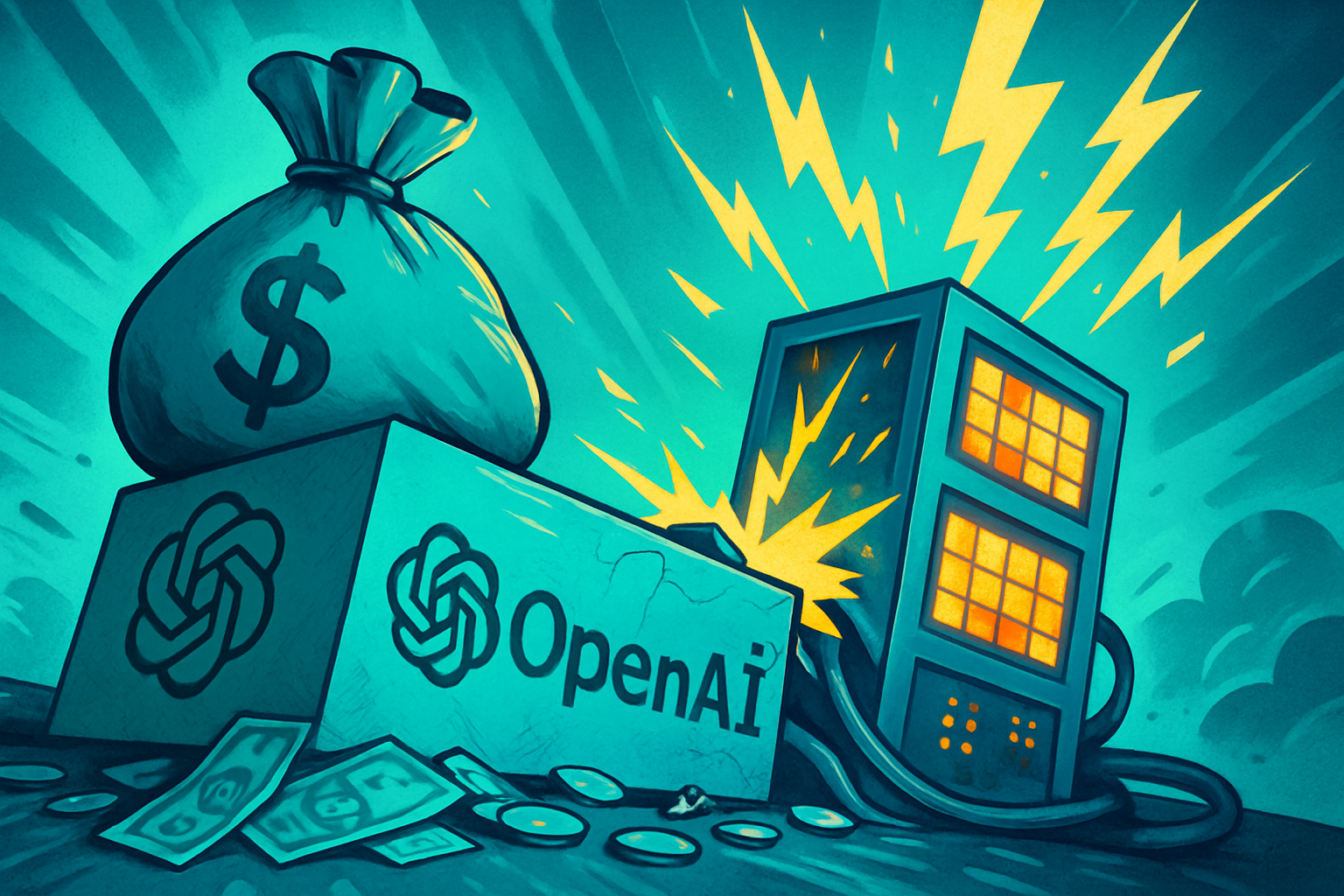
OpenAI, while continuing to raise substantial funds, is facing a demand for computing power that is growing at an even faster pace. This situation has raised concerns within the company regarding its financial trajectory. Despite massive investments, ChatGPT, one of its flagship products, seems to be losing momentum.
Since the introduction of ChatGPT, OpenAI has become a central player in the generative artificial intelligence revolution. Under the leadership of Sam Altman, the company has managed to attract the attention of various sectors, from chip manufacturers to cloud computing giants, as well as investors. However, this rapid growth comes at a cost, which is becoming increasingly difficult to ignore.
To keep its models operational, attract new users, and maintain its technological edge, OpenAI requires a colossal amount of computing power. According to the Wall Street Journal, some internal growth and revenue targets have not been met recently, raising crucial questions about the company's ability to fund its long-term ambitions.
Internal Concerns and Cost Management
The company's mixed performance has raised concerns among its leaders, particularly regarding the ability to sustain massive spending on data centers. Sarah Friar, the Chief Financial Officer, reportedly expressed worries about paying for future computing contracts if revenues do not grow quickly enough.
The OpenAI board has also intensified its scrutiny of data center agreements in recent months. Some members have questioned Sam Altman's efforts to acquire more computing power, despite an apparent slowdown in activity. This increased oversight aims to rein in ambitions that were previously almost limitless, as the company considers a potential IPO by the end of the year.
However, in a joint statement, Sam Altman and Sarah Friar refuted the idea of any disagreement. They claimed to be "completely aligned" on the need to acquire as much computing power as possible, calling any suggestion of division or slowdown in their efforts to secure new computing resources "ridiculous."
Ambitious Strategy and Market Realities
Sam Altman has long argued that the lack of computing power is the main obstacle to OpenAI's growth. This belief has led him to multiply agreements, committing the company to around $600 billion in future spending. As long as ChatGPT seemed to be expanding, this bold strategy enjoyed the support of Sarah Friar and the board.
However, ChatGPT's growth reportedly slowed towards the end of last year. OpenAI is said to have missed its internal target of one billion weekly active users for ChatGPT, a figure the company has yet to make public. Additionally, it is believed to have fallen short of its annual revenue target for ChatGPT, while Google's Gemini has made significant strides, capturing market share.
OpenAI is also facing subscriber churn and several unmet monthly revenue targets earlier this year, after losing ground to Anthropic in the coding space. Despite a record fundraising of $122 billion, the largest in Silicon Valley history, this amount could be exhausted in three years if OpenAI meets its ambitious revenue forecasts. Part of this funding would still depend on specific agreements with partners.
To try to reduce some costs, the company has decided to cut projects like Sora, while betting on Codex and GPT-5.5. The challenge remains: in the field of AI, growth also depends on the ability to finance the necessary infrastructure to support it.
Brief IA — L'actualité IA en français
L'essentiel de l'actualité de l'intelligence artificielle, décrypté et expliqué chaque jour.