Libby Prepares to Filter AI-Generated Books
Le brief IA que les pros lisent chaque soir
Les 7 actus IA du jour, décryptées en 5 min. Gratuit.
Inclus dès l'inscription : notre sélection des meilleurs guides & comparatifs IA.
Choisis ton rythme
Gratuit · Pas de spam · Désabonnement en 1 clic
Libby Prepares to Filter AI-Generated Books
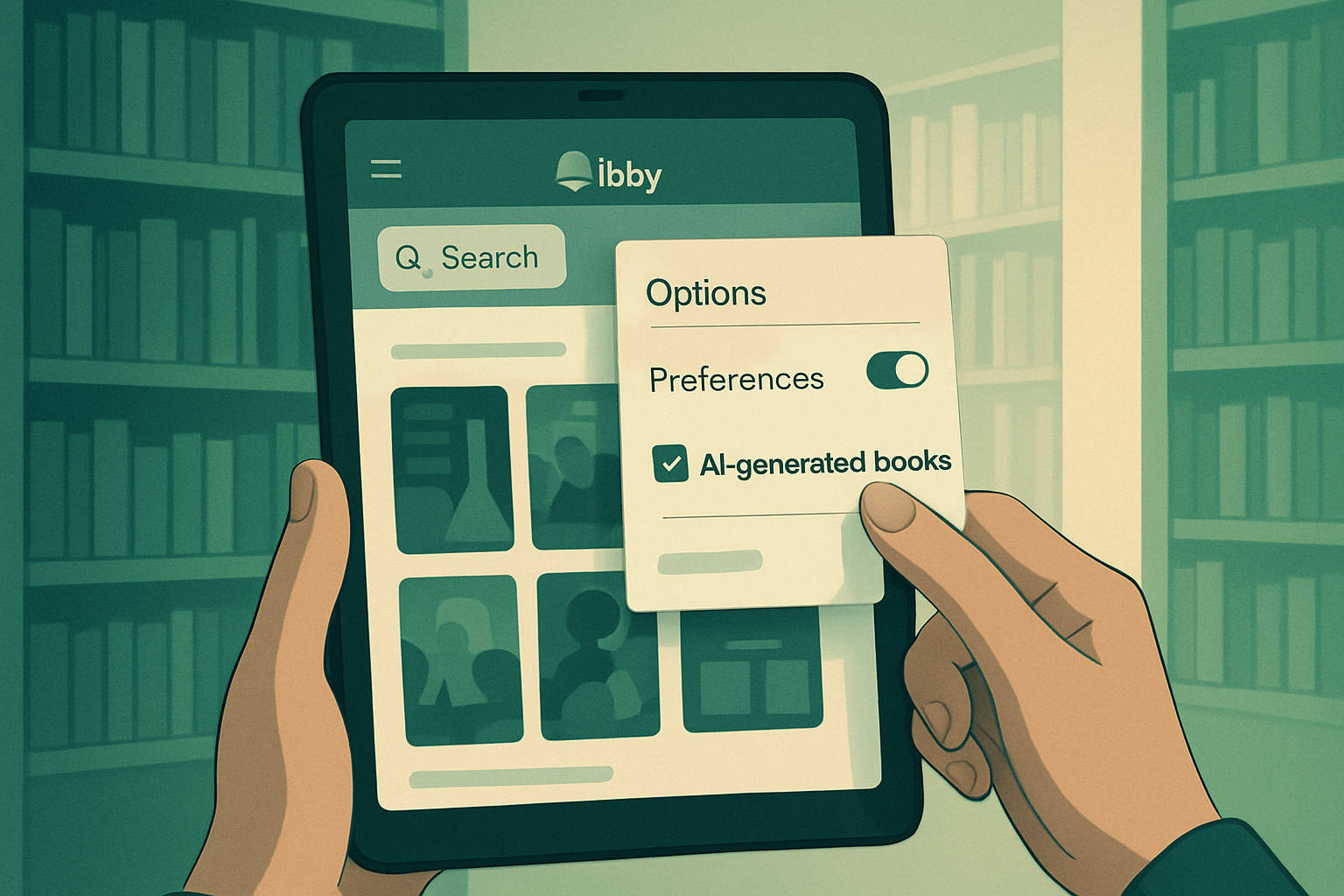
The ebook lending app Libby, known for its access to millions of books through public libraries, is preparing to introduce content controls related to AI. These filters will allow readers to choose in the app's settings whether they want to see AI-generated content, including books, AI-narrated audiobooks, automated translations, and AI-generated artwork.
Marc DeBevoise, the new CEO of OverDrive, emphasized the importance of this initiative: “We need to inform people about what is available [and] how it was created.” With these new filters, OverDrive aims to strike a balance between the choices of readers and librarians to oppose AI while leveraging the potential benefits of this technology, particularly in content recommendations and localization.
History and Impact of OverDrive
Founded 40 years ago, OverDrive started by digitizing books for distribution on floppy disks and CD-ROMs. It launched ebook lending in partnership with local libraries in the early 2000s and introduced Libby as a consumer app in 2017. Currently, OverDrive collaborates with 92,000 public libraries, schools, and universities in over 115 countries.
Participating libraries allow their users to borrow ebooks via the Libby app for free. The Libby catalog includes more than 6 million books, which have been borrowed over a billion times. Most of these books were published before the emergence of modern language models. DeBevoise clarifies: “Anything prior to 2020 [or] 2022 is by definition not AI.”
Rapid Evolution of the Publishing Landscape
However, the situation could change rapidly. In 2023, Amazon began restricting the number of books that self-published authors can upload daily to combat the proliferation of AI-generated content. Michael Tamblyn, CEO of Kobo, revealed last month that Kobo rejects nearly 50% of all self-published books due to AI-related concerns.
OverDrive does not allow authors to upload their books directly as Kobo and Amazon do. However, it collaborates with a self-publishing intermediary, Draft to Digital, which also provides self-published books to most digital platforms. This service permits AI-generated books as long as they have undergone “extensive human editing,” making it inevitable that some AI-generated titles will appear in the Libby catalog.
Potential Benefits of AI
DeBevoise argues that AI can ultimately help reduce barriers to access information. For example, localizing audiobooks presents an opportunity to broaden access to international content.
OverDrive has observed significant growth in audiobooks in recent years. Although they represent only 15% of the Libby catalog, audiobooks now account for about 50% of the app's usage. DeBevoise states: “It’s the mode of choice.”
While he prefers audiobooks narrated by real actors rather than entirely synthetic narration, he acknowledges that translating into multiple languages can become costly. Critics of AI also note that automated translation, especially for literary works, can pose challenges. The new Libby filters include an option to exclude automated translations, but this only works if the books are properly labeled.
Brief IA — L'actualité IA en français
L'essentiel de l'actualité de l'intelligence artificielle, décrypté et expliqué chaque jour.