European AI Law: Are Your Systems Already High-Risk?
The New European Guidelines on AI: A Necessary Insight
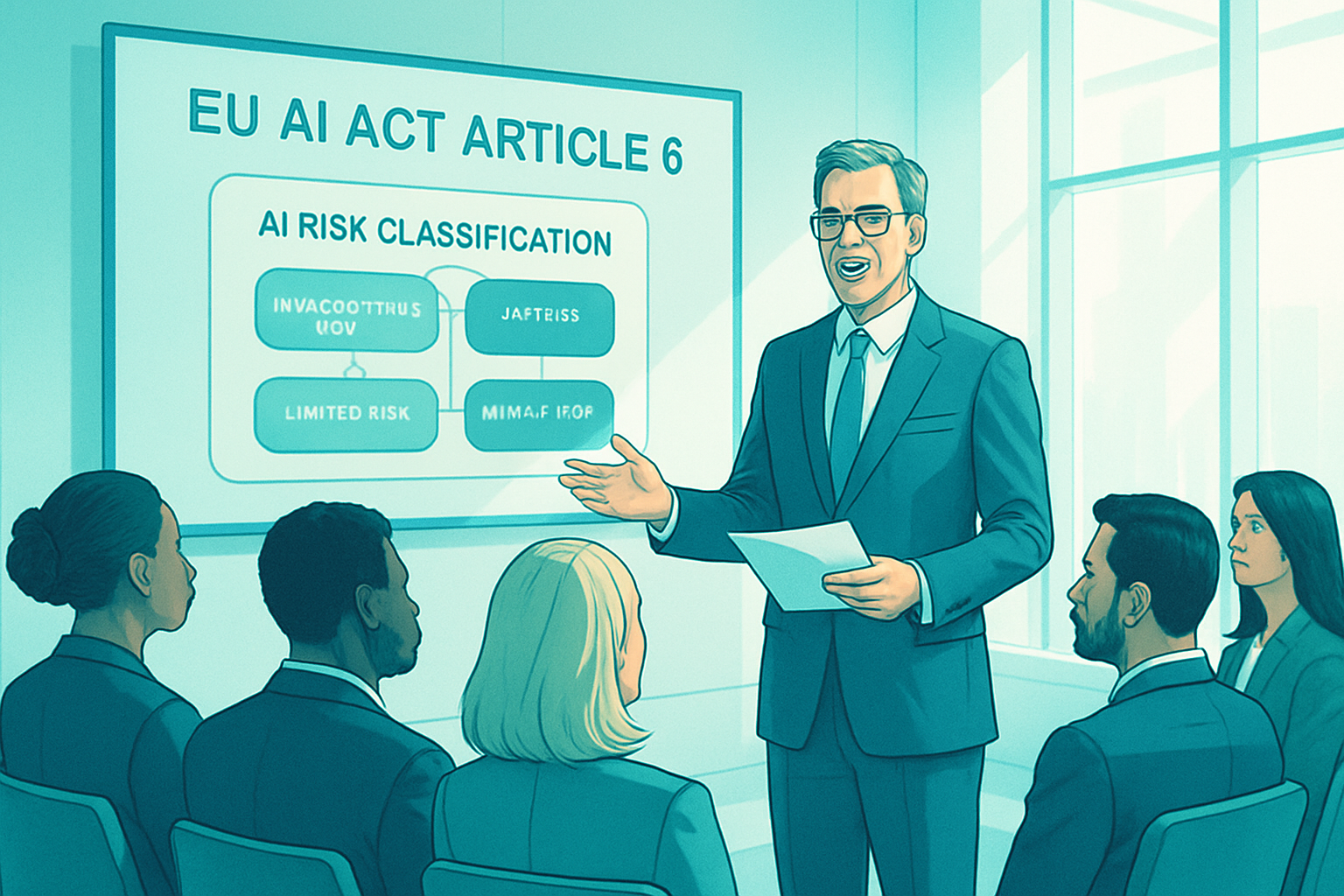
The European Commission has recently published guidelines that provide crucial clarity on how companies should classify their artificial intelligence (AI) systems in terms of risk. These guidelines focus on Article 6 of the European AI Act, which defines the criteria for determining whether an AI system is considered high-risk. However, this clarification raises an essential question for businesses: could their current AI systems already be classified as high-risk without their knowledge?
The Importance of the Intended Purpose
The classification of an AI system does not solely depend on its technical features. Indeed, according to the European AI Act, the intended purpose of a system plays a crucial role in its risk classification. This means that how a system is documented, marketed, deployed, and used can influence its risk status just as much as its intrinsic technical capabilities.
The Two Paths to High-Risk Classification
Article 6 of the European AI Act outlines two main paths through which an AI system can be classified as high-risk. First, there are AI systems used in certain products that are already subject to specific regulations. Second, there are AI systems deployed in sensitive contexts, where they could have a significant impact on the health, safety, or fundamental rights of individuals.
Le brief IA que les pros lisent chaque soir
Les 7 actus IA du jour, décryptées en 5 min. Gratuit.
Inclus dès l'inscription : notre sélection des meilleurs guides & comparatifs IA.
Choisissez votre rythme
Gratuit · Pas de spam · Désabonnement en 1 clic
Crucial Questions for Businesses
For corporate teams, these new guidelines raise several immediate questions. Which AI systems within the organization are affected by Article 6? Does the current documentation accurately reflect the use of each system? Could the exemption under Article 6(3) apply to certain systems, and what evidence would be necessary to benefit from it? Finally, what actions should legal, governance, and technology teams undertake right now to comply with these new requirements?
A Webinar to Guide Businesses
To help companies navigate these new guidelines, Airia is offering a webinar titled EU AI Act: What It Really Requires and Enterprises Need to Do Now. This webinar breaks down the new guidelines into a practical decision-making framework, allowing businesses to better understand how to assess their AI systems.
Understand and Act
The webinar session covers the two paths to high-risk classification, the limitations of the self-assessment mechanism under Article 6(3), and the steps that businesses can take to evaluate their AI systems with greater confidence. By accessing this on-demand webinar, organizations can gain a better understanding of what these latest guidelines mean for their AI governance program and determine the actions to take to ensure compliance.
Brief IA — L'actualité IA en français
L'essentiel de l'actualité de l'intelligence artificielle, décrypté et expliqué chaque jour.