MCP: The 5 Essential Servers to Boost Your AI Agents
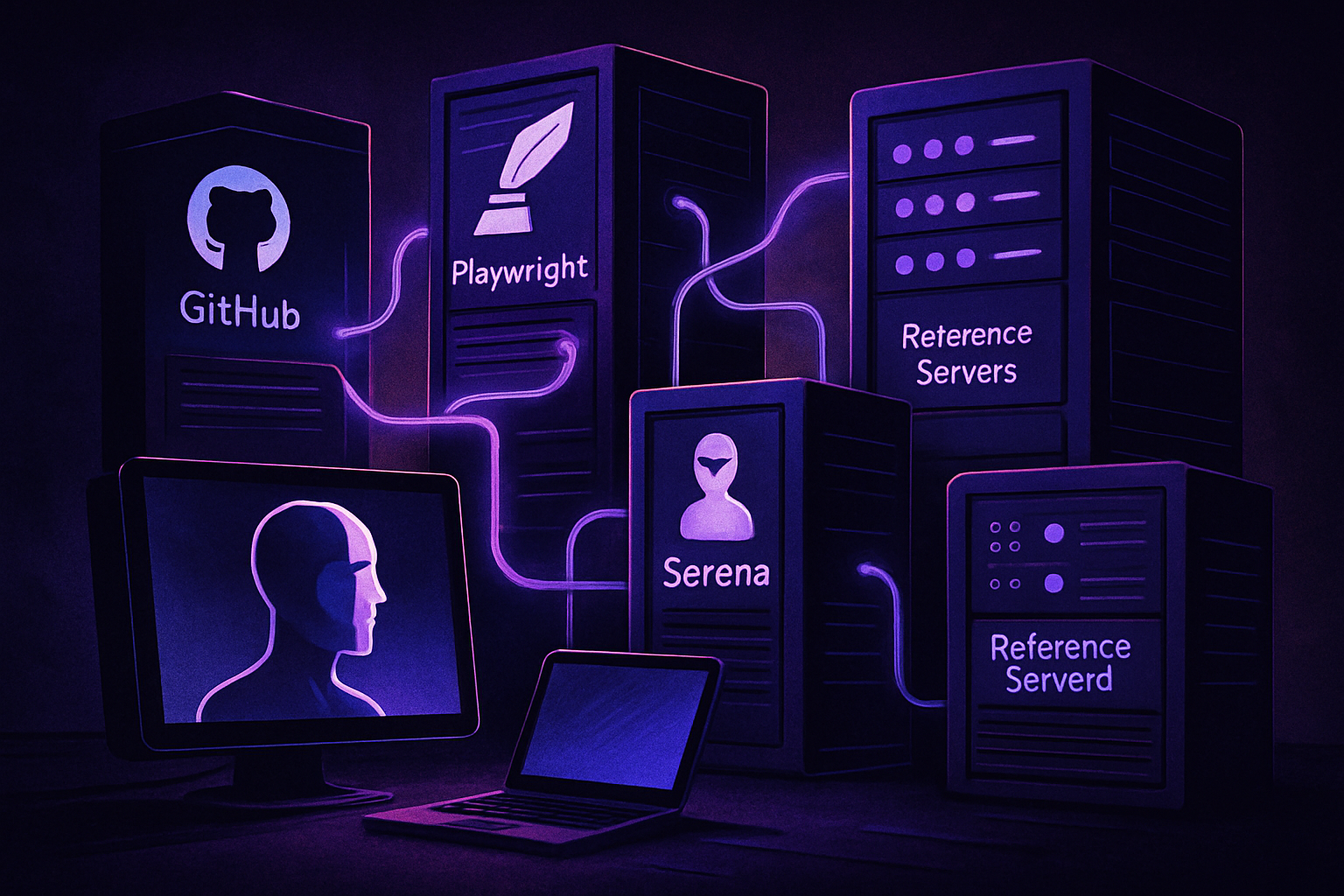
A Revolution in AI Agent Integration
A year and a half ago, integrating an artificial intelligence agent with an external tool required developing specific integration code for each connection. This complexity was simplified when Anthropic launched the Model Context Protocol (MCP) as open source at the end of 2024. This protocol was quickly adopted by giants like OpenAI, Google, and Microsoft throughout 2025. By the end of the year, the management of the MCP was entrusted to an organization affiliated with the Linux Foundation. The MCP has become a universal standard, comparable to USB-C for agent tools, enabling unprecedented interoperability between compliant tools and agents.
However, this standardization has also led to a proliferation of the ecosystem, making it difficult to distinguish between relevant information and ambient noise. Additionally, several previously recommended servers are now obsolete. Here is a selection of five MCP servers that stand out for their ability to genuinely enhance agent performance, rather than their popularity measured in stars. The star ratings mentioned here were current at the time of writing but are evolving rapidly.
1. GitHub MCP Server
The official GitHub MCP server is essential for any agent involved in software development. It allows agents to access repositories, issues, pull requests, Actions, and code security through natural language commands. Maintained by GitHub, this server remains aligned with the platform's developments.
For agent development, this means that an agent can not only understand the code but also actively interact with it: creating a pull request, resolving an issue, or analyzing a failing workflow. With around 30,000 stars, this server is actively maintained and is often the first choice for developers.
2. Playwright MCP (Microsoft)
Browser automation is a challenge that many agents struggle with, often due to their reliance on screen image analysis through vision models. Microsoft's Playwright MCP addresses this issue by controlling the browser through the accessibility tree, thus providing structured and reliable data about the web page rather than just an image to interpret.
This approach allows for faster and more reliable web interaction, using over 40 tools without requiring a vision model. For agents that need to test web applications, retrieve rendered pages, or complete workflows, this server is a performance-focused choice. It has around 31,000 stars and receives regular updates.
Le brief IA que les pros lisent chaque soir
Les 7 actus IA du jour, décryptées en 5 min. Gratuit.
Inclus dès l'inscription : notre sélection des meilleurs guides & comparatifs IA.
Choisissez votre rythme
Gratuit · Pas de spam · Désabonnement en 1 clic
3. Context7 (Upstash)
Context7 stands out for its ability to directly improve the quality of code generated by agents. It integrates up-to-date, version-specific library documentation directly into the agent's context, addressing the common issue of outdated or nonexistent APIs used by AI agents.
For agents generating code using rapidly evolving libraries, Context7 is the most efficient server on this list. Its popularity is evident with nearly 59,000 stars and very active development. It is the server to prioritize for any code-generating agent, as it prevents errors before they occur.
4. Serena (Oraios)
Text search and replace is a rudimentary method for an agent to edit code, often leading to wasted resources and errors. Serena provides agents with a semantic and symbolic understanding of a codebase via the Language Server Protocol (LSP), covering over 40 languages. This allows the agent to precisely locate and modify functions or symbols, rather than relying on pattern matches on text strings.
This precision is crucial for agent efficiency, especially on large codebases where processing entire files is slow and costly. Serena gives the agent an understanding comparable to that of an IDE, with around 24,000 stars.
5. Official Reference Servers
To complete a robust setup, the collection of official reference servers offers reliable foundational tools: Filesystem for local file access, Git, Fetch, Memory, and Sequential Thinking, which allows an agent to structure its thoughts before acting. The monorepo totals over 80,000 stars collectively, although this figure encompasses all tools rather than a single server.
Two warnings are in order. These servers are primarily designed as educational references, so they should be considered solid foundations rather than robust production infrastructure. Additionally, several previously popular servers, such as those for Postgres and Puppeteer, have been archived. Therefore, it is crucial to check the activity of a server before integrating it.
Building the Stack
By integrating these servers, you equip an agent with a coherent set of capabilities: GitHub for code management, Playwright for web navigation, Context7 for precise code generation, Serena for efficient editing, and the reference servers for local operations. The MCP protocol has facilitated their interoperability. Your role now is to choose wisely, ensuring that the selected servers are still active.
Brief IA — L'actualité IA en français
L'essentiel de l'actualité de l'intelligence artificielle, décrypté et expliqué chaque jour.