Mercor and Micro1: AI Disrupts the Legal Profession in 2023
Le brief IA que les pros lisent chaque soir
Les 7 actus IA du jour, décryptées en 5 min. Gratuit.
Inclus dès l'inscription : notre sélection des meilleurs guides & comparatifs IA.
Choisis ton rythme
Gratuit · Pas de spam · Désabonnement en 1 clic
The Emergence of AI Trainers in the Legal Field
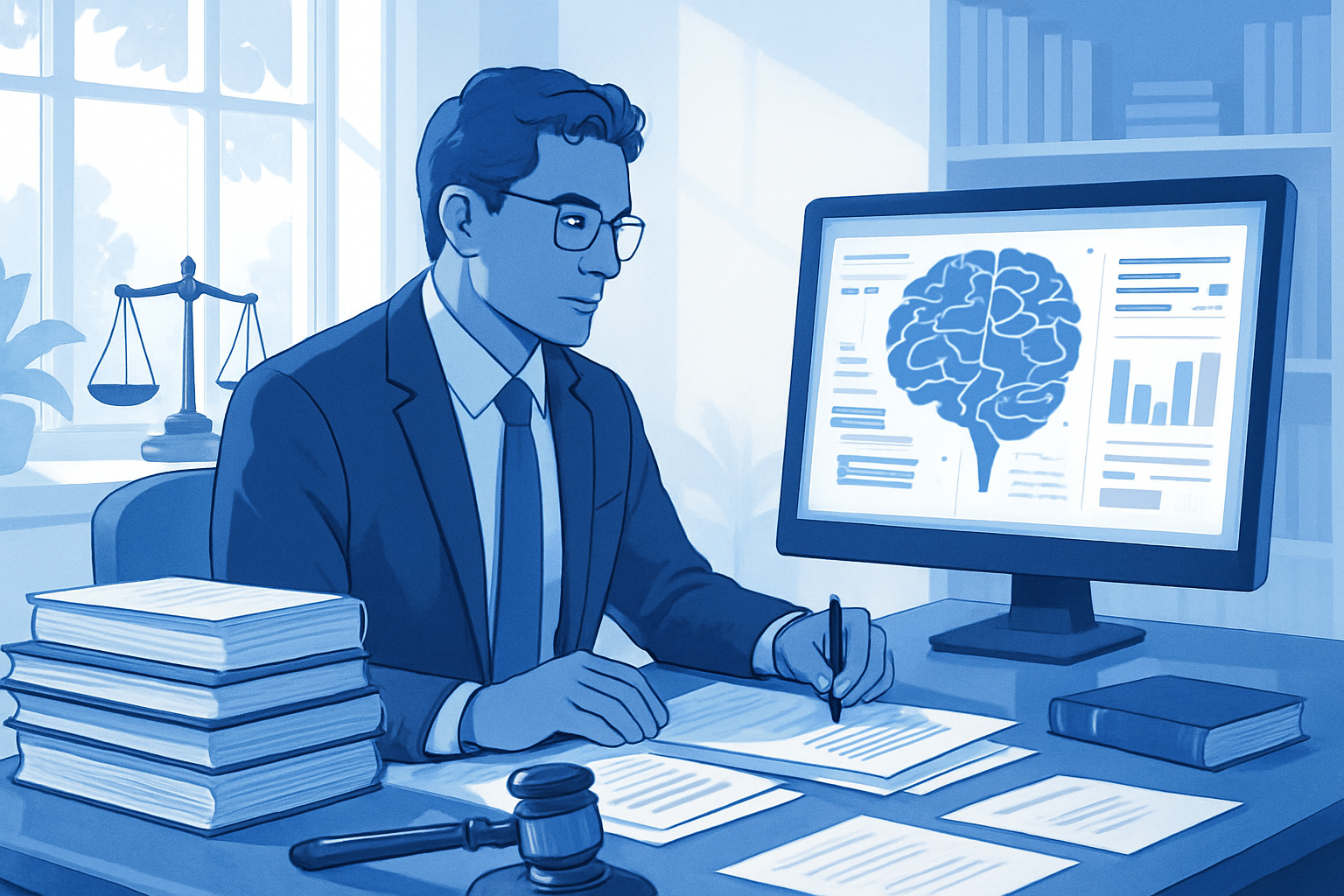
Jessica Crutcher, a professional arbitrator, is dedicated to an intriguing side activity: training artificial intelligence models. After spending her days arbitrating disputes, she immerses herself in the world of AI through Mercor, a company specializing in recruiting experts to teach AI systems. In her home office, she imagines complex legal scenarios that machines still struggle to resolve. One week, she designs a case about oil and gas trading; the next, she drafts an asylum application. She interrogates the models and evaluates their responses, seeking to refine their understanding.
Lawyers are increasingly aware that AI could replace part of their work. However, before that becomes a reality, many of them are engaged in teaching these systems. Crutcher is part of a growing number of legal professionals who help train the systems that millions of people increasingly rely on. Companies like Mercor and Micro1 have recruited thousands of lawyers, retired judges, and paralegals for this task. These professionals often spend their evenings and weekends crafting complex legal puzzles, assessing chatbot responses, and showing the models how experienced lawyers think.
The Impact of Chatbots on the Legal Sector
Today, over a billion people use chatbots like ChatGPT and Claude each month for tasks ranging from drafting emails to resolving complex legal issues, such as divorces or tenant disputes. The companies developing these systems aim to make their responses as accurate as possible. To achieve this, they hire lawyers to provide professional judgment that the Internet cannot offer.
For Crutcher, this work is not just about salary; it’s about staying connected to a technology that is transforming her field. Investors are pouring billions into startups looking to do for lawyers what tools like Cursor and Lovable have done for programmers. These software programs learn to review contracts, research case law, and handle other routine tasks that have been the bread and butter of law firms for decades. Crutcher asserts that keeping up with AI developments is essential to remain relevant in her profession.
An Opportunity for Legal Professionals
Harrison Margolin, another lawyer, has also begun training models via Micro1. His legal career had already brought him closer to Silicon Valley, where he advised semiconductor companies and software firms. However, the law firm where he worked prohibited the use of AI for client matters, and many of his colleagues viewed this technology as a passing fad. Margolin, on the other hand, saw a different opportunity. Their reluctance gave him "more time to get ahead."
After discovering a recruitment ad from Micro1 on LinkedIn, Margolin signed up and was quickly compensated for testing cutting-edge models. One of his tasks involved "red teaming," creating legal scenarios complex enough for the models to fail. His toughest challenge was a cross-border merger filled with conflicts. He drafted fake legal documents and a scoring grid, making the exercise increasingly difficult. Micro1 kept returning the model with the same score: the model was not sufficiently perplexed.
The Challenges of Teaching Legal Reasoning to AI
This exercise highlights one of the biggest challenges in legal AI. In programming, models can learn from billions of lines of public source code and immediately verify if the code works. In contrast, teaching legal reasoning is much more complex, explains Bertie Vidgen, a researcher at Mercor. A large portion of global legal knowledge is inaccessible, hidden behind paywalls or confidentiality agreements. Even public documents rarely reveal why lawyers made certain decisions. This is where human experts come into play.
More recently, Margolin changed his strategy to draft "ideal responses," answers that models can learn from rather than trying to trick them into failing. Isabel Yishu Yang, head of special projects at Micro1, describes this work as "transforming lawyers into law professors."
Compensation and Motivation for Trainer Lawyers
Compensation for this type of work is respectable, although it does not rival the astronomical sums of large firms. Mercor offers rates ranging from $100 to $200 per hour for legal experts. Micro1 indicates that compensation varies based on levels of seniority and types of roles.
Lawyers interviewed by Business Insider all stated that money was secondary to understanding the evolution of their profession. Charley Kelsey, an entertainment lawyer, reached the same conclusion. While working at Lionsgate, he was not allowed to use AI because clients prohibited it. Rather than waiting for the legal industry to adopt the technology, he left his position to start his own firm and began taking projects through Micro1.
The Impact of AI on Legal Practice
A recent assignment for Kelsey involved creating an imaginary video game, complete with screenshots, logos, licensing agreements, and posters, and then asking the model to untangle the copyright and trademark issues he had embedded in the documents. This work unexpectedly changed his legal practice.
Kelsey stated that lawyers often move from a client question to an instinct-based answer. Training the AI, he said, forced him to slow down and examine each step of that reasoning. He recalls a client asking if a stuffed bear could be protected by copyright. His instinct was to answer no. But after analyzing the question in the same way he teaches models to do, he discovered case law considering taxidermy as a sculpture—and thus potentially eligible for copyright protection.
Ultimately, this side work ceased to be a mere supplement. In June, Kelsey left full-time legal practice to join Micro1. He does not believe he is automating lawyers out of existence. AI can draft contracts faster or summarize legal research, but it still cannot reassure anxious clients, read the room during settlement negotiations, or argue before a judge.
What artificial intelligence will reduce, he argues, are the tasks that did not require much judgment to begin with.
Brief IA — L'actualité IA en français
L'essentiel de l'actualité de l'intelligence artificielle, décrypté et expliqué chaque jour.