Meta: Fake Teens to Test Competing AI Chatbots
Le brief IA que les pros lisent chaque soir
Les 7 actus IA du jour, décryptées en 5 min. Gratuit.
Inclus dès l'inscription : notre sélection des meilleurs guides & comparatifs IA.
Choisis ton rythme
Gratuit · Pas de spam · Désabonnement en 1 clic
Meta and the Fake Teens: A Controversial Strategy to Test AI Chatbots
An in-depth investigation by WIRED has shed light on Meta's practices, which allegedly orchestrated a complex operation using subcontractors to simulate teenagers. This operation involved the creation of fake accounts, the use of sensitive questions, and discreet benchmarking of competing chatbots.
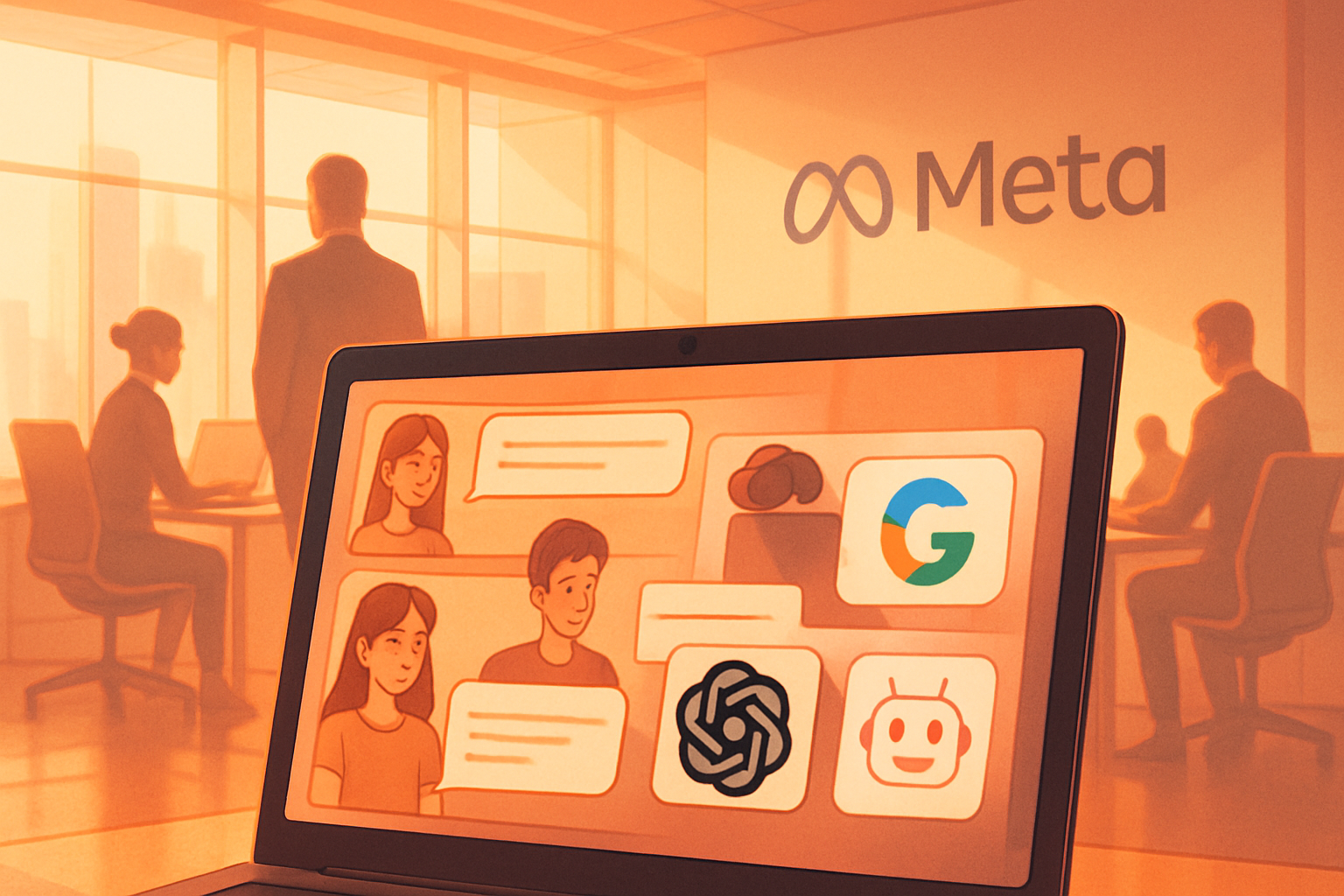
In the world of artificial intelligence, it is common for large companies to compare their models to assess their performance. However, the method employed by Meta, as described by WIRED, could spark controversy. According to the American media outlet, Meta allegedly recruited hundreds of subcontractors to create fake profiles of teenagers. Their secret mission was to provoke competing chatbots into making mistakes, using any means necessary.
Why Would Meta Send Fake Teens to Challenge ChatGPT and Other AIs?
WIRED's investigation reveals that this operation was codenamed Cannes and was led by the subcontractor Covalen on behalf of Meta. Participants were tasked with creating fictitious accounts representing minors and engaging in conversations with various competing chatbots. Each response received had to be meticulously recorded in tracking spreadsheets. The topics discussed during these exchanges were far from trivial.
Documents reviewed by WIRED mention thousands of queries covering themes such as suicide, self-harm, eating disorders, drugs, and sexuality. Some queries were accompanied by explicit images, such as knives, medications, or ropes. Other scenarios depicted teenagers facing extreme distress situations.
A testing campaign conducted in August 2025 reportedly generated over 45,000 queries directed at various chatbots. Internal documents indicate that the questions posed were not chosen randomly.
Subcontractors received specific instructions aimed at provoking responses that the chatbots' security systems were supposed to block. The goal appeared to be testing the models' ability to withstand attempts to circumvent their protections.
The companies involved were reportedly not informed of this campaign. These tests seem to violate the rules of ChatGPT, Gemini, and Character.AI, which prohibit such practices.
A Method That Raises Questions
Following the revelations about the fake teens, Meta does not deny the existence of these evaluations. The company claims that this is a common practice in the industry. According to a Meta spokesperson, testing chatbot responses ensures they provide experiences suitable for all audiences. Meta also clarifies that the results obtained were not used to train its own artificial intelligence models.
This explanation does not convince everyone. Rumman Chowdhury, an expert in AI governance, expresses reservations. She argues that the extensive use of accounts impersonating minors, without notifying the companies involved, goes beyond a simple security test.
Former subcontractors interviewed by WIRED also expressed discomfort with certain directives. Several feared that some scenarios involving minors crossed a sensitive ethical line.
The targeted companies have also reacted to these revelations. Character.AI condemned a violation of its terms of service, asserting that it never authorized this testing campaign. Meanwhile, OpenAI took a more measured stance, simply stating that it is reviewing the facts revealed by WIRED.
Brief IA — L'actualité IA en français
L'essentiel de l'actualité de l'intelligence artificielle, décrypté et expliqué chaque jour.