Meta and AI: Mark Zuckerberg Acknowledges Unexpected Slowdown
Le brief IA que les pros lisent chaque soir
Les 7 actus IA du jour, décryptées en 5 min. Gratuit.
Inclus dès l'inscription : notre sélection des meilleurs guides & comparatifs IA.
Choisis ton rythme
Gratuit · Pas de spam · Désabonnement en 1 clic
Mark Zuckerberg on the Progress of AI Agents at Meta
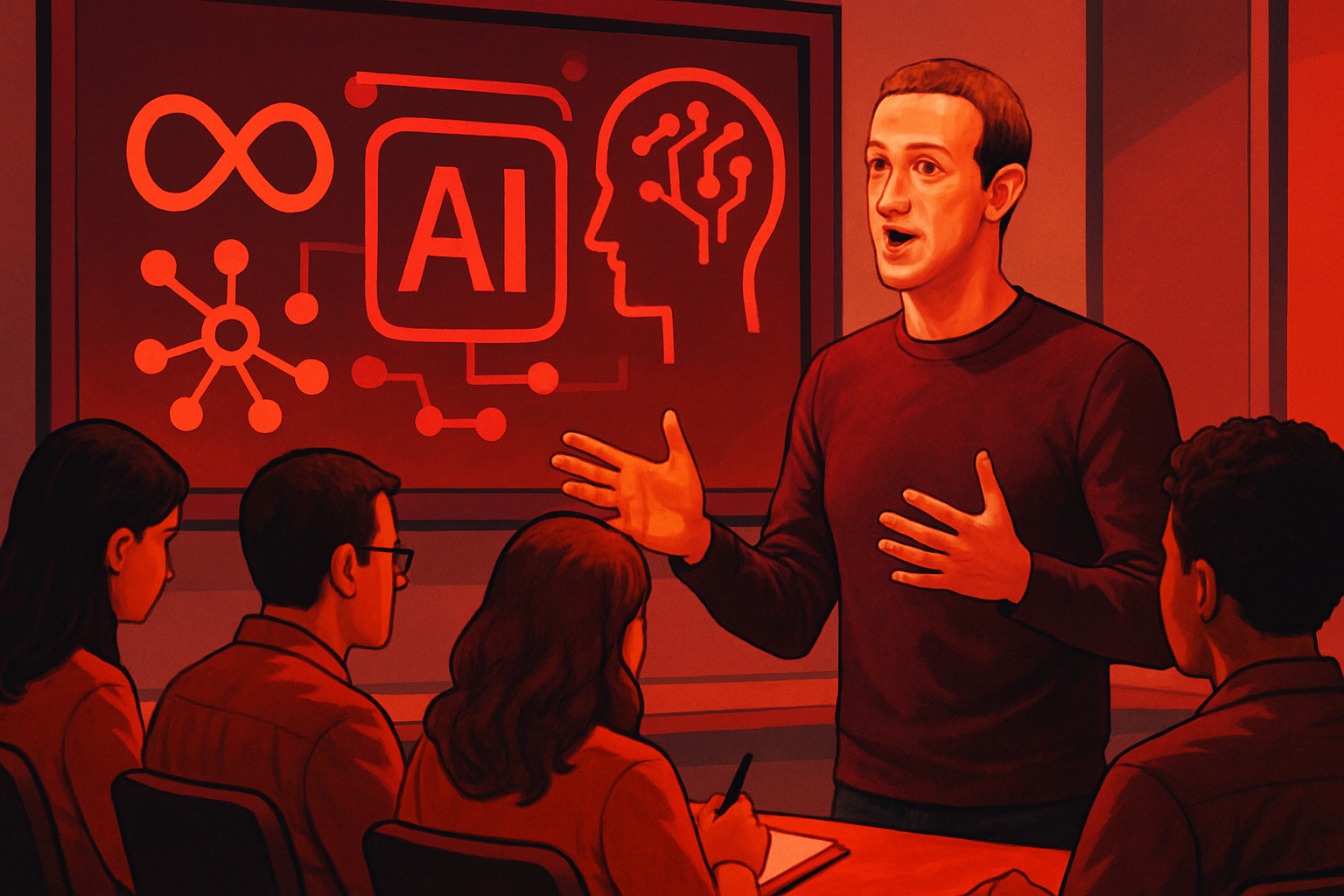
During an internal meeting, Mark Zuckerberg shared with his employees that the development towards superintelligence at Meta is progressing, but at a slower pace than initially expected. Despite colossal investments in artificial intelligence, advancements in the specific area of AI agents are not materializing as quickly as anticipated, according to reports from participants in the meeting.
Tensions Within Meta's AI Strategy
This observation highlights the internal tensions within Meta's ever-evolving AI strategy. Zuckerberg and his team are committed to building AI models, investing tens of billions of dollars in talent recruitment and infrastructure development. However, this race for innovation comes at a cost: the speed of development must be balanced with trust, morale, and employee engagement, who are the architects of these technologies.
Expectations for Short-Term Benefits
Despite these challenges, Zuckerberg reaffirmed that Meta is on the path to superintelligence, and he anticipates tangible benefits in the next three to six months. This ambition requires sustained effort, especially as the AI sector becomes increasingly competitive. Employees present during the call reported that Zuckerberg emphasized the importance of maintaining an intense work pace to achieve these goals.
Changes in the AI Training Program
Meta has also decided to revise one of the most controversial aspects of its AI training program. Andrew Bosworth, Chief Technology Officer, announced that the program which used employees' keystrokes and mouse movements to train its AI models will now be based on volunteer participation. This decision comes after negative reactions emerged, with employees feeling uncomfortable about the idea of their activities being recorded. The program had been suspended the previous month following internal leaks that revealed conversations and keystrokes of employees to their colleagues.
Impact on Morale and Trust
Bosworth acknowledged that the program had a negative impact on employee morale and trust. However, he also noted that the program had generated more useful data than expected, allowing Meta to avoid the need for large-scale deployment. This shift in direction echoes another recent decision: Meta has allowed engineers to leave the applied AI task force, after having been mass-reassigned to this unit. This turnaround has been perceived by some employees as a sign of "disengagement."
This decision came shortly after Bosworth warned that employee morale was "probably one of the worst" in Meta's history, a situation exacerbated by the layoff of 10% of the workforce, or about 8,000 people, in May.
Brief IA — L'actualité IA en français
L'essentiel de l'actualité de l'intelligence artificielle, décrypté et expliqué chaque jour.