Microsoft, Meta, and Amazon: AI Redefines the American Economy
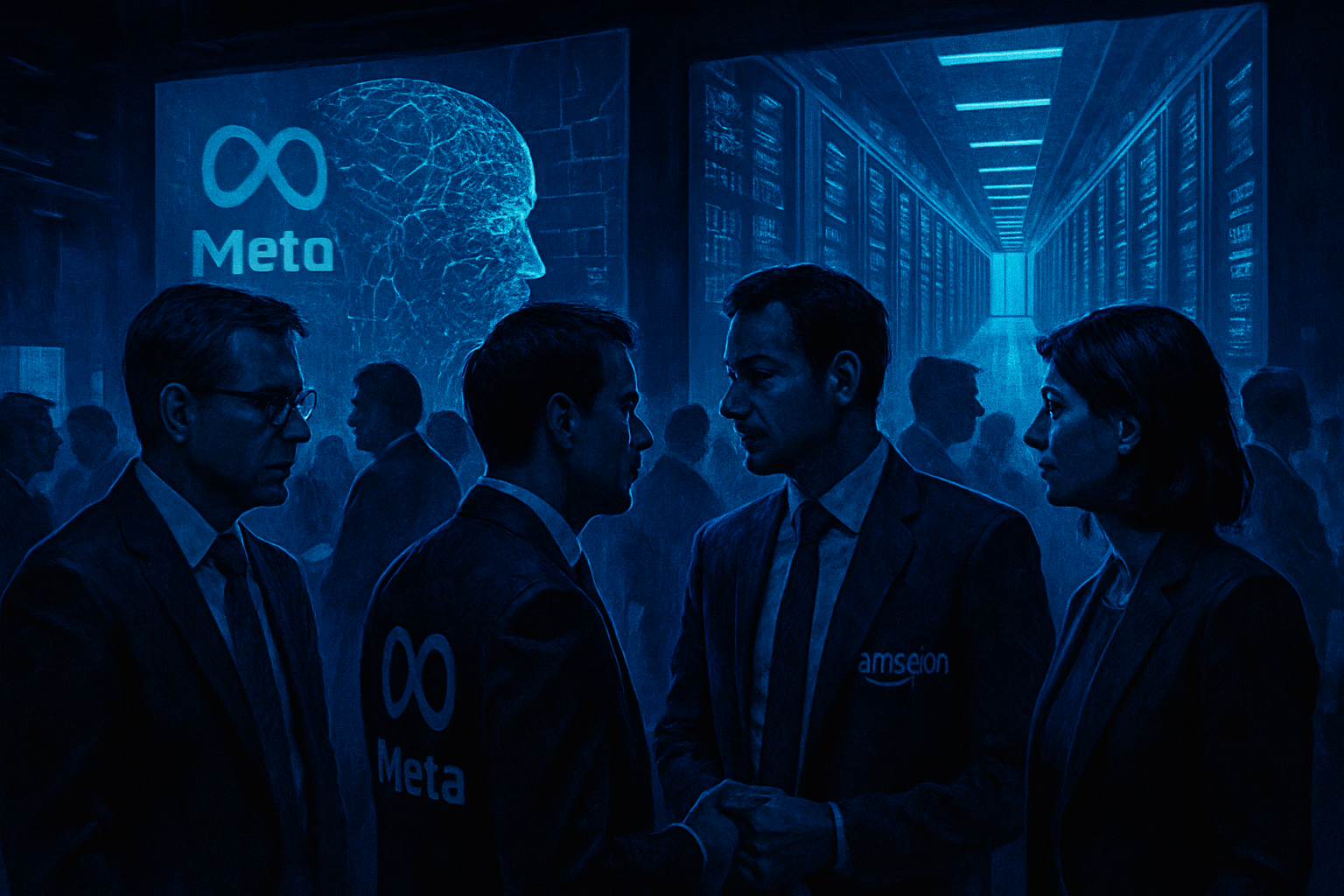
Massive Investments in AI Transform the American Economy
Artificial intelligence has become one of the most significant investment stories in the United States. Tech giants like Microsoft, Meta, Amazon, and Alphabet are collectively committing to invest hundreds of billions of dollars in AI infrastructure. This movement has also propelled NVIDIA among the most valuable companies in the world, thanks to the growing demand for advanced chips. What started as a race to develop smarter AI models is now a driving force influencing various sectors such as construction, manufacturing, energy, and digital infrastructure. The effects of these investments are spreading throughout the entire American economy.
An Unprecedented Infrastructure Push
Headlines often focus on new AI models, but rarely on the resources needed to make these models functional. Every chatbot, image generator, and AI assistant relies on immense data centers filled with specialized processors, connected by high-speed fiber optic networks and powered by massive amounts of electricity. Building this capacity requires billions of dollars in construction, engineering, and equipment, creating a level of demand that far exceeds the tech sector. These investments are also redefining expectations for the American economy, with productivity gains and investment spending influencing currency markets even before they appear in official data. For investors, currency trading can provide an early glimpse into how global markets are reacting to the expanding AI economy in the United States.
Productivity: Key to Future Growth
An important factor to consider is that the long-term value of AI will not be measured by the number of new tools hitting the market, but rather by how businesses become more productive with these tools. This process is already underway. For example, manufacturers are using AI to identify defects before products leave the factory, healthcare providers are reducing administrative burdens, and financial institutions are analyzing market data in seconds instead of hours. In fact, Goldman Sachs estimates that generative AI could boost global GDP by about 7% over the next decade if adoption continues to accelerate, highlighting why companies view AI as an investment in future growth rather than just a software update. However, realizing these gains will require careful implementation. Companies must invest in training, establish AI governance, and address data security and regulatory compliance to ensure that new tools deliver sustainable value rather than short-term efficiency gains. The adoption of AI is also changing how employees spend their time. Rather than replacing entire roles, many organizations are using AI as complementary tools that automate repetitive tasks such as report writing, analyzing large datasets, or managing customer inquiries. With repetitive tasks removed from their workload, employees can focus on higher-value work, while companies can improve their efficiency without fundamentally changing their operating model overnight.
Le brief IA que les pros lisent chaque soir
Les 7 actus IA du jour, décryptées en 5 min. Gratuit.
Inclus dès l'inscription : notre sélection des meilleurs guides & comparatifs IA.
Choisissez votre rythme
Gratuit · Pas de spam · Désabonnement en 1 clic
An Impact Beyond Silicon Valley
The companies building AI models are just one part of a much larger ecosystem. This is evident in how utilities are expanding electricity production to support new data centers, how semiconductor manufacturers are ramping up domestic production, and how construction firms are securing contracts to build facilities capable of hosting next-generation computing infrastructure. States like Texas, Arizona, and Virginia have become major beneficiaries for companies seeking locations with reliable power, skilled workers, and room to grow. Together, these investments support local economies and bolster AI-driven industries.
Anticipated Reactions from Financial Markets
Markets rarely wait for quarterly GDP figures before reassessing growth prospects, inflation expectations, and interest rate forecasts. Instead, investors react to new information as soon as it becomes available, particularly when major AI investment announcements signal stronger productivity or sustained business spending. This also helps explain why movements in the U.S. dollar can sometimes reflect optimism about economic prospects well before these trends become apparent in official statistics. Investors are also monitoring whether AI investment translates into stronger profits and sustained capital expenditures, both of which can influence interest rate expectations and global capital flows. Understanding the broader impact of AI means looking beyond tech headlines and focusing on the elements that influence the market: corporate earnings, employment reports, inflation data, and central bank decisions. Platforms like OANDA support this approach by combining access to the currency market with real-time market analysis, economic calendars, and research tools that help traders interpret macroeconomic developments.
AI: An Economic Engine Still in Development
Unlike a few years ago, investment in AI is no longer confined to tech companies or venture capital funding rounds; it is redefining supply chains, accelerating infrastructure projects, creating demand for skilled workers, and influencing how investors assess the outlook for the American economy. While these changes will take years to fully materialize, many of them are already visible today. The next chapter in the story of AI will likely be measured not by faster models, but by how companies convert record levels of investment into increased productivity in the workplace, and how financial markets respond.
Brief IA — L'actualité IA en français
L'essentiel de l'actualité de l'intelligence artificielle, décrypté et expliqué chaque jour.