NextEra and Duke Energy Mitigate AI's Impact on Energy
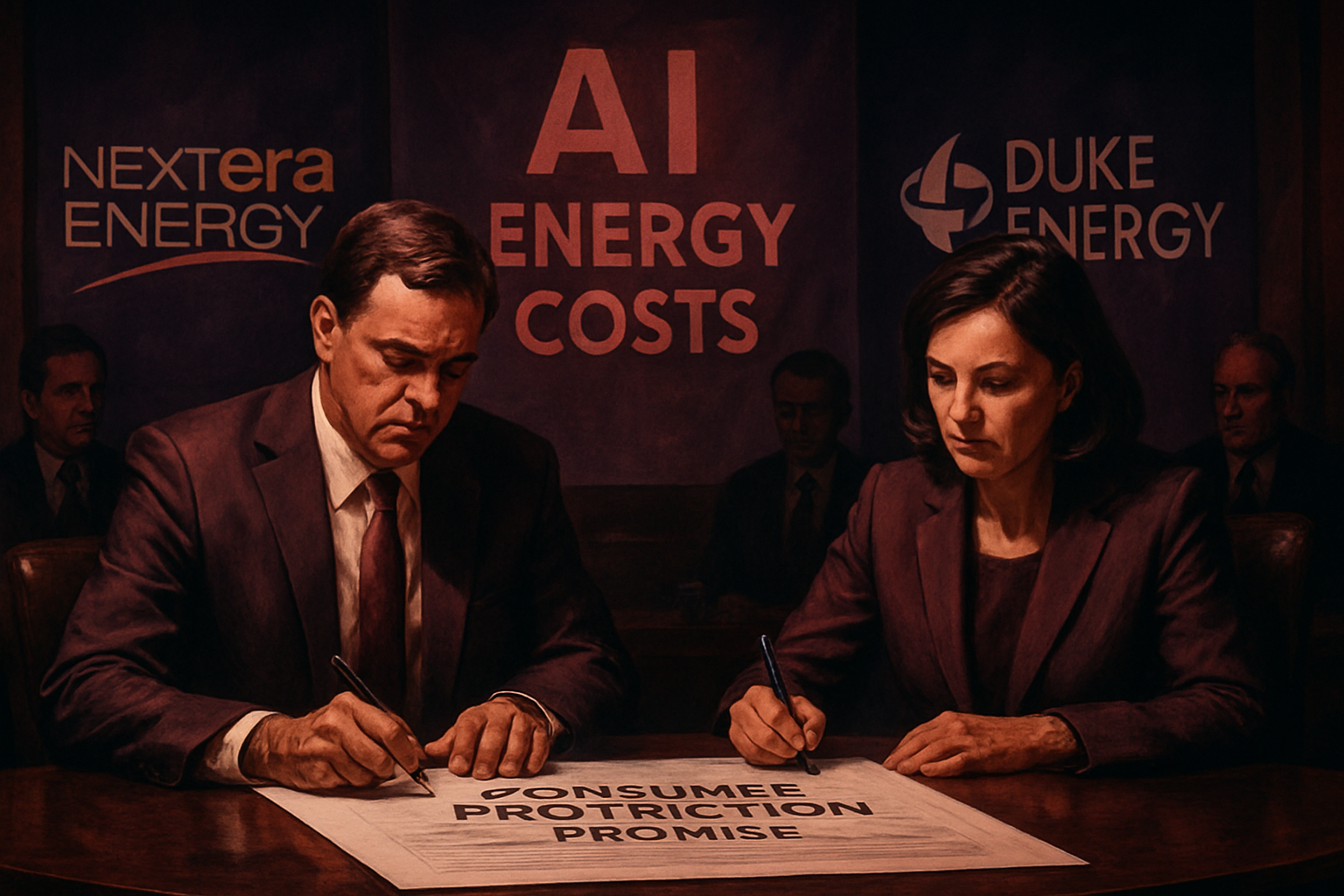
NextEra and Duke Energy Limit the Impact of AI on Energy
In response to concerns about rising electricity bills due to the surge of AI, the largest utility companies and data center developers in the United States are pledging to take action. The Wall Street Journal reports that nearly 200 organizations have signed President Donald Trump's "consumer protection pact," aimed at shielding average citizens from the costs associated with AI.
Trump is expected to announce the new signatories on Thursday, which include NextEra Energy, Duke Energy, Equinix, and Digital Realty, according to a list obtained by the WSJ. An anonymous White House official told the publication that those who have committed to the pact now represent about 80% of all electricity supplied to homes and businesses in the United States.
The consumer protection pact was introduced in March and includes several vague commitments for AI providers to cover the costs of new infrastructure necessary for training and operating generative AI models. It was signed by leaders from Google, Meta, Microsoft, Oracle, OpenAI, Amazon, and xAI at its announcement, with Trump stating at the event that tech companies "need a little help with public relations" to ease criticism regarding data center projects and rising electricity rates.
Le brief IA que les pros lisent chaque soir
Les 7 actus IA du jour, décryptées en 5 min. Gratuit.
Inclus dès l'inscription : notre sélection des meilleurs guides & comparatifs IA.
Choisissez votre rythme
Gratuit · Pas de spam · Désabonnement en 1 clic
Now, energy companies have joined the effort to try to mitigate some of the backlash, but the pact has so far done little to alleviate public and political concerns. Some data center projects have been scaled back or blocked in response to this reaction, and the largest electric grid operator in the United States, PJM, is now expected to add $6.3 billion in additional costs for consumers across 13 states due to the demand from data centers.
Enforcing the pact will be a challenge, as energy prices are generally set by state regulators and electricity traders, not by the federal government. Additionally, the pact is voluntary and carries no penalties for non-compliance, making it little more than a mere promise.
Brief IA — L'actualité IA en français
L'essentiel de l'actualité de l'intelligence artificielle, décrypté et expliqué chaque jour.