OpenAI Required to Obtain Washington's Approval for GPT-5.6
Le brief IA que les pros lisent chaque soir
Les 7 actus IA du jour, décryptées en 5 min. Gratuit.
Inclus dès l'inscription : notre sélection des meilleurs guides & comparatifs IA.
Choisis ton rythme
Gratuit · Pas de spam · Désabonnement en 1 clic
OpenAI Required to Obtain Washington's Approval for GPT-5.6
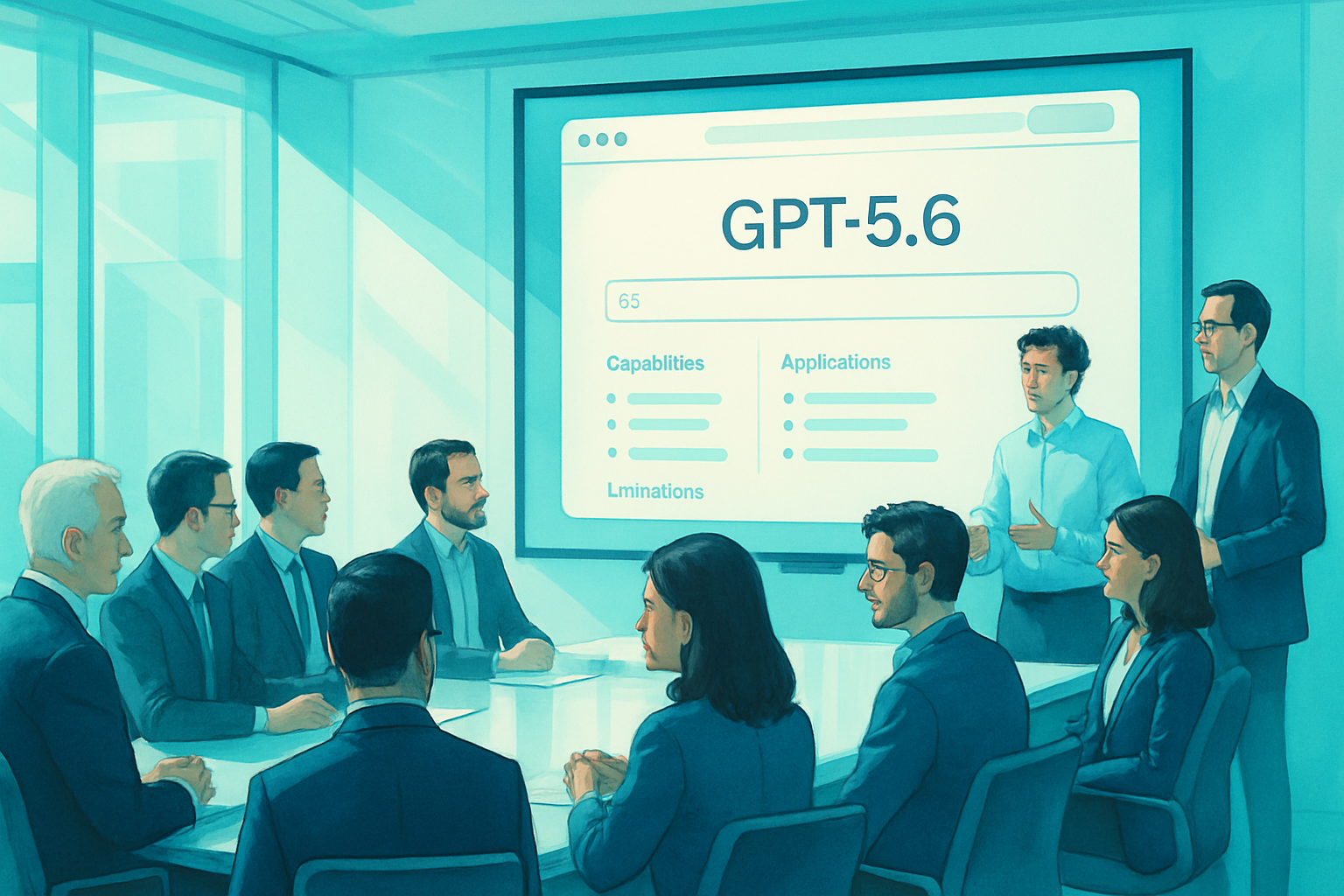
The deployment of GPT-5.6 by OpenAI now requires approval from the U.S. government on a "client-by-client" basis.
CEO Sam Altman announced this during an internal Q&A session on Wednesday, according to a report from The Information. The U.S. federal government has "requested" OpenAI to limit access to its latest AI model to a small group of partners. This request likely stems from the recently issued executive order by the Trump administration, which calls for a voluntary review of new AI models, particularly regarding cybersecurity.
OpenAI's situation illustrates how voluntary this review actually is. In the memo, Altman explained that the government would approve access "client by client" during the preview phase. He hopes for a broader deployment "a few weeks later," provided everything goes smoothly.
According to The Information, the request for a phased deployment arose from discussions with two government agencies, the Office of the National Cyber Director and the Office of Science and Technology Policy.
- "We have made it clear to the U.S. government that this is not our preferred model in the long term, and we will work with them and other industry stakeholders to achieve a more sustainable approach for future releases," Altman wrote in the memo.
Even after OpenAI shared its plans for the limited deployment with senior government officials, Altman received a call from Commerce Secretary Howard Lutnick. Lutnick warned the company not to proceed without approval from several agencies.
Anthropic's Crisis Fuels Fears of a De Facto Licensing Regime
The current situation dates back to Anthropic's "Mythos" presentation in early April. During the limited launch, the AI company strongly emphasized cybersecurity risks and stated that it would release the model only in phases. Independent groups and companies confirmed some of these risks. This caught the attention of the U.S. government, which saw both opportunities and threats to its own cybersecurity.
After Anthropic launched Fable, the first public model in the Mythos class, accompanied by specific security guidelines, the U.S. government intervened and forced the company to retract it. Anthropic reportedly worked with the government beforehand to identify security vulnerabilities in Fable, and according to The Information, authorities had raised no objections at the announcement of the planned launch.
However, things soured after the launch. A likely factor is the strained relationship between Anthropic and the Pentagon. The company was classified as a supply chain risk after it refused to grant the Pentagon access for domestic mass surveillance and autonomous warfare.
Discussions about re-releasing Fable are ongoing. A White House spokesperson told The Information: "The White House continues to work with leading AI labs to develop shared approaches to address the challenges posed by the scale of this technology."
Brief IA — L'actualité IA en français
L'essentiel de l'actualité de l'intelligence artificielle, décrypté et expliqué chaque jour.