OpenAI and AI Regulation: An Inevitable Backlash
Le brief IA que les pros lisent chaque soir
Les 7 actus IA du jour, décryptées en 5 min. Gratuit.
Inclus dès l'inscription : notre sélection des meilleurs guides & comparatifs IA.
Choisis ton rythme
Gratuit · Pas de spam · Désabonnement en 1 clic
OpenAI and the Call for Global Regulation
Last Wednesday, Sam Altman, the CEO of OpenAI, published an op-ed in the Financial Times, advocating for the creation of an international body dedicated to regulating the safety of artificial intelligence. Altman envisions global cooperation as an essential means to prevent excessive power concentration and ensure that the benefits of AI are shared equitably. This proposal follows his earlier call for an organization similar to the International Atomic Energy Agency, but applied to AI. However, this vision raises questions among the global public, particularly regarding the nature of the promised benefits of AI.
From Awe to Opposition
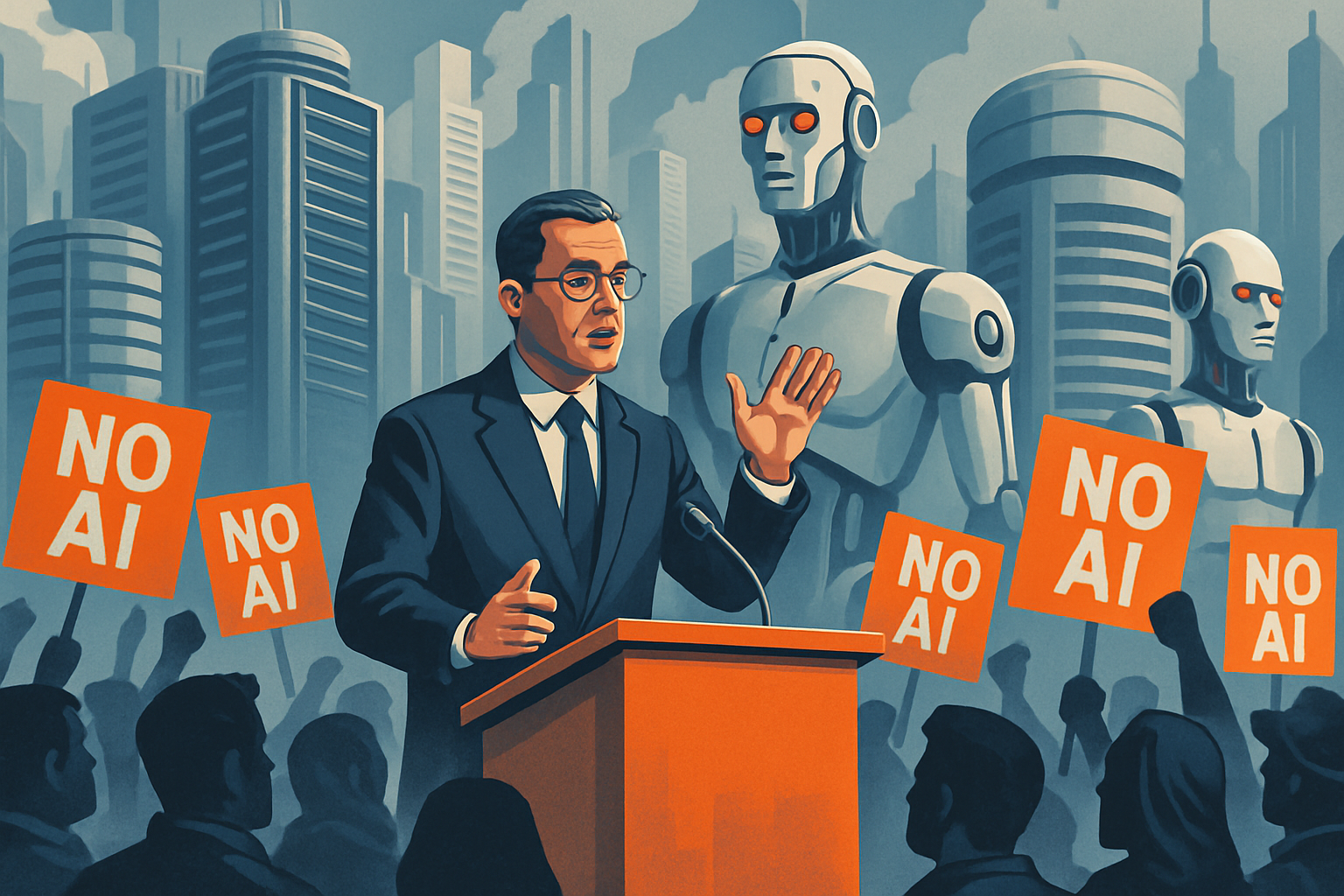
Three and a half years after the introduction of ChatGPT, the initial enthusiasm for these AI tools has transformed into a wave of anger and anxiety, accompanied by increasingly organized opposition. Major tech companies are beginning to feel the effects of this backlash, while criticism of AI continues to multiply. This week, The Economist illustrated this trend by featuring a robot pierced by a lance on its cover, with a clear warning: "The backlash against AI is just beginning."
Growing Opposition to Data Centers
Public opposition to the construction of data centers is now well documented. A survey conducted in May by Gallup revealed that 71% of Americans are somewhat or strongly opposed to the establishment of such centers in their area, a figure higher than the 53% who oppose nuclear power plants. This opposition has significantly slowed construction projects in the AI sector. According to an analysis by Data Center Watch, at least 75 data center projects in the United States, representing a value of $130 billion, have been delayed or blocked in the first quarter of 2026. The number of organized groups against these projects has doubled, reaching 833 across 49 states.
The NIMBY Phenomenon
This resistance is partly framed within the well-known phenomenon of NIMBYism (Not In My Back Yard) in the United States. While convincing a member of Congress to take action can be difficult, it is often easier to delay the construction of new infrastructure in one's own city. Some of the initial criticisms against data centers stemmed from misinformation, particularly regarding water usage. However, these facilities present real negative externalities that tech giants are only beginning to address. Among these are rising electricity bills for local consumers, tax breaks that affect public service funding, greenhouse gas emissions, and infrasonic noise nuisances that can lead to health issues such as insomnia and anxiety.
Economic Concerns Related to AI
Beyond environmental concerns, one of the main reasons for opposition to data centers is economic. Many Americans fear that AI will eliminate or radically transform their jobs. This fear is beginning to materialize, regardless of proximity to a data center. The threat that AI poses to employment is one of the most debated topics in 2026, although the available data is mixed. Currently, there is no employment crisis directly linked to AI, with hiring exceeding expectations in May, and the unemployment rate remaining stable at 4.3% over the past three months. However, the phenomenon of "AI washing," where CEOs attribute job cuts to technology to appease financial markets, is very real.
Employment Warning Signs
Despite the absence of an immediate crisis, several warning signs justify some concern. AI is now the primary reason cited for layoffs in the tech sector, where its adoption is the highest. Recently, a study conducted by Stanford economist Erik Brynjolfsson revealed concerning data on the wages of 4.6 million workers across 730 professions. Young workers aged 22 to 25, in jobs highly exposed to AI, are seeing their employment decline by 3.8% per year. While the overall impact remains low, with a 0.2% decrease in AI-exposed jobs year-over-year, these trends raise concerns for the future.
Public Perception and Expectations
According to the Stanford AI Index, nearly two-thirds of Americans believe that AI will lead to a decrease in jobs over the next 20 years, while only 5% think it will create more jobs. Workers may observe signs of impending disruption in their own workplaces, where leaders often appear more enthusiastic about AI than their employees. This difference in enthusiasm can be attributed to leaders' belief that AI could reduce labor costs.
Growing Demand for AI Services
The increasing demand for AI services has opened a new front in the backlash against this technology. The development of AI infrastructure is absorbing the majority of memory and storage chips, and manufacturers are warning of a continued rise in prices next year. Already, Apple has raised the prices of its MacBooks and iPads by up to 25%, and iPhone prices also seem poised to climb. Microsoft recently announced a price increase for its Xbox console from $100 to $150, and Valve has launched its cheapest Steam machine at $1,049.
The Impact of Memory Shortages
Analysts predict that the memory supply shortage will extend until 2027, leading to AI-driven inflation that has already increased the average cost of software and computer accessories by 15%. With American wages relatively stagnant, these price hikes are likely to hit consumers hard.
Efforts by Tech Companies
Tech companies are not entirely insensitive to the backlash. They are proposing to offset rising electricity rates, fund infrastructure to support data centers, and invest millions in retraining programs. A new $500 million effort, funded by major labs, has been announced to test wage insurance and other resilience strategies in the face of AI.
Upcoming Challenges for the AI Industry
However, the externalities of AI are growing faster than the plans put in place to address them. In his op-ed, Altman discusses the future promises of AI, such as curing diseases and creating unprecedented abundance. Yet, while waiting for these advancements, AI continues to generate significant disruptions. If the industry does not begin to bear a greater share of its costs, the backlash could intensify, rendering current challenges almost insignificant by comparison.
Brief IA — L'actualité IA en français
L'essentiel de l'actualité de l'intelligence artificielle, décrypté et expliqué chaque jour.