OpenAI and Washington: A $42 Billion Deal in Sight
Le brief IA que les pros lisent chaque soir
Les 7 actus IA du jour, décryptées en 5 min. Gratuit.
Inclus dès l'inscription : notre sélection des meilleurs guides & comparatifs IA.
Choisis ton rythme
Gratuit · Pas de spam · Désabonnement en 1 clic
OpenAI Seeking Government Support
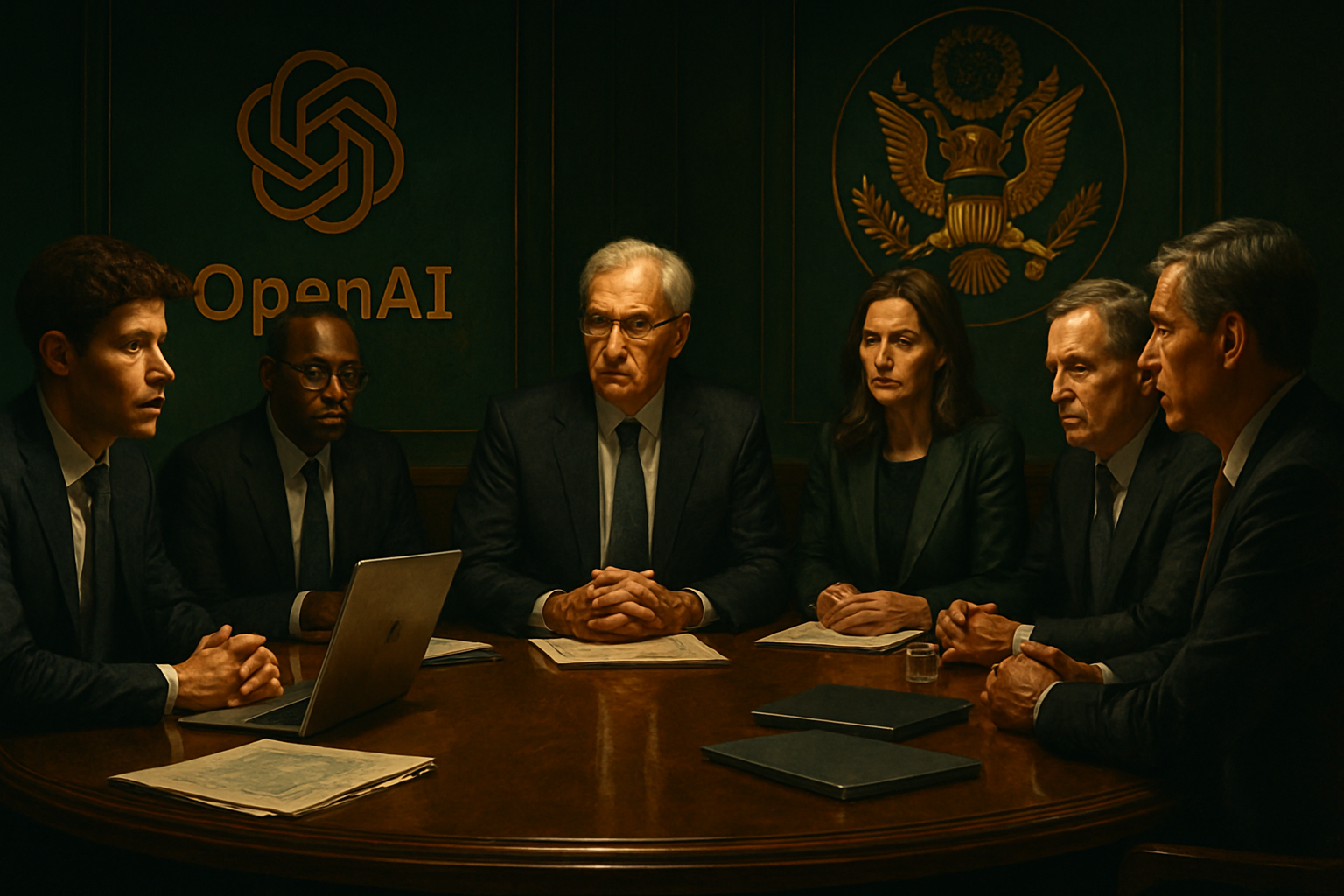
OpenAI, the company behind the innovative ChatGPT, is currently in preliminary discussions with the Trump administration to consider government participation in its capital. According to reports from the Financial Times, two anonymous sources close to the matter revealed that Sam Altman, the CEO of OpenAI, is proposing that the company sell 5% of its equity to an American sovereign wealth fund. With OpenAI's current valuation standing at $852 billion, this transaction would represent a colossal investment of $42 billion for the United States government.
Altman's plan is not limited to OpenAI. He also envisions that other AI giants, such as Google, Meta, and Anthropic, might follow this same path. However, it remains uncertain whether these companies would be interested in such a move. For now, OpenAI has not responded to requests for comments on this proposal. Although nothing is finalized yet, if this agreement were to materialize, it would provide OpenAI with financial support and increased credibility, which could be crucial in light of the growing criticism towards the AI industry.
Reducing Political Pressure and Preparing for the Future
This initiative could also play a key role for OpenAI by alleviating the political and regulatory pressures it faces. The company is under the watchful eye of regulators, and such an agreement could offer it some leeway as it considers going public. OpenAI, like its competitor Anthropic, has begun taking steps towards an initial public offering, allowing the general public to purchase shares in the company. By seeking to ease its relations with Washington, Altman hopes to stay on course for the IPO. However, there are concerns that this agreement could artificially inflate the value of AI companies in financial markets or involve taxpayers in a potential bailout if the AI sector were to experience a sharp downturn.
The Concept of a Public Wealth Fund
A sovereign wealth fund dedicated to AI could provide the government with a direct stake in the success of this technology while redistributing some of the profits generated by the AI boom. An example of such a fund is the Alaska Permanent Fund, which invests a portion of revenue from extractive industries and redistributes the gains to state residents. Last month, Senator Bernie Sanders proposed legislation to create a public wealth fund in the United States, suggesting that the government take a 50% stake. According to him, since AI relies on the collective knowledge of humanity, its benefits should be shared equitably.
Currently, AI companies are not yet profitable, spending more on infrastructure and computing than they earn from subscriptions. The idea is that if AI becomes profitable in the future, its financial successes should benefit everyone, not just the leaders of tech companies. OpenAI has expressed in a policy paper that a public wealth fund could directly redistribute profits to citizens and ensure that AI does not exacerbate economic inequalities.
The Stakes for the AI Industry
The idea of government participation could appeal to Sam Altman and OpenAI, especially in light of the administration's increasing demands for stronger oversight of the AI industry. Recently, President Trump ordered a government review process for new AI models before they hit the market, citing national security concerns.
Some critics view this move as an attempt to hold the government accountable before the AI industry encounters difficulties, thus creating a sort of preventive safety net. If this agreement comes to fruition, it could significantly alter investors' perceptions regarding OpenAI's IPO. Indranil Bandyopadhyay, a principal analyst at Forrester, stated that some institutional investors might see it as a reduction of risks, while others might view it as a governance obstacle.
However, a 5% stake would be costly and would require Congressional approval, making the agreement less likely. Ed Zitron, author of the newsletter Where's Your Ed At, pointed out that, given high living costs, the $42 billion price tag could make this move unpopular among the American public. According to him, OpenAI appears desperate, having proposed ideas for sovereign funds and government investments for over a year, which may indicate a lack of clear direction beyond seeking funding.
Brief IA — L'actualité IA en français
L'essentiel de l'actualité de l'intelligence artificielle, décrypté et expliqué chaque jour.