OpenAI, Google, and Meta: When AI Takes Inspiration from the Market
Le brief IA que les pros lisent chaque soir
Les 7 actus IA du jour, décryptées en 5 min. Gratuit.
Inclus dès l'inscription : notre sélection des meilleurs guides & comparatifs IA.
Choisis ton rythme
Gratuit · Pas de spam · Désabonnement en 1 clic
OpenAI and its Jalapeño Chip
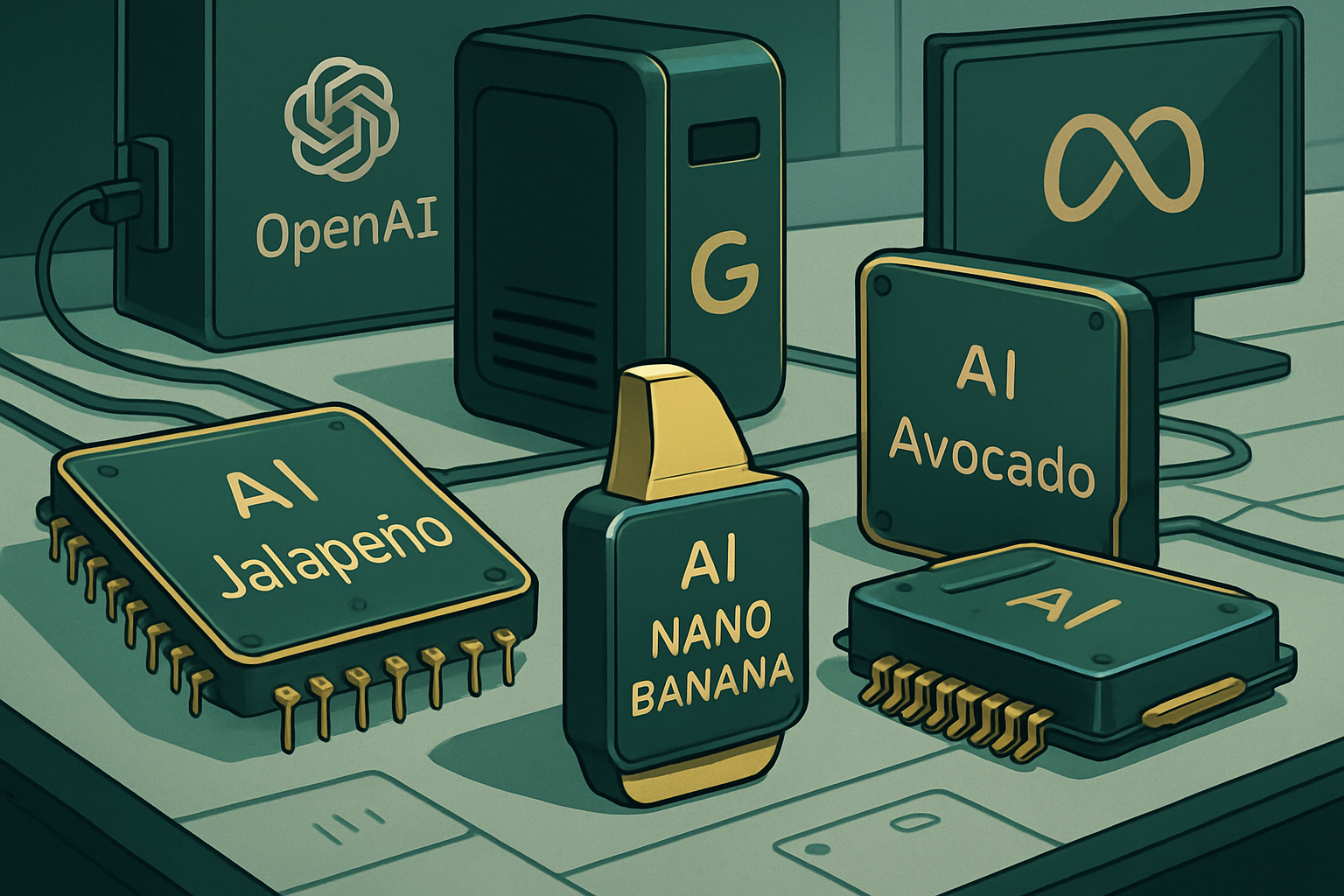
On June 24, OpenAI announced the launch of its first advanced chip, developed in collaboration with Broadcom, and named "Jalapeño." This choice of name, which immediately evokes the spiciness of the pepper, fits into a broader trend where tech companies draw inspiration from gastronomy to name their innovations. Sam Altman, the CEO of OpenAI, is not the only one looking to his grocery list for catchy names. This naming strategy, which may seem anecdotal, nonetheless underscores the strategic importance of these developments for the future of artificial intelligence.
OpenAI emphasized the significance of these chips in a statement, declaring: "Chips are fundamental to the AI economy. Building our own chip expands our complete platform, from products to models to infrastructure, and will help us scale intelligence, serve more people, and broaden access to AI."
OpenAI and the Garlic Model
The creator of ChatGPT has also named its new large language model "garlic," according to The Information. This model is distinct from another LLM that OpenAI is developing, known by the code name "Shallotpeat." These naming choices, while playful, reflect a differentiation strategy in an increasingly competitive market.
Google and the Nano Banana Project
Google, for its part, has also adopted this playful approach by naming its AI image generator, integrated into the Gemini project, "Nano Banana Pro." This name was made public on November 20, 2025, although the model had previously been known internally as "nano-banana." This decision to publicly unveil such an original name demonstrates the importance Google places on image and communication surrounding its technological innovations.
Meta and the Avocado AI
Meta is not to be outdone with its AI model named "avocado," according to a report by CNBC. However, CEO Mark Zuckerberg chose to move away from the food theme for the final name of the model, opting for "Muse Spark." This model is the first released by Meta after a major overhaul of its artificial intelligence strategy. This overhaul included a colossal investment of $14 billion in Scale AI, aiming to recruit Alexandr Wang, co-founder of Scale AI, to lead this new direction.
Varied and Creative Code Names
The code names used by these companies are not limited to fruits and vegetables. OpenAI, for example, used "strawberry" to refer to its model o1, a choice that may reference the difficulty AI models have in correctly identifying the number of "R's" in the word "strawberry." Prior to that, OpenAI had a secret project named Q*.
In 2025, xAI, Elon Musk's company, opted for a sweet name, "chocolate," for an early test version of Grok-3. Meanwhile, Mistral AI, a French startup, chose a fiercer name with "Jaguar" for a test model. Anthropic, for its part, named its family of models Opus, Sonnett, and Hakiu, and recently added Mythos and Fable, although the release of the latter encountered complications.
These naming choices, while sometimes eccentric, reveal a thoughtful marketing strategy and a desire to stand out in a sector where innovation is key.
Brief IA — L'actualité IA en français
L'essentiel de l'actualité de l'intelligence artificielle, décrypté et expliqué chaque jour.