OpenAI: The White House Slows Down GPT 5.6
Le brief IA que les pros lisent chaque soir
Les 7 actus IA du jour, décryptées en 5 min. Gratuit.
Inclus dès l'inscription : notre sélection des meilleurs guides & comparatifs IA.
Choisis ton rythme
Gratuit · Pas de spam · Désabonnement en 1 clic
OpenAI Under Pressure to Delay GPT 5.6
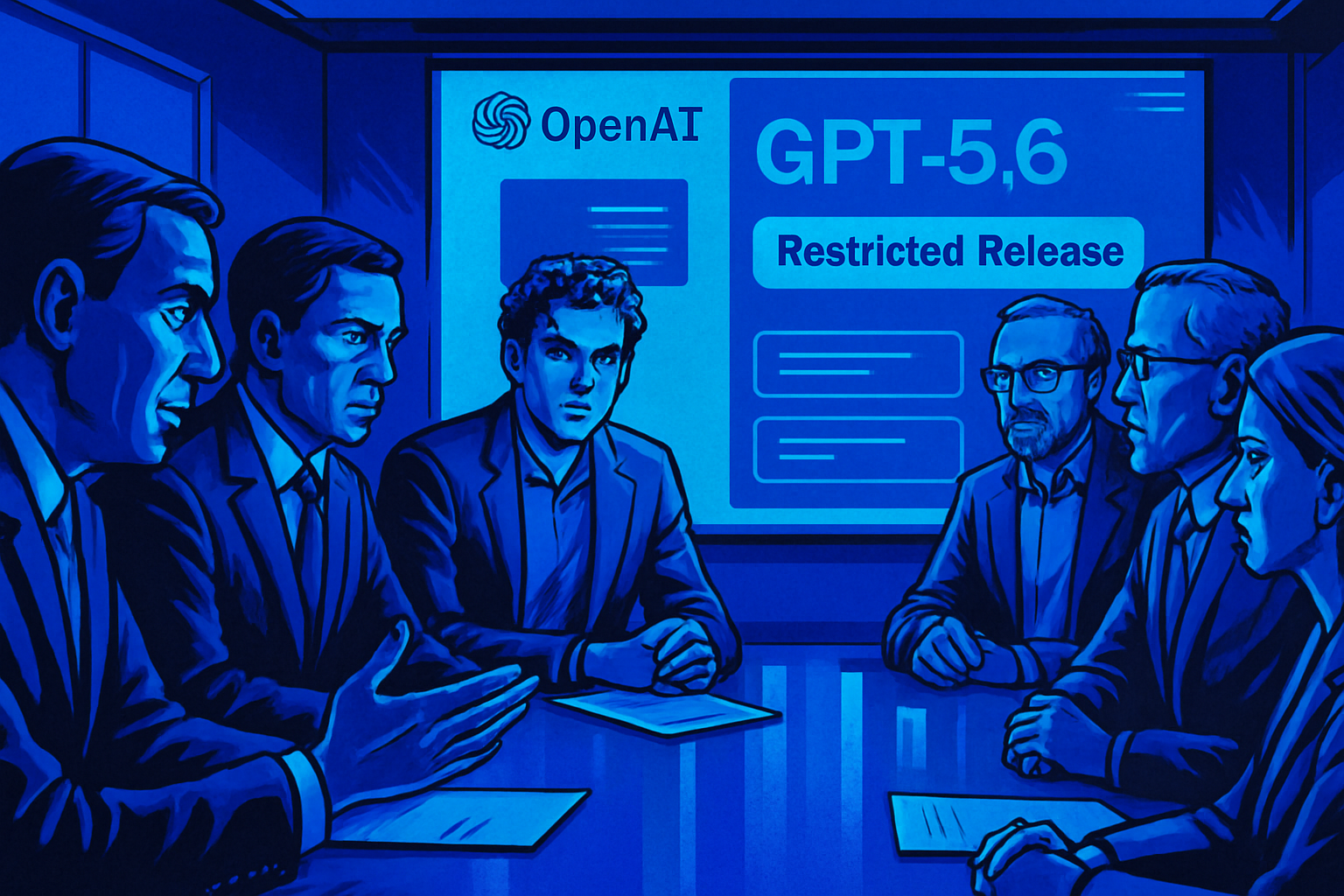
OpenAI's latest artificial intelligence model, GPT 5.6, will not be immediately available to the general public like its predecessors. According to reports from The Information, the Trump administration has requested that OpenAI initially restrict access to this model to a select group of partners. This decision marks a turning point in how OpenAI distributes its innovations.
In a recent meeting, Sam Altman, the CEO of OpenAI, informed his team that the U.S. government would require specific approval for each client wishing to access GPT 5.6 during a preview period. Altman clarified that if this phase goes smoothly, the company hopes to expand access to a broader audience in the following weeks.
Increased Government Pressure
The Trump administration appears to want OpenAI to adopt a strategy similar to that of Anthropic, which has already chosen to keep its most advanced AI models under strict control. The Information reports that OpenAI employees are working closely with the government to prepare for the launch of GPT 5.6. The agencies involved in this request for a limited launch include the Office of the National Cyber Director and the Office of Science and Technology Policy.
Although the Trump administration initially advocated for a non-interventionist approach to AI, it has recently shifted towards favoring increased federal oversight. An executive order signed by Trump this month encourages AI companies to voluntarily submit their new models for government testing before they hit the market.
Anthropic and the Precedent of Claude Mythos
Earlier this year, Anthropic stirred controversy by announcing that its cybernetic model, Claude Mythos, would only be available to a limited number of partners through the Project Glasswing program. The company justified this decision by stating that the model was too powerful and could be dangerous if it fell into the wrong hands. This approach has sparked debates among observers, with some viewing it as a marketing strategy and others as a legitimate precautionary measure.
The Risks of Advanced AI Models
Cybercriminals have long exploited automated tools, but the rise of generative AI now offers them enhanced capabilities. Large language models (LLMs) have demonstrated their ability to autonomously create malware and conduct ransomware attacks.
Concerns surrounding advanced models like Mythos lie in their ability to identify and exploit software vulnerabilities at a speed unmatched by human analysts. Many software systems contain hidden bugs that can serve as entry points for attacks on corporate networks. However, as long as these models remain inaccessible to the public, it is difficult to assess their true level of danger.
Brief IA — L'actualité IA en français
L'essentiel de l'actualité de l'intelligence artificielle, décrypté et expliqué chaque jour.