OpenAI, Microsoft, and Amazon: Preparing Workers for AI
Le brief IA que les pros lisent chaque soir
Les 7 actus IA du jour, décryptées en 5 min. Gratuit.
Inclus dès l'inscription : notre sélection des meilleurs guides & comparatifs IA.
Choisis ton rythme
Gratuit · Pas de spam · Désabonnement en 1 clic
An Ambitious Initiative to Prepare for the Future of Work
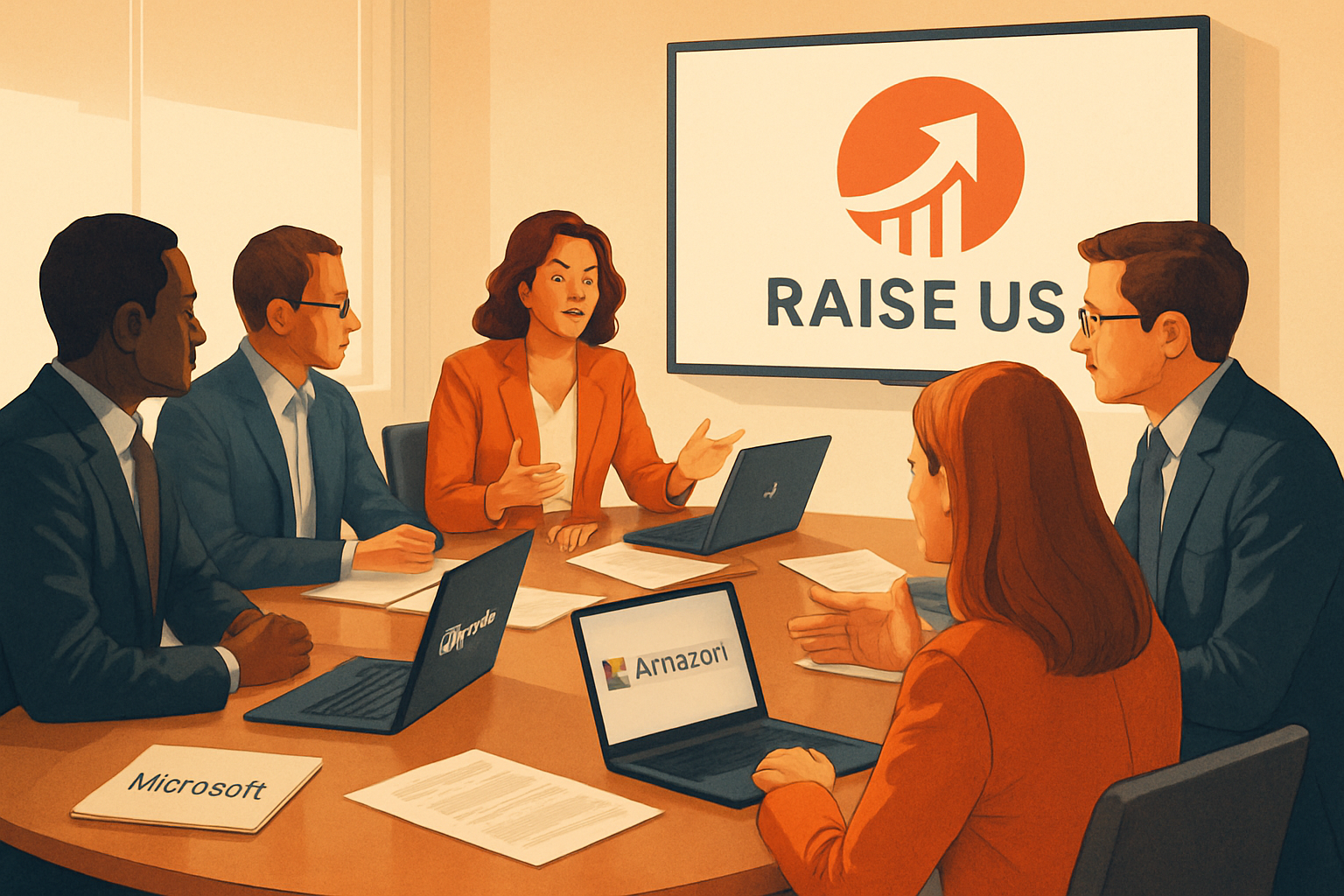
A new organization, called Raise US, has emerged with the mission of preparing the United States for the upheavals that artificial intelligence could cause in the labor market. This initiative is supported by tech giants such as OpenAI, Anthropic, Amazon, and Microsoft. The goal of Raise US is to implement concrete pilot projects, including wage insurance policies, to help workers adapt to the changes brought about by AI.
The most influential technology and artificial intelligence companies are joining forces to support Raise US, a nonprofit organization aiming to raise $1 billion. This amount will be used to create a national platform designed to advise governors on the best strategies to prepare their workforce for the challenges of AI. To date, Raise US has already managed to raise $500 million. Notably, the OpenAI Foundation, which holds a $100 billion stake in OpenAI's commercial branch, is a key player in this initiative.
A Human Strategy for Technological Competition
Gina Raimondo, former Secretary of Commerce, leads this new organization. She emphasized the importance of developing a people-centered strategy for the United States to maintain its edge in the global AI competition. According to her, a technological strategy without a human strategy is insufficient for effective leadership.
Raise US has already established partnerships with several U.S. states, including Arkansas, Connecticut, Maryland, and Utah. These collaborations reflect a balance between states governed by Republicans and Democrats, illustrating a bipartisan approach to addressing the challenges posed by AI.
Pilot Projects for Concrete Impact
In Arkansas, Raise US is working with Governor Sarah Huckabee Sanders to develop Arkansas LAUNCH, an AI-powered career navigation platform. This platform aims to connect students and job seekers with personalized learning pathways tailored to the needs of employers.
In Maryland, the organization is collaborating with Governor Wes Moore to expand service opportunities for young graduates in key sectors such as health and education. The goal is to provide hands-on experiences that better prepare young people to enter the job market.
Utah presents a particularly interesting case. This state has been the scene of controversies surrounding the development of AI data centers, especially after Kevin O'Leary, a star of Shark Tank, scaled back his data center project following strong public and political opposition.
A Vision for the Future
Raise US plans to expand its initiative to other states in the coming months. The organization also aims to explore "concrete pilot projects" for policies such as short-term compensation and wage insurance.
Gina Raimondo is supported in this effort by former Indiana Governor Eric Holcomb and David Sze, a partner at Greylock, who is part of the Raise US board. The organization's advisory board includes influential figures from business, politics, labor, philanthropy, and economics, such as Laurene Powell Jobs, Steve Schwarzman of Blackstone, and renowned economist Raj Chetty.
The Potential Impact of AI on Employment
The debate over the impact of AI on the labor market is intense. Dario Amodei, CEO of Anthropic, has expressed concerns that AI could eliminate up to 50% of entry-level office jobs in the 1 to 5 years ahead.
Tech company leaders are seeking to alleviate fears of an employment "apocalypse," which could harm the perception of AI in the United States. Sam Altman, CEO of OpenAI, recently stated that he is "happy to be wrong" regarding his initial forecasts about the impact of AI on employment, noting that the effects have not been as drastic as he had anticipated during an event in May hosted by the Commonwealth Bank of Australia.
Brief IA — L'actualité IA en français
L'essentiel de l'actualité de l'intelligence artificielle, décrypté et expliqué chaque jour.