OpenAI Offers 5% of Its Capital to Trump to Soothe Washington
Le brief IA que les pros lisent chaque soir
Les 7 actus IA du jour, décryptées en 5 min. Gratuit.
Inclus dès l'inscription : notre sélection des meilleurs guides & comparatifs IA.
Choisis ton rythme
Gratuit · Pas de spam · Désabonnement en 1 clic
OpenAI Offers 5% of Its Capital to Trump to Soothe Washington
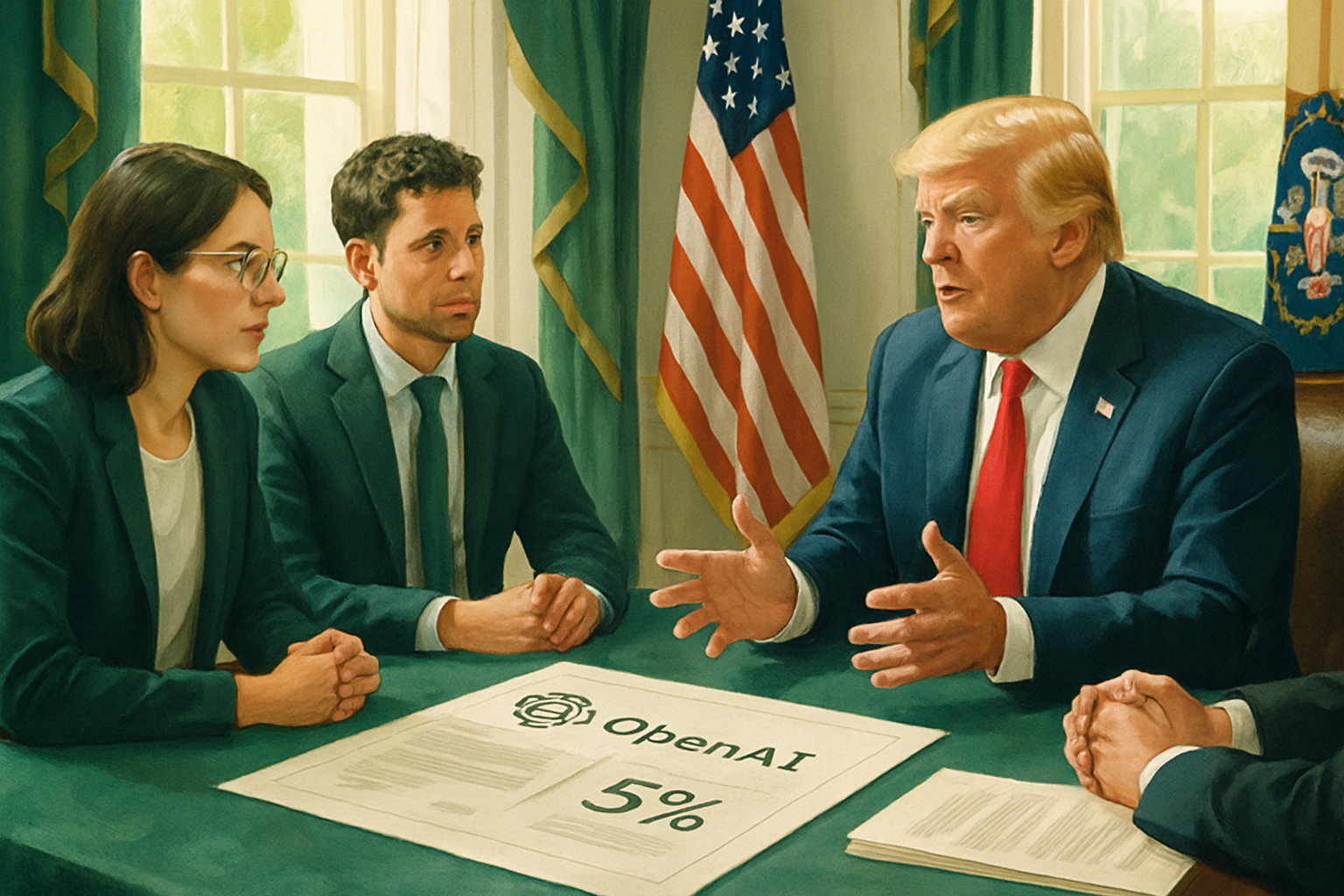
According to information from the Financial Times, OpenAI has begun discussions with the Trump administration to transfer 5% of its capital to the U.S. government. Valued at $852 billion, the creator of ChatGPT does not wish to act alone. Its CEO, Sam Altman, suggests that other industry giants, such as Anthropic, Google, or Meta, adopt the same approach.
The primary goal of this initiative is political, as the company actively prepares for its IPO. It faces growing distrust in Washington, where lawmakers are concerned about its impact on society, particularly regarding job losses, cybersecurity, and the construction of massive data centers. By offering a stake in the company directly to the government, the startup hopes to overcome these regulatory hurdles, win favor with the administration, and secure its future profits.
The AI Sector Under Close Scrutiny
This outreach to the White House comes at a particularly tense time for the artificial intelligence (AI) ecosystem. The U.S. government has significantly strengthened its position in recent weeks, to the point that OpenAI had to postpone the public launch of its new model, GPT-5.6. Meanwhile, its major rival, Anthropic, was forced to suspend access to its Fable 5 model for foreign nationals due to national security concerns.
Sam Altman's company is thus drawing inspiration from a proven method; recently, Donald Trump has been much more conciliatory towards chipmaker Intel after the U.S. government took a 10% stake in its capital. With this financial maneuver, the company hopes to make Intel a partner directly invested in its economic success.
Sharing Profits in the Face of Automation Threat
Specifically, this 5% stake, which would represent approximately $42.6 billion based on OpenAI's current valuation, would not be paid directly into the government's coffers for its current expenditures. Sam Altman's idea is to draw inspiration from the Alaska Permanent Fund, a sovereign fund fueled by local oil revenues that distributes dividends to its residents each year.
Transposed to tech, this model would allow for a portion of the wealth generated by AI to be redistributed directly to American citizens in the form of a digital dividend. In essence, it would serve as a way to offset the impact of automation on the job market.
This proposal, although in its early stages and dependent on a future Congressional vote, resonates particularly within the broader political landscape. Donald Trump himself has stated a desire to explore ways for Americans to benefit from the gains of the sector. On the other side of the aisle, Democratic Senator Bernie Sanders has also spoken with Sam Altman in recent weeks. While Sanders supports the idea of a sovereign fund, he is much more ambitious: he advocates for the state to reclaim not 5%, but nearly half of the capital of AI giants.
OpenAI is therefore proposing to cede 5% of its capital to the U.S. government to ease political tensions ahead of its future IPO. This offer comes as Washington hardens its stance, having slowed the launches of the latest models from OpenAI and Anthropic. Inspired by the Alaska model, this sovereign fund project aims to redistribute AI profits directly to Americans.
Brief IA — L'actualité IA en français
L'essentiel de l'actualité de l'intelligence artificielle, décrypté et expliqué chaque jour.