OpenAI renforce ChatGPT contre les violations de droits d'auteur
Le brief IA que les pros lisent chaque soir
Les 7 actus IA du jour, décryptées en 5 min. Gratuit.
Inclus dès l'inscription : notre sélection des meilleurs guides & comparatifs IA.
Choisis ton rythme
Gratuit · Pas de spam · Désabonnement en 1 clic
OpenAI et la protection des droits d'auteur
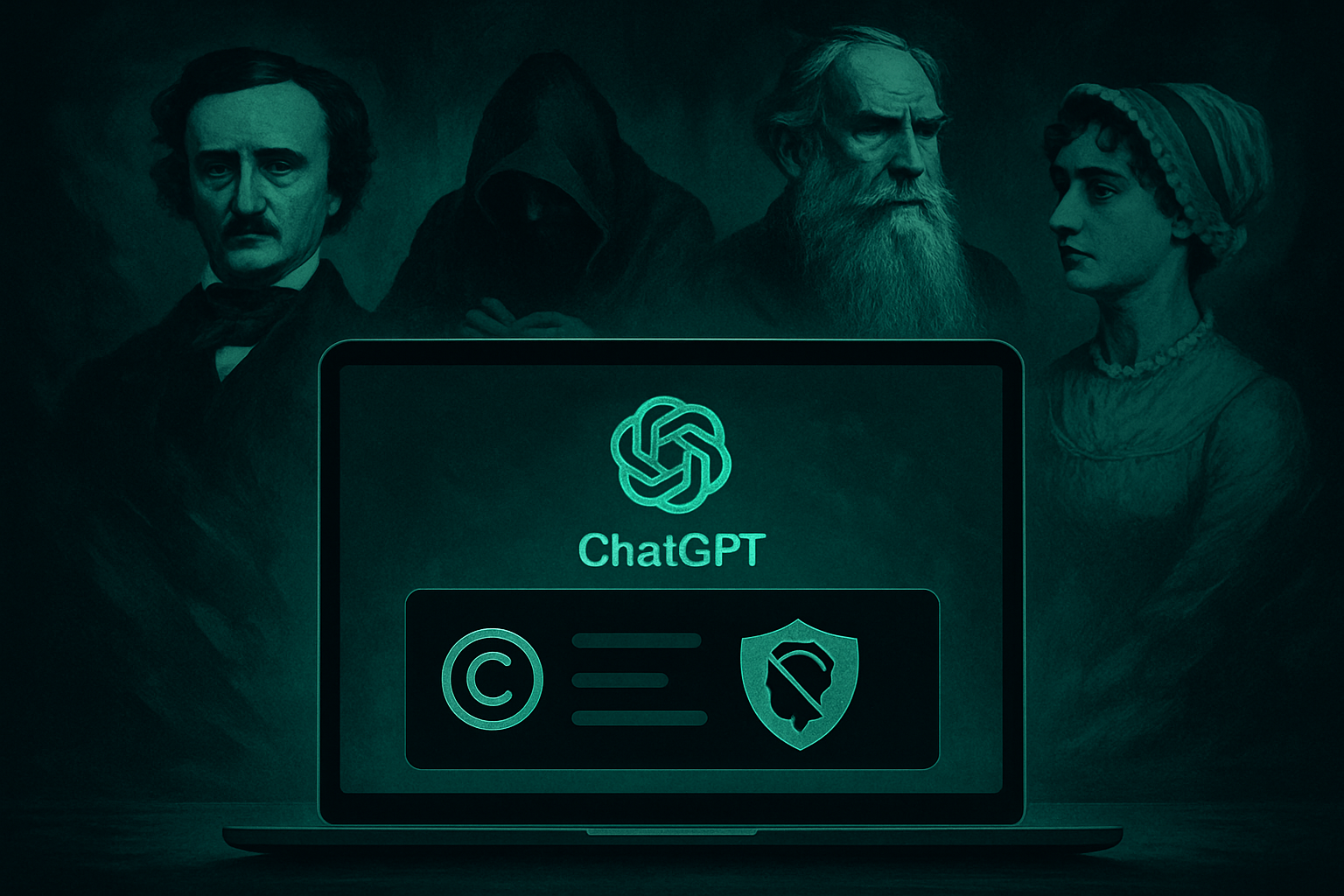
Dans le domaine de l'intelligence artificielle, la question des droits d'auteur reste un sujet complexe et souvent débattu. OpenAI, l'entreprise à l'origine de ChatGPT, a décidé de prendre des mesures concrètes pour clarifier sa position sur ce sujet sensible. En effet, OpenAI a mis en place de nouvelles restrictions pour son modèle d'IA, ChatGPT, afin de protéger les droits des auteurs, qu'ils soient contemporains ou historiques. Cette initiative vise à instaurer des garde-fous pour éviter toute appropriation non autorisée de styles littéraires.
Une nouvelle politique de refus
ChatGPT, l'outil conversationnel d'OpenAI, a récemment commencé à refuser certaines requêtes qui pourraient enfreindre les droits d'auteur. Ce changement a été remarqué par des utilisateurs sur les réseaux sociaux et a ensuite été confirmé par des tests menés par la presse américaine. Cette évolution marque un tournant important par rapport à une étude antérieure du site No Latency, qui avait révélé que ChatGPT pouvait encore imiter le style d'auteurs décédés.
Lorsqu'on demande à ChatGPT d'écrire dans le style d'un auteur français, le chatbot accepte de répondre, mais il s'abstient de reproduire le style "exact" de cet auteur. Des tests indépendants ont montré que, par exemple, lorsqu'on lui demande de rédiger une histoire dans le style d'Agatha Christie, ChatGPT refuse de le faire. Le chatbot explique que les œuvres de Christie sont toujours protégées par le droit d'auteur, et qu'il ne peut pas produire un texte qui imite de près son style distinctif.
Une alternative proposée par ChatGPT
Bien que ChatGPT refuse de copier directement le style d'auteurs protégés, il ne laisse pas l'utilisateur sans réponse. Fidèle à sa nature, ChatGPT propose une alternative : il peut créer un texte qui s'inspire des caractéristiques généralement associées à l'auteur, tout en restant original. Cette approche permet à ChatGPT de fournir une réponse tout en respectant les contraintes légales.
Cette nouvelle fonctionnalité semble être davantage une mise en garde qu'un blocage complet. Elle pourrait être motivée par la volonté d'OpenAI de minimiser les risques juridiques associés aux droits d'auteur, surtout dans un contexte où l'entreprise fait déjà face à plusieurs poursuites judiciaires. En adoptant cette stratégie, OpenAI cherche à naviguer prudemment dans le paysage juridique complexe des droits d'auteur tout en continuant à innover dans le domaine de l'intelligence artificielle.
Brief IA — L'actualité IA en français
L'essentiel de l'actualité de l'intelligence artificielle, décrypté et expliqué chaque jour.