OpenAI: A Promise of Wealth at $42.6 Billion
Le brief IA que les pros lisent chaque soir
Les 7 actus IA du jour, décryptées en 5 min. Gratuit.
Inclus dès l'inscription : notre sélection des meilleurs guides & comparatifs IA.
Choisis ton rythme
Gratuit · Pas de spam · Désabonnement en 1 clic
OpenAI and the Promise of Shared Wealth
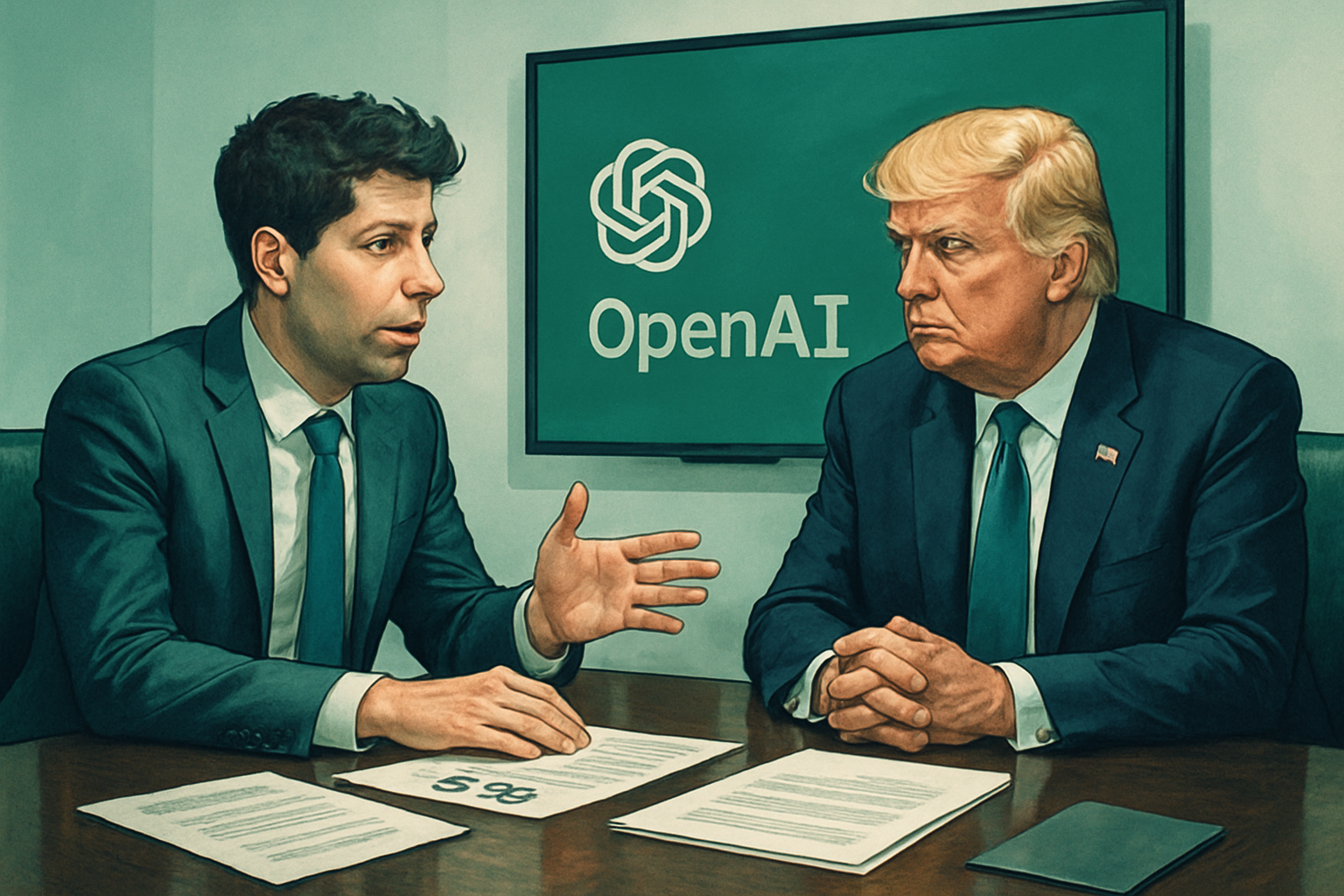
Sam Altman, the CEO of OpenAI, has recently reignited interest in his vision of redistributing the wealth generated by artificial intelligence to Americans. According to a report from the Financial Times, Altman is currently in discussions with former President Donald Trump to offer the U.S. government a 5% stake in OpenAI. This initiative is part of a broader promise to share the benefits of AI with the population.
The idea is not entirely new. In 2021, Altman had already proposed a more radical approach, suggesting that all companies exceeding a certain market value should contribute 2.5% of their value each year to a fund intended to pay dividends to American citizens. More recently, OpenAI has presented a more targeted proposal, which seems to be at the heart of current discussions with Trump. This idea has garnered diverse political support, with figures like Senator Bernie Sanders proposing that Americans hold a 50% stake in major AI companies.
The Motivations Behind the Proposal
For potential beneficiaries, Altman's proposal rests on two main arguments. First, AI feeds off human creations—whether books, films, or works of art—without compensating the authors of these works. Offering a free stake could be seen as a form of compensation. Second, it could address fears that AI will disrupt the job market by providing an economic safety net, even though economists do not agree on the extent of this threat.
An Economic Safety Net
The size and nature of this safety net are still under debate. The details of OpenAI's proposal remain vague, but if the government were to distribute this stake directly to citizens, it could represent a substantial sum. Last March, OpenAI was valued at $852 billion, meaning a 5% stake would amount to approximately $42.6 billion. Dividing this amount among the 133 million American households would yield about $320 per household. However, if the model followed that of other wealth funds, the government might choose to let the fund grow before distributing profits, potentially offering larger payments in the future, provided that AI companies become profitable.
Implications for the Tech Sector
If this dividend distribution were to materialize, it could have several implications for tech companies. Altman might hope that the promise of payouts would help improve the public image of AI companies. Currently, a majority of Americans are wary of how companies use AI and oppose the establishment of data centers in their neighborhoods. Furthermore, about half of the population expresses more concern than enthusiasm regarding the rise of AI in their daily lives.
For OpenAI, the challenge may also be to maintain good relations with the Trump administration, which has shown interest in tech agreements, as evidenced by its investments in Intel and its sales of Nvidia in China. For AI companies, staying on good terms with the government is crucial, particularly to avoid having their models perceived as risks to the supply chain or to gain support against Chinese competition.
A Still Vague Proposal
In conclusion, these plans function more as an idea in development rather than a concrete policy. Altman has been discussing this idea for five years, and although it was proposed to Trump shortly after he took office, there is still no concrete plan. Sanders' more ambitious proposal seems even less likely to come to fruition.
However, these proposals highlight ongoing debates about the future of AI. Altman draws inspiration from the Alaska Permanent Fund, created in the 1970s to redistribute oil profits to Alaskans. This model is based on the idea that oil is a shared and depleting resource. Altman appears willing to accept the first point for AI while promising that AI will generate extraordinary wealth for decades to come. Whether Americans receive a check or not is secondary; the main goal of the proposal might be to convince them that the AI boom will be significant enough to be shared.
Brief IA — L'actualité IA en français
L'essentiel de l'actualité de l'intelligence artificielle, décrypté et expliqué chaque jour.